


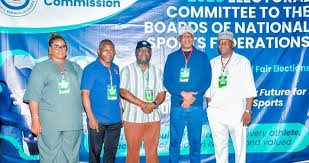
The National Sports Commission (NSC) yesterday officially inaugurated the newly elected boards of several national sports federations, describing the occasion as a turning point in the country’s sport governance framework.
During the ceremony in Abuja, the NSC’s Director-General, Bukola Olopade, exhorted the new federation presidents and their boards to deliver meaningful progress across athlete welfare, training, infrastructure, and private-sector partnerships. He emphasised that the era of sports being managed like a mere government department is over: federations must now adopt corporate discipline, transparent governance, and sustainable funding models.
Among the federations inaugurated were Wrestling, Cricket, Hockey, Tennis, Shooting, Squash, Swimming, Handball and Traditional Sports. Olopade praised the election process, calling it “free, fair and credible,” and noted that the calibre of individuals emerging into leadership roles—from the Comptroller-General of Customs to former state legislators—signals a commitment to revitalising Nigeria’s sporting ecosystem.
Highlighting reform measures, the NSC has introduced a new corporate governance structure requiring each federation to appoint a Chief Operating Officer (COO) and to secure private-sector sponsorships within the next six months. The ultimate aim: reduce public-sector dependency on sports financing and generate self-sustaining revenue streams. Olopade noted that already in the past year the Commission attracted over ₦50 billion in sponsorship deals for pilot programmes, signalling renewed investor confidence in Nigerian sports.
Speaking on behalf of the federations, the Chairman of the Electoral Committee, Simon Ebohjaye, described the elections as “orderly and transparent,” and confirmed that only one federation (Kickboxing) experienced a postponement due to minor implementation issues. With fresh leadership now installed, the board members have six months to submit their constitutions, strategic plans and funding proposals for ratification.
Athletes, coaches and stakeholders hailed the event as a long-awaited breakthrough. Many believe that with effective implementation, Nigeria could finally reposition its sports industry from chronic under-investment and mismanagement to efficiency, result-orientation and global competitiveness.