


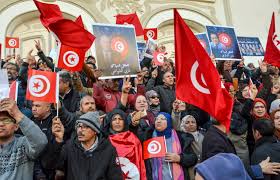
A Tunisian appeals court has sentenced 40 individuals including opposition politicians, businesspeople and media figures to lengthy prison terms ranging from 5 to 45 years after convicting them of conspiring against state security.
The case among the largest security‑related prosecutions in recent national history began earlier this year. Prosecutors accused the defendants of plotting to destabilize the state, collaborating with foreign powers, and undermining public order. More than 20 of the accused have reportedly fled abroad to avoid prosecution.
Rights groups and opposition supporters argue the convictions reflect a deepening crackdown on dissent under the current regime. They describe the trials as politically motivated and say they target voices critical of ruling authorities.
Critics also highlight that many of the defendants were denied what they call a fair trial: limited access to legal representation, evidence largely based on anonymous or secret witnesses, and charges that broadly criminalize political opposition.
The verdict has drawn international condemnation. Observers warn the mass sentencing risks reversing democratic gains in the country and could deepen political instability and human rights concerns.