


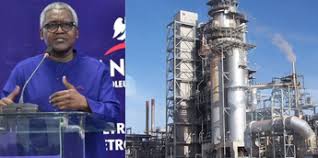
Industrialist Aliko Dangote has officially announced plans to nearly double the processing capacity of the Dangote Petroleum Refinery from 650,000 barrels per day (bpd) to 1.4 million bpd, marking a bold push to position it as the world’s largest single-train refinery.
During a press event held at the refinery in Lagos, Dangote revealed that expansion work has already begun. He stated that the upgrade will involve adding a new train, upgrading power generation, and adopting modern refining technologies in partnership with licensor firms.
The billionaire said the move is part of his vision to secure energy independence for Nigeria, reduce refined import dependence and lower fuel prices across the board. “This expansion reflects our confidence in Nigeria’s future, our belief in Africa’s potential, and our commitment to building energy independence for our continent,” Dangote said.
The project is expected to generate about 65,000 jobs during construction, with over 85% of the workforce comprising Nigerians. Additionally, Dangote projected the refinery could command a turnover of up to USD 55 billion annually at full scale, citing increased petrochemical outputs (like polypropylene) in tandem with fuel operations.
Analysts believe the expansion will shake Nigeria’s oil and gas landscape: it may compress margins for smaller refiners, increase pressure on crude supply chains, and demand deeper regulatory assurance for feedstock sourcing. To fund the upgrade, Dangote has floated the idea of listing part of the refinery on the Nigerian Stock Exchange and possibly selling up to 10% equity, as well as securing multibillion-dollar lending.
If successful, the expanded infrastructure could deliver cleaner Euro VI standard fuels, bolster Nigeria’s position in the global refining value chain, and deliver sustained downward pressure on domestic fuel prices. However, challenges like crude supply logistics, foreign exchange volatility, and regulatory bottlenecks remain critical tests for execution.


