


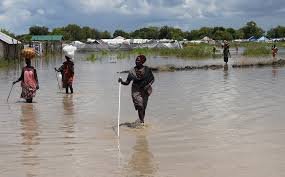
Families across parts of South Sudan are battling for survival as rising waters of the River Nile trigger severe flooding, destroying homes, farmlands and livelihoods, and deepening an already fragile humanitarian situation.
According to local authorities and aid agencies, communities in flood-prone states including Unity, Jonglei and Upper Nile have been among the hardest hit, with thousands forced to flee submerged villages. Entire settlements have been cut off, leaving residents stranded on small patches of dry land or makeshift embankments with limited access to food, clean water and healthcare.
The floods, driven by prolonged heavy rainfall and upstream water surges, have wiped out crops and livestock, intensifying food insecurity in a country already grappling with conflict, economic hardship and climate shocks. Humanitarian groups warn that the displacement could worsen the spread of water-borne diseases and malnutrition, particularly among children and the elderly.
Aid agencies have called for urgent international support, stressing that without swift intervention, the flooding could reverse fragile recovery gains and push vulnerable families deeper into crisis as South Sudan enters another difficult dry season with depleted reserves.


