


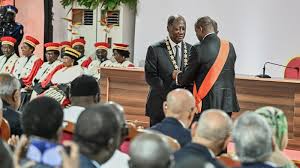
On Monday, December 8th, Alassane Ouattara took the oath of office for a fourth term as president of Côte d’Ivoire, following a disputed October election that gave him over 89% of the vote.
The inauguration, held at the presidential palace in Abidjan and attended by several African heads of state, came amid low voter turnout and widespread criticism over exclusion of major opposition figures from the poll.
After being sworn in, Ouattara lauded the election as a reaffirmation of the people’s “choice for stability, peace, and development.” He pointed to the country’s post‑conflict recovery since 2011 as validation of his leadership.
Supporters of the re‑election argue Côte d’Ivoire needs continuity and experience to navigate regional instability and terrorist threats, which Ouattara also cited in his speech noting that the sub‑region remains fragile.
Critics, however, view the fourth term made possible after constitutional changes in 2016 that reset term limits as a dangerous consolidation of power. They warn that repeated reelection under contested circumstances undermines democratic norms and could breed disenchantment, especially in opposition strongholds where turnout was markedly low.
With age, past controversies, and the sidelining of key opposition voices still fresh, many will be watching whether this term brings inclusive growth and reform or entrenched control.