


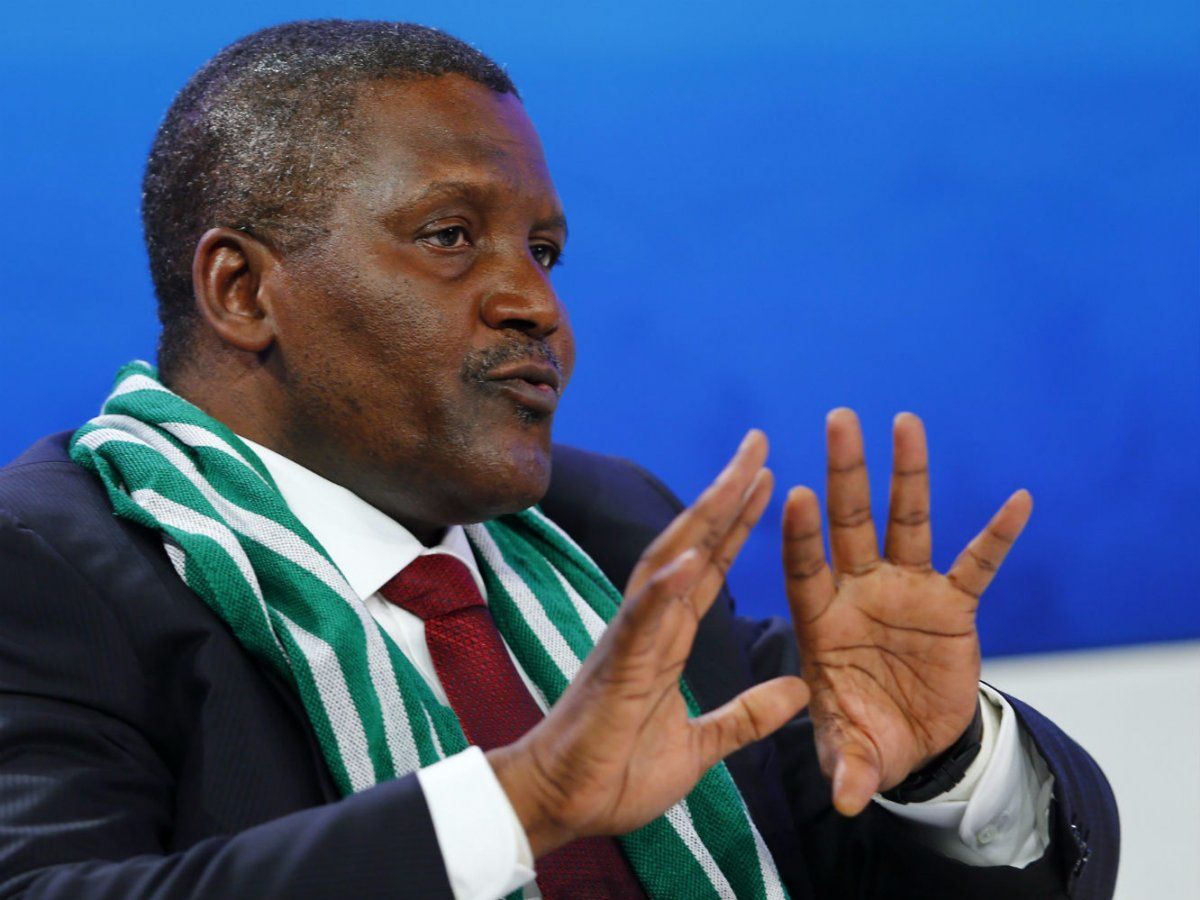
On February 17, 2026, Africa’s richest industrialist, Aliko Dangote, issued a strong appeal to the Federal Government of Nigeria to immediately convene an emergency national power summit, warning that the country’s worsening electricity crisis is reaching a tipping point. Speaking during a stakeholders’ engagement in Lagos, Dangote described the persistent grid instability and chronic blackouts as a direct threat to Nigeria’s economic survival and long-term industrial ambitions.
Dangote stated that between January and mid-February 2026, Nigeria recorded multiple nationwide grid disturbances, disrupting businesses across major commercial and industrial centers such as Kano, Port Harcourt, Ibadan, and Aba. According to him, the frequency of system collapses is not merely an operational issue but a structural economic risk that undermines productivity, discourages investment inflows, and inflates production costs.
He emphasized that electricity is the backbone of industrialization, noting that no economy aspiring to diversify beyond primary commodities can succeed without reliable base-load power. Nigeria, despite being Africa’s largest economy, continues to generate far below its estimated demand. The national grid, operated by the Transmission Company of Nigeria, has struggled with aging infrastructure, weak transmission capacity, and liquidity challenges across the value chain.
Dangote revealed that large-scale manufacturers — including cement producers, food processing plants, refineries, and petrochemical facilities — are increasingly dependent on self-generation using gas turbines and diesel generators. While some conglomerates can absorb these costs, he warned that small and medium-sized enterprises are bearing disproportionate burdens. “When businesses generate their own power, the cost of goods inevitably rises,” he said, linking electricity instability to inflationary pressures currently affecting Nigerian households.
The business leader specifically called on President Bola Ahmed Tinubu to take decisive executive action. He urged the presidency to mandate an emergency summit bringing together the Minister of Power, Adebayo Adelabu, leadership of generation and distribution companies, financial institutions, gas suppliers, industrial associations, and international technical partners. According to Dangote, the summit must focus on measurable outcomes, not political optics.
Among the priority issues he outlined were grid modernization, improved transmission wheeling capacity, accelerated metering rollout, enhanced gas supply reliability to thermal power plants, and regulatory reforms to restore investor confidence. He also advocated for strategic investments in renewable energy integration, particularly solar and embedded generation models that could reduce pressure on the overstretched national grid.
Dangote’s position aligns with repeated warnings from the Manufacturers Association of Nigeria. Its Director General, Segun Ajayi-Kadir, has consistently highlighted that unreliable electricity remains the single largest constraint on Nigeria’s manufacturing competitiveness. According to industry data cited during the Lagos meeting, manufacturers spend a substantial share of operating expenses on alternative energy sources — a cost structure that reduces profit margins and weakens export competitiveness under regional trade frameworks.
Economic analysts argue that Nigeria’s power crisis is rooted in structural inefficiencies dating back to the 2013 privatization of the electricity sector. While the reform was intended to attract private investment and improve efficiency, persistent liquidity shortfalls, tariff disputes, inadequate transmission upgrades, and regulatory inconsistencies have limited progress. Distribution companies continue to grapple with revenue collection gaps and technical losses, while generation companies face payment delays that affect maintenance and expansion capacity.
Dangote warned that the macroeconomic implications are severe. Persistent power instability contributes to reduced manufacturing output, slower GDP growth, capital flight, and unemployment pressures. In industrial corridors across Lagos and Port Harcourt, production cycles are frequently interrupted, forcing factories to adjust shifts or suspend operations. In northern hubs like Kano, small-scale industries report rising overhead costs due to generator fuel expenses.
He further noted that Nigeria’s aspiration to become a regional manufacturing powerhouse under the African Continental Free Trade framework depends heavily on energy reliability. Without stable electricity, he cautioned, Nigeria risks losing competitive ground to countries with more predictable power infrastructure.
Observers say Dangote’s intervention carries significant weight, given his investments in cement production, petrochemicals, agriculture, and refining — sectors heavily dependent on uninterrupted power supply. His call for an emergency summit signals growing frustration within the private sector over what many describe as cyclical grid collapses without systemic reform.
As of February 18, 2026, the Federal Government had not officially announced plans for such a summit. However, pressure is mounting from industry leaders, chambers of commerce, and energy experts for coordinated action. With Nigeria navigating fiscal consolidation measures, currency volatility, and inflationary pressures in early 2026, the urgency of resolving the power crisis has become central to economic policy discussions.