


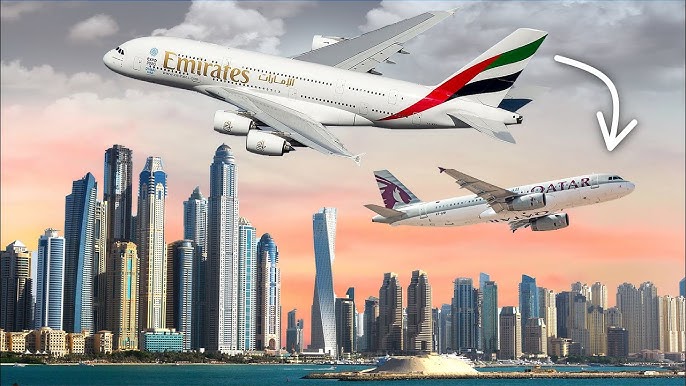
The escalating geopolitical tensions across the Middle East have continued to cause significant disruptions to international aviation, affecting thousands of travelers and forcing airlines to suspend, reroute, or delay flights across one of the world’s busiest air travel corridors. The crisis intensified in early March 2026 as the growing confrontation involving the United States, Israel, and Iran led several countries in the region to impose temporary airspace restrictions amid concerns about potential missile strikes, drone activity, and broader military escalation.
The disruptions began to spread rapidly across major aviation hubs throughout the Gulf region during the first week of March, when aviation authorities issued emergency notices restricting flights through sensitive air corridors. Airlines were instructed to avoid certain sections of airspace considered vulnerable to military activity, leading to widespread cancellations and delays that left thousands of passengers stranded in airports across the region.
Major transit hubs such as Dubai, Abu Dhabi, Doha, and Manama experienced significant congestion as passengers waited for updates from airlines regarding rescheduled flights or alternative travel arrangements. These cities serve as key international transit points connecting Europe, Asia, Africa, and Oceania, and disruptions in their airspace can have widespread ripple effects across the global aviation network.
Airports in the United Arab Emirates reported particularly high numbers of stranded passengers, many of whom were in transit between continents. The UAE is home to some of the world’s busiest airports, including Dubai International Airport, which consistently ranks among the top global hubs for international passenger traffic. The sudden cancellation of dozens of flights created significant operational challenges for airport authorities and airline staff, who worked around the clock to assist passengers and manage the rapidly evolving situation.
The airspace disruptions were largely triggered by heightened security concerns following a series of military exchanges across the region. Defense analysts warned that commercial aircraft flying near active conflict zones could face potential risks from missile systems or military operations. As a result, aviation regulators and air traffic control authorities across several Middle Eastern countries moved quickly to restrict civilian flights from certain corridors until safety assessments could be conducted.
International airlines were forced to adjust flight paths immediately, often rerouting aircraft through longer routes that bypassed the restricted zones. These alternative routes frequently added several hours to flight durations and increased fuel consumption, placing additional operational pressure on airlines already dealing with scheduling challenges. Flights connecting Europe to Asia, as well as routes linking Africa and the Pacific region, were among those most heavily affected.
The disruptions left thousands of travelers stranded in airports across the Gulf region. Many passengers reported waiting overnight in crowded terminals while airline representatives worked to arrange hotel accommodations, rebook flights, or organize alternative travel solutions. The situation was particularly difficult for migrant workers and international tourists whose connecting flights had been canceled without immediate replacement options.
In response to the growing number of stranded passengers, several governments and airlines began organizing special recovery and evacuation flights. One of the largest such efforts was announced by Air India, which confirmed on March 9, 2026 that it would operate 32 special flights to transport stranded passengers from the United Arab Emirates and nearby regions back to India.
These special operations were coordinated from major airports including Dubai International Airport and Zayed International Airport, with flights scheduled to carry passengers to multiple destinations across India. Indian authorities stated that the effort was designed primarily to assist Indian nationals who had been unable to return home after flight cancellations disrupted normal travel routes.
Officials in New Delhi confirmed that Indian diplomatic missions in Gulf countries were working closely with airline operators and airport authorities to identify stranded passengers and facilitate their evacuation. The Indian government also deployed additional consular staff to assist travelers with documentation issues, ticket rescheduling, and emergency support.
The need for large-scale evacuation flights reflects the significant presence of Indian expatriate workers in Gulf countries. Millions of Indian citizens live and work across the Middle East, particularly in sectors such as construction, hospitality, healthcare, and aviation. As a result, any disruption to regional air travel tends to have a disproportionately large impact on Indian travelers.
Major Gulf airlines also began gradually restoring flight operations once aviation authorities started reopening selected sections of restricted airspace. Carriers such as Emirates, Etihad Airways, and Qatar Airways resumed limited services while continuing to monitor the security situation closely. Many of these flights are currently operating on revised schedules that incorporate longer alternative routes designed to avoid sensitive areas.
Industry experts warn that the Middle East remains one of the most strategically important aviation corridors in the world. The region sits at the crossroads of several major intercontinental flight paths, making it a critical link in global air transportation networks. Airlines rely heavily on Gulf hubs for connecting passengers between Europe, Asia, Africa, and Australia, meaning disruptions in the region can affect flight schedules worldwide.
Cargo operations have also been affected by the disruptions. Many international freight routes pass through the same Middle Eastern air corridors used by passenger flights. Delays or rerouting of cargo aircraft could potentially disrupt global supply chains, particularly for high-value goods, pharmaceuticals, and perishable products that depend on rapid air transport.
Aviation analysts warn that if the regional conflict continues to escalate, additional airspace closures could occur, prolonging disruptions for both passenger and cargo operations. Airlines are therefore maintaining contingency plans that include rerouting strategies, expanded customer support services, and coordination with international aviation authorities to ensure safe flight operations.
Despite the challenges, aviation regulators and airline companies are working closely to gradually restore stability to regional air travel. As security conditions improve and restricted airspace begins reopening, airlines are expected to increase the number of recovery flights in order to clear the backlog of stranded passengers.
However, with geopolitical tensions in the Middle East still evolving, the global aviation industry remains on high alert. Airlines, governments, and airport authorities are continuing to monitor developments closely, aware that further escalation of the conflict could once again disrupt one of the most critical air travel corridors in the world.