


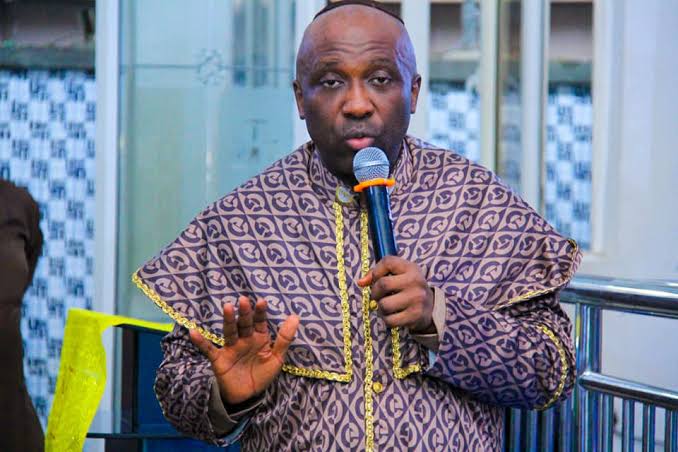
The Leader of the INRI Evangelical Spiritual Church, Primate Elijah Ayodele, has generated nationwide and continental debate after predicting that a sitting president in Africa could pass away before 2027.
Ayodele made the declaration on Thursday, February 26, 2026, during a press briefing held at his church headquarters in the Oke-Afa area of Isolo, Lagos State. Speaking before congregants and journalists, the cleric said the prophecy was revealed to him during a recent spiritual exercise focused on Africa’s political future.
“I foresee a situation where a sitting president in Africa may not complete his tenure between now and 2027. There is a need for serious prayers across the continent,” Ayodele said. “This is not about fear, but about spiritual warning and intercession.”
Although Ayodele did not name any specific country or leader, his statement quickly ignited speculation across Nigeria and other African nations. Social media discussions in Abuja, Lagos, Nairobi, Pretoria, and Kigali referenced several prominent leaders, including President Bola Ahmed Tinubu of Nigeria, President William Ruto of Kenya, President Cyril Ramaphosa of South Africa, and President Paul Kagame of Rwanda.
Political analysts have cautioned against drawing conclusions or linking the prophecy to any specific individual. Dr. Suleiman Yakubu, a senior lecturer in political science at the University of Abuja in the Federal Capital Territory, said on February 27, 2026, that public pronouncements predicting the death of a sitting leader could create unnecessary political anxiety.
“In constitutional democracies such as Nigeria, there are clear provisions for succession under Sections 143 and 146 of the 1999 Constitution,” Yakubu explained. “However, statements of this magnitude can heighten political tension, particularly as countries approach election cycles.”
Under Nigeria’s constitutional framework, if a sitting president dies or becomes incapacitated, the vice president assumes office. In the current administration, Vice President Kashim Shettima would constitutionally succeed President Tinubu in such a scenario.
Officials within the Presidency in Abuja declined formal comment as of Friday afternoon, February 27, 2026. However, a senior figure in the ruling All Progressives Congress (APC), speaking anonymously, dismissed the prophecy as speculative and urged Nigerians to remain calm.
“Governance is ongoing, and there is no cause for alarm. Nigerians should not allow sensational statements to distract from national priorities,” the party official said.
Leaders within the opposition Peoples Democratic Party (PDP) also declined to politicize the matter, calling instead for unity and stability ahead of the 2027 general elections.
Primate Ayodele has built a reputation for issuing annual prophecies concerning political developments, elections, security crises, and global affairs. In previous years, he made predictions relating to Nigeria’s presidential elections and the fortunes of political figures in Lagos, Abuja, and other parts of the country. Some of his pronouncements have drawn attention when events appeared to align with his forecasts, while others have been criticized by skeptics.
Religious leaders in Lagos and Abuja have urged the public to respond responsibly. Pastor Tunde Bakare of the Citadel Global Community Church called for prayers for national stability without directly referencing Ayodele’s prophecy. Similarly, Archbishop Daniel Okoh, President of the Christian Association of Nigeria, emphasized the importance of unity and peace in public discourse.
Security analysts note that predictions concerning the death of sitting presidents are particularly sensitive in Africa, where political stability often hinges on constitutional continuity. They warn that unverified speculation could trigger misinformation or political opportunism if not handled carefully.
As of February 27, 2026, there has been no official report indicating health concerns involving President Tinubu or any of the other African leaders mentioned in public speculation. Government activities in Abuja continued as scheduled, with President Tinubu presiding over meetings earlier in the week at the Presidential Villa.
The prophecy comes at a time when Nigeria and several African countries are navigating economic reforms, security challenges, and preparations for upcoming elections. With the 2027 general elections drawing closer in Nigeria, political observers say heightened sensitivity to leadership issues is expected.
For now, Ayodele’s statement remains a religious pronouncement without reference to any verified health or political development. Authorities and analysts alike have urged citizens across Lagos, Abuja, and beyond to avoid spreading fear and to rely on official information regarding matters of national leadership.


