


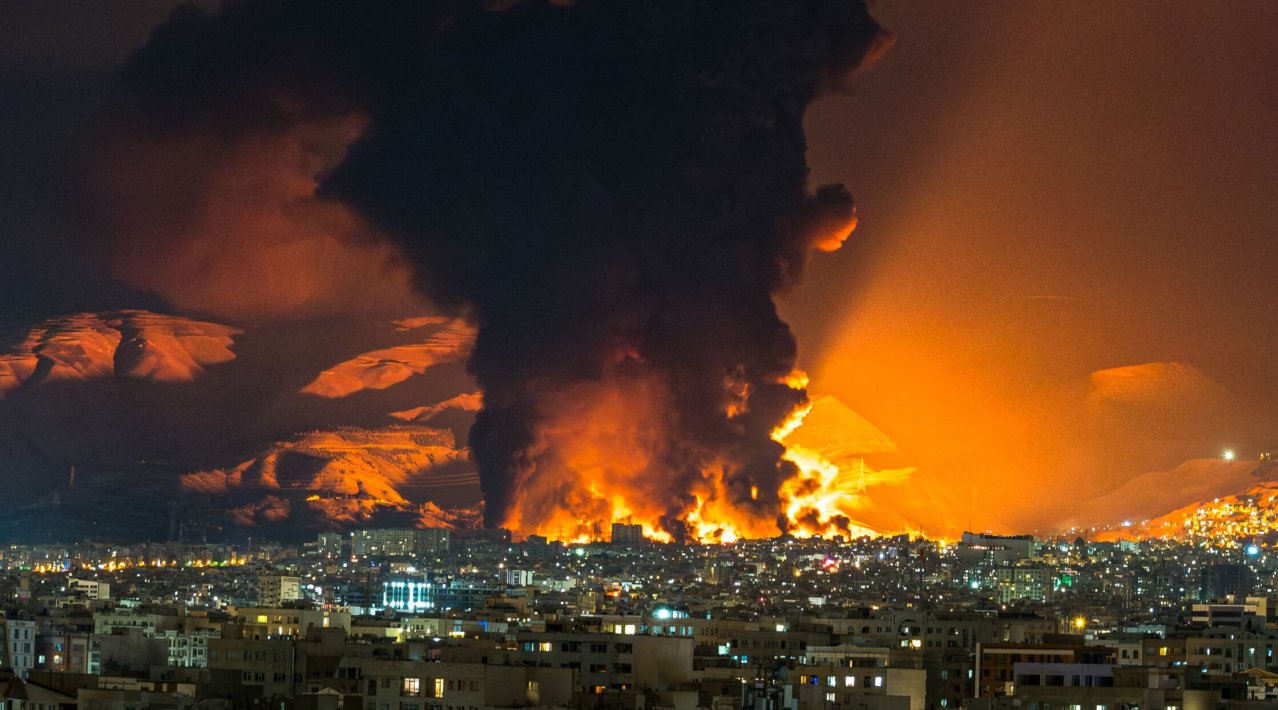
Explosions were reported in several major Middle Eastern cities as the ongoing conflict involving the United States, Israel, and Iran continued to intensify, with military strikes and retaliatory actions spreading beyond traditional battlefronts into urban areas.
Residents and authorities in Tehran, Dubai, and Beirut reported hearing loud detonations and witnessing blasts in and around populated districts, reflecting the widening consequences of the nearly two old conflict that began in late February 2026. On March 12 and 13, multiple air defense engagements and reported strikes raised alarm among civilians and government officials across the region.
In Tehran, the capital of Iran, plumes of smoke and reports of explosions were observed over industrial and urban districts following sustained aerial operations and air defense alerts. The city has been a focal point in recent military exchanges, with infrastructure and energy installations previously targeted in broader campaigns tied to the conflict.
In the United Arab Emirates, residents in Dubai reported explosions and shockwaves as authorities engaged hostile aerial threats. The UAE Air Defence Command intercepted dozens of ballistic missiles and drones, and debris from interceptions struck buildings along prominent thoroughfares such as Sheikh Zayed Road, causing structural damage but no immediate confirmation of casualties. The government of the UAE heightened its security alert and reiterated that civil defense and air defense measures were fully active to protect residents.
In Beirut, capital of Lebanon, explosions were heard as Israeli airstrikes intensified in and around urban neighborhoods, including central districts near government headquarters and residential areas. The Lebanese government reported significant damage, displacement, and civilian casualties resulting from strikes associated with military actions against Hezbollah positions and related targets across southern and eastern parts of the city. The escalation prompted evacuation advisories and international concern over civilian safety.
The reported explosions in these cities occurred amid a broader surge in military activity across the Middle East, including missile and drone barrages, air raids, and the deployment of defensive systems in Gulf states and Levantine capitals. Regional leaders, including Benjamin Netanyahu, Prime Minister of Israel, and Mojtaba Khamenei, Supreme Leader of Iran, have issued statements justifying continued operations as part of their respective military strategies, even as humanitarian agencies and foreign governments express deep concern over rising civilian impact.
International organizations and humanitarian relief agencies have repeatedly called for restraint and the protection of civilians, emphasizing that explosions and impacts on urban centers underscore the risk to non-combatants and critical infrastructure. Analysts warn that as the conflict expands geographically, the potential for further civilian harm — from direct strikes, interception debris, or secondary explosions — will remain a central concern for governments and aid groups alike.
Reports of explosions across Tehran, Dubai, and Beirut highlight the complex and escalating nature of the Middle Eastern conflict as of March 12–13, 2026, with urban populations facing increasing disruption, safety risks, and uncertainty amid ongoing military operations.


