


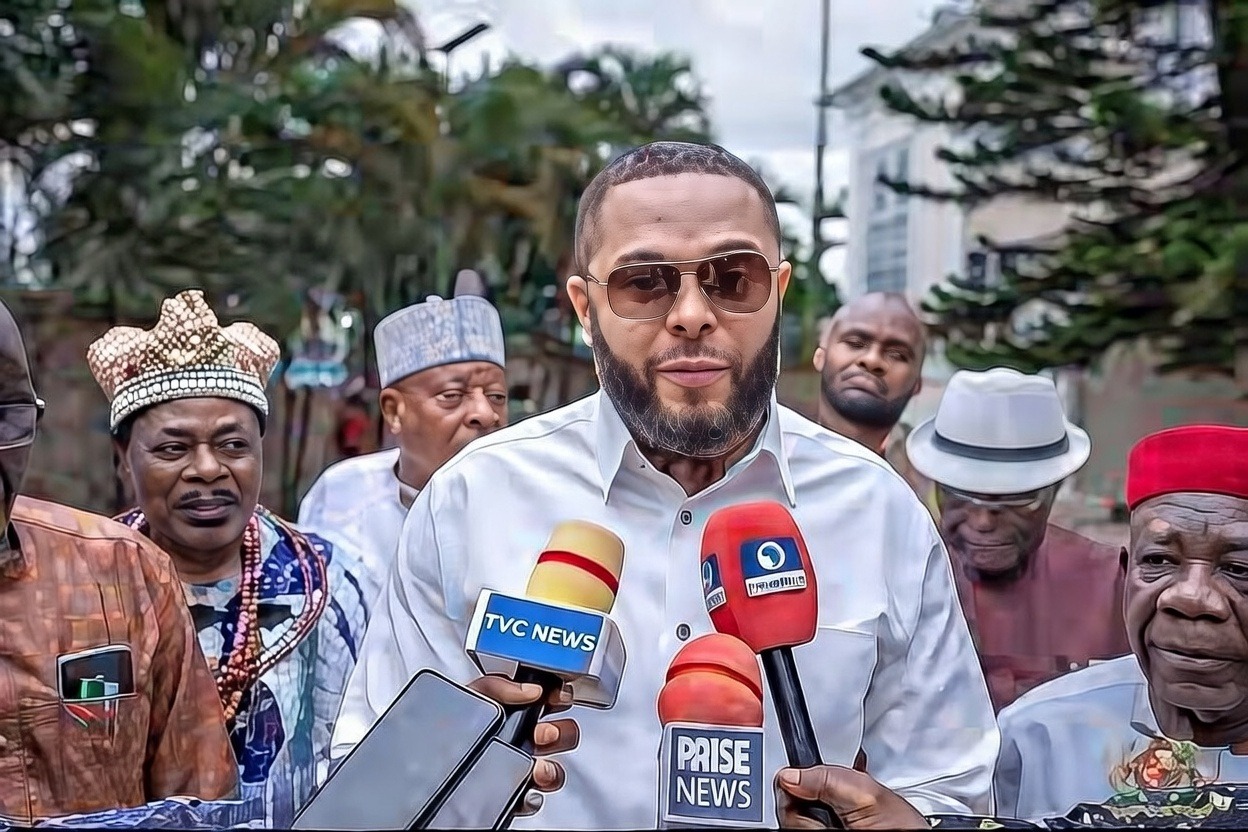
On Wednesday, February 25, 2026, what began as a routine budget defence hearing at the National Assembly Complex in Abuja, Federal Capital Territory, transformed into one of the most dramatic oversight sessions of the year when Hon. Alex Mascot Ikwechegh, representing Aba North/Aba South Federal Constituency of Abia State, repeatedly chanted demands for accountability during proceedings.
The session was convened by the House of Representatives Committee on Aids, Loans and Debt Management to assess the implementation of the 2025 Appropriation Act and review the status of capital project funding tied to both budgetary allocations and external loan facilities approved between 2023 and 2025. Senior officials of the Federal Ministry of Finance were present, led by the Minister of Finance and Coordinating Minister of the Economy, Wale Edun.
Tensions rose sharply when Hon. Ikwechegh declared that ₦1.15 trillion had been raised and expressly approved by the National Assembly to finance 30 percent of the 2025 capital budget, yet there was no clear evidence of corresponding disbursement to executing ministries, departments, and agencies. According to him, the approved sum was intended to accelerate infrastructure and development projects across transportation, healthcare, education, agriculture, and power sectors nationwide.
As questioning intensified inside the committee chamber in Abuja, Ikwechegh began chanting calls for “accountability” and “transparency,” insisting that Nigerians deserved full disclosure of how public funds were being handled. His chants briefly disrupted the formal proceedings, prompting the committee chairman to call for order while allowing the lawmaker to continue his line of questioning.
Ikwechegh argued that while the executive branch frequently cited revenue growth and successful loan negotiations, communities across states including Abia, Kano, Rivers, and Lagos were yet to see tangible progress on federally funded capital projects. He demanded a comprehensive breakdown of approvals, actual releases, project locations, contractors engaged, and stages of completion. He further stressed that oversight responsibility requires lawmakers to verify that approved funds translate into measurable development outcomes.
In his response, Wale Edun maintained that capital disbursements are subject to revenue inflows, fiscal constraints, and compliance procedures. He explained that documentation requirements, procurement processes, and verification steps must be completed before funds can be released. Edun also clarified that the operational handling of disbursement processes falls under the supervision of the Minister of State for Finance, Doris Uzoka-Anite.
The clarification did not fully satisfy committee members, who insisted that ultimate responsibility for fiscal accountability rests with the Ministry of Finance as an institution. Several lawmakers emphasized that the National Assembly’s approval of ₦1.15 trillion was based on assurances from the executive and that the legislature expects detailed and consolidated reporting directly from the finance ministry.
The confrontation unfolded against the backdrop of Nigeria’s expanding public debt profile under the administration of President Bola Ahmed Tinubu, who assumed office on May 29, 2023. While the federal government has consistently defended its borrowing strategy as necessary to stabilize the economy and fund critical infrastructure, lawmakers at the February 25 hearing argued that rising debt levels heighten the need for transparent capital project implementation.
By the close of proceedings on February 25, the committee directed the Ministry of Finance to submit comprehensive documentation detailing the status of the ₦1.15 trillion allocation, including dates of approval, dates of release, beneficiary agencies, and current execution levels. The hearing was adjourned and reconvened on Thursday, February 26, 2026, with lawmakers reiterating their demand for clarity.
Observers in Abuja described Hon. Ikwechegh’s chants as a rare but symbolic moment within parliamentary oversight, reflecting mounting frustration in the House of Representatives over perceived gaps between budgetary approvals and on-ground implementation. The episode has since intensified national debate on fiscal transparency, loan utilization, and capital expenditure management, signaling that legislative scrutiny of federal spending is likely to remain rigorous in the months ahead.