


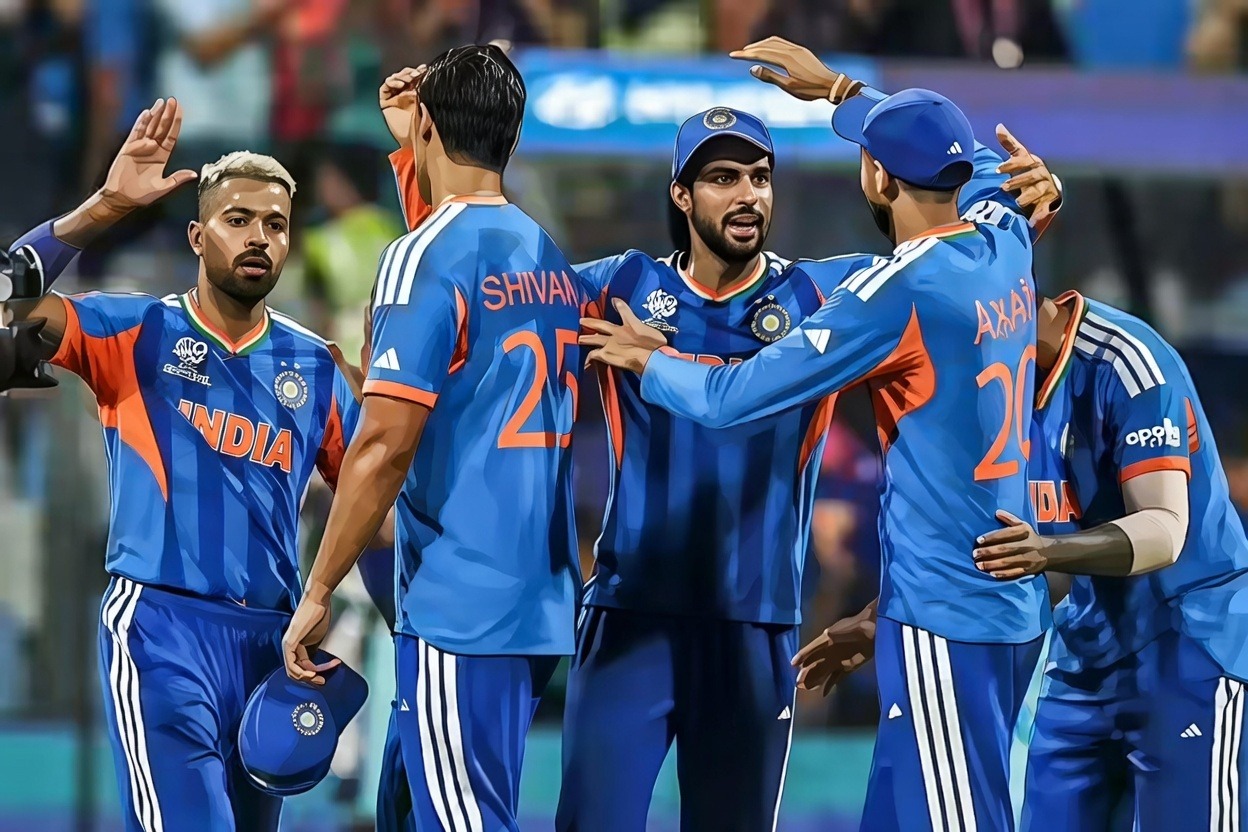
On 5 March 2026, the India national cricket team secured a dramatic and hard-fought victory over the England national cricket team in the semi-final of the ICC Men’s T20 World Cup 2026, advancing to the tournament’s final after an intense encounter at the Wankhede Stadium in Mumbai, India. The match, played before a packed stadium and watched by millions around the world, ended with India defeating England by seven runs in one of the most thrilling contests of the competition.
The semi-final clash produced a remarkable display of modern T20 cricket, with both teams delivering explosive batting performances and dramatic momentum swings throughout the match. Analysts and commentators later described the encounter as one of the most entertaining matches of the tournament, with a combined total of nearly 500 runs scored across both innings.
After winning the toss, England captain Harry Brook elected to field first, hoping that his bowlers could restrict India to a manageable total on a batting-friendly pitch. However, India’s powerful batting lineup quickly seized control of the match and began building a formidable total.
Opening the innings for India, the hosts started aggressively during the powerplay overs. The early momentum allowed the middle order to continue attacking England’s bowling attack, which struggled to contain the run flow throughout the innings.
The standout performer for India was wicket-keeper batsman Sanju Samson, who delivered an explosive innings of 89 runs from just 42 balls. Samson’s knock included a series of powerful boundaries and towering sixes that electrified the crowd at Wankhede Stadium. His ability to dominate England’s pace and spin bowlers helped India accelerate rapidly through the middle overs.
Samson’s innings proved decisive in shaping the match. At one crucial moment, when he had scored only 15 runs, England captain Harry Brook dropped a difficult but potentially decisive catch. The missed opportunity allowed Samson to continue his aggressive batting, and he went on to produce one of the most important innings of the tournament.
India’s batting lineup received further contributions from key players including Suryakumar Yadav, whose attacking stroke play added vital runs, and all-rounder Hardik Pandya, who delivered a quick late cameo that boosted India’s total during the final overs of the innings.
England’s bowling unit endured a difficult evening. Fast bowler Jofra Archer faced intense pressure from the Indian batsmen and conceded more than 60 runs in his four overs. Other bowlers also struggled to maintain consistent lines and lengths on a pitch that heavily favored attacking batting.
By the end of the 20-over innings, India had posted an imposing total of 253 runs for seven wickets, setting England the challenging target of 254 runs to secure a place in the World Cup final.
England’s run chase began under immediate pressure. Within the first few overs, India’s bowlers managed to dismiss key English batsmen, including Jos Buttler and Phil Salt, leaving England in a precarious position early in the innings.
However, England mounted a remarkable comeback led by young batting sensation Jacob Bethell. Displaying extraordinary composure and power hitting, Bethell launched a counterattack against India’s bowling lineup, scoring a sensational 105 runs from just 48 balls.
His innings featured a combination of aggressive drives, lofted shots, and powerful sixes that reignited England’s hopes of pulling off one of the most dramatic run chases in T20 World Cup history. The crowd witnessed several momentum shifts as Bethell’s aggressive batting steadily reduced the gap between England’s score and the daunting target.
England also received valuable support from middle-order batsman Will Jacks, who contributed important runs while maintaining the required run rate during the middle overs of the chase.
As the match entered its final stages, England required a challenging but achievable number of runs from the last few overs. The tension inside Wankhede Stadium rose sharply as both teams fought to control the outcome of the contest.
India’s experienced bowling attack ultimately proved decisive in the closing moments of the match. Fast bowler Jasprit Bumrah delivered a series of disciplined overs, using accurate yorkers and variations to restrict England’s scoring opportunities during the critical death overs.
Hardik Pandya also played a crucial role with the ball, maintaining pressure on the English batsmen and preventing them from fully capitalizing on Bethell’s remarkable innings.
England eventually finished their 20 overs with 246 runs for seven wickets, falling just seven runs short of the target set by India. The narrow margin highlighted the fiercely competitive nature of the semi-final and demonstrated the unpredictable excitement of the T20 format.
Fielding contributions from India also played a key role in the victory. All-rounder Axar Patel produced several crucial moments in the field, including impressive catches that helped break England’s momentum during their chase.
With the victory, India secured a place in the final of the ICC Men’s T20 World Cup 2026, where they are scheduled to face the New Zealand national cricket team on 8 March 2026 at the Narendra Modi Stadium in Ahmedabad.
The upcoming final has generated enormous excitement among cricket fans around the world. For India, the match presents an opportunity to secure another major international cricket title and potentially become the first host nation to win the T20 World Cup on home soil.
Sports analysts say the dramatic semi-final between India and England will likely be remembered as one of the defining matches of the tournament. With extraordinary batting performances, tense final overs, and world-class individual displays, the encounter showcased the intensity and global appeal of international T20 cricket.
As preparations begin for the championship match in Ahmedabad, both teams and fans now turn their attention to what promises to be a historic final in one of cricket’s most prestigious global tournaments.