


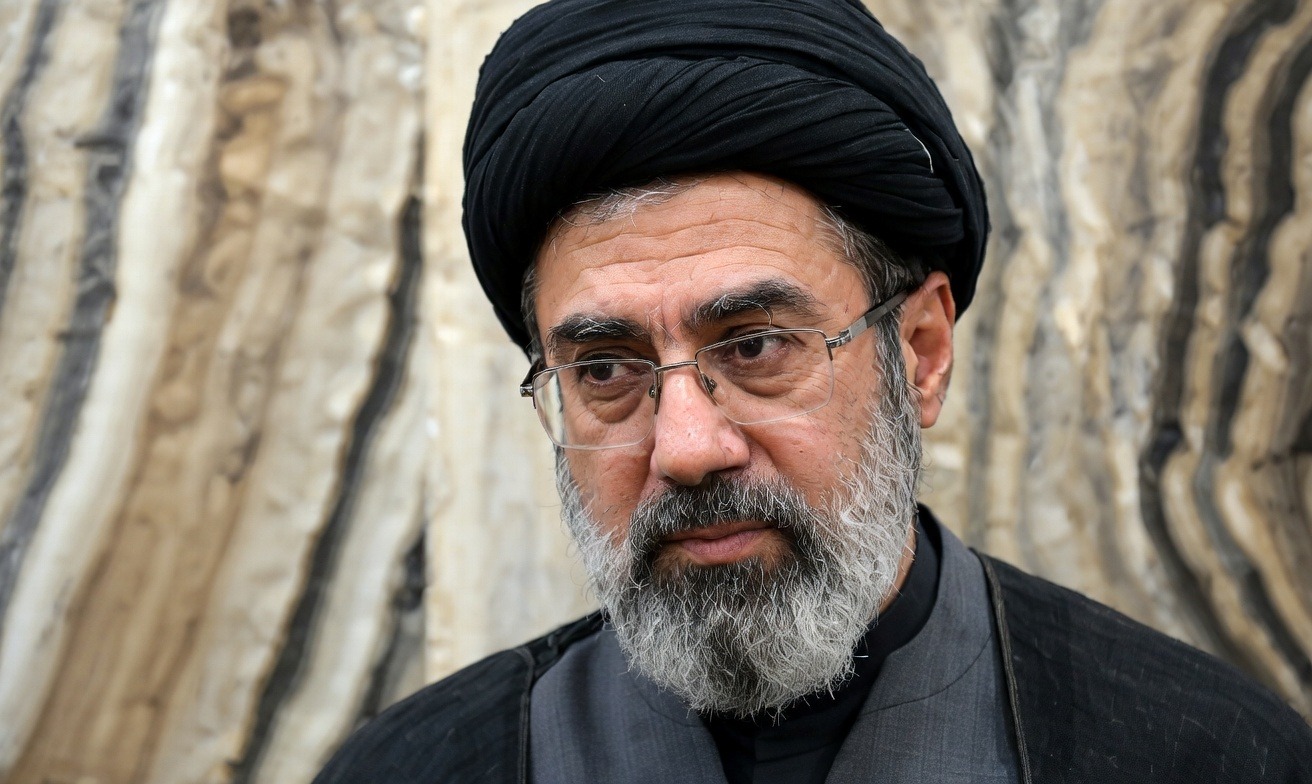
Iran entered a new and highly controversial political chapter on March 8, 2026, when senior clerical authorities announced the appointment of Mojtaba Khamenei as the country’s new Supreme Leader following the assassination of his father, Ali Khamenei. The leadership transition occurred amid the rapidly escalating military confrontation involving Iran, Israel, and the United States, a conflict that has already triggered widespread geopolitical tensions and global economic disruptions.
According to Iranian officials, Ali Khamenei was killed on February 28, 2026, during a series of Israeli military strikes targeting strategic political and military locations in the Iranian capital, Tehran. The attacks were part of an intensifying regional confrontation that began earlier in the year following a series of missile exchanges and retaliatory operations between Iranian forces and Israeli defense units. The strike that killed Khamenei reportedly targeted a heavily secured government complex where senior Iranian officials were gathered for emergency security consultations.
Ali Khamenei had served as Iran’s Supreme Leader since 1989, making him one of the longest-serving political leaders in the modern Middle East. During his nearly four decades in power, he held ultimate authority over the country’s military, judiciary, and major state institutions. His death marked one of the most dramatic leadership crises in the history of the Islamic Republic and immediately raised questions about the future of Iran’s political structure.
Following confirmation of his death, Iran’s powerful clerical body known as the Assembly of Experts convened an emergency session in Tehran to determine a successor. Under Iran’s constitution, the Assembly of Experts is responsible for appointing and supervising the Supreme Leader, the highest political and religious authority in the country. The council, composed of dozens of senior Islamic scholars and clerics, met behind closed doors for several days before announcing Mojtaba Khamenei as the new leader on March 8, 2026.
Mojtaba Khamenei, believed to be in his mid-fifties, has long been considered a powerful figure within Iran’s conservative political establishment despite holding no official elected office. Over the years he built significant influence through close relationships with senior clerics and commanders within the Islamic Revolutionary Guard Corps, one of the most powerful institutions in Iran responsible for protecting the country’s political system and national security interests.
Shortly after the announcement of his appointment, senior commanders within the Revolutionary Guard publicly pledged loyalty to the new leader, describing the transition as a continuation of the ideological path established by the Islamic Republic after the Iranian Revolution. Iranian state media broadcast statements from military and political officials urging national unity as the country confronts what they describe as an unprecedented external threat.
The appointment of Mojtaba Khamenei has sparked significant controversy both within Iran and internationally. Critics argue that the succession represents a move toward dynastic leadership within a political system that was originally founded on the rejection of hereditary rule. The Islamic Republic was established in 1979 after the overthrow of the monarchy led by Mohammad Reza Pahlavi, with revolutionary leaders promising a government guided by religious principles rather than family inheritance.
Because Mojtaba Khamenei is the son of the previous Supreme Leader, some political observers believe the appointment could fundamentally reshape perceptions of Iran’s governing system. Reform advocates inside and outside the country have expressed concern that the transition may consolidate power within a small circle of religious and military elites.
International reactions to the announcement have been swift. Officials in Washington and Tel Aviv warned that the leadership change is unlikely to alter Iran’s strategic posture in the ongoing conflict. Analysts in both countries suggest that Mojtaba Khamenei is expected to maintain a hardline approach toward Western powers and Israel, particularly given his longstanding connections to conservative factions within Iran’s political structure.
The new Supreme Leader assumes power at one of the most volatile moments in Iran’s modern history. The conflict involving Iran, Israel, and the United States has already expanded across several parts of the Middle East, with missile attacks, drone strikes, and military mobilizations reported across multiple countries. Rising tensions have also triggered disruptions in global oil markets and international transportation routes.
Within Iran, government officials have sought to present the leadership transition as a demonstration of institutional stability. Senior members of parliament and security officials issued statements calling on citizens to support the new leadership and defend the country against foreign pressure.
Mojtaba Khamenei now faces the immense challenge of guiding Iran through a period marked by military confrontation, economic sanctions, and internal political tensions. As Supreme Leader, he will hold ultimate authority over Iran’s armed forces, foreign policy decisions, and strategic direction, giving him significant influence over how the country responds to the ongoing regional crisis.
Political analysts across the Middle East and the wider international community say the coming months will be critical in determining how the new leader shapes Iran’s policies during a period of extraordinary uncertainty. His decisions regarding military strategy, diplomatic engagement, and domestic governance could play a decisive role in determining whether the current conflict escalates further or opens the possibility for negotiations aimed at reducing tensions across the region.