


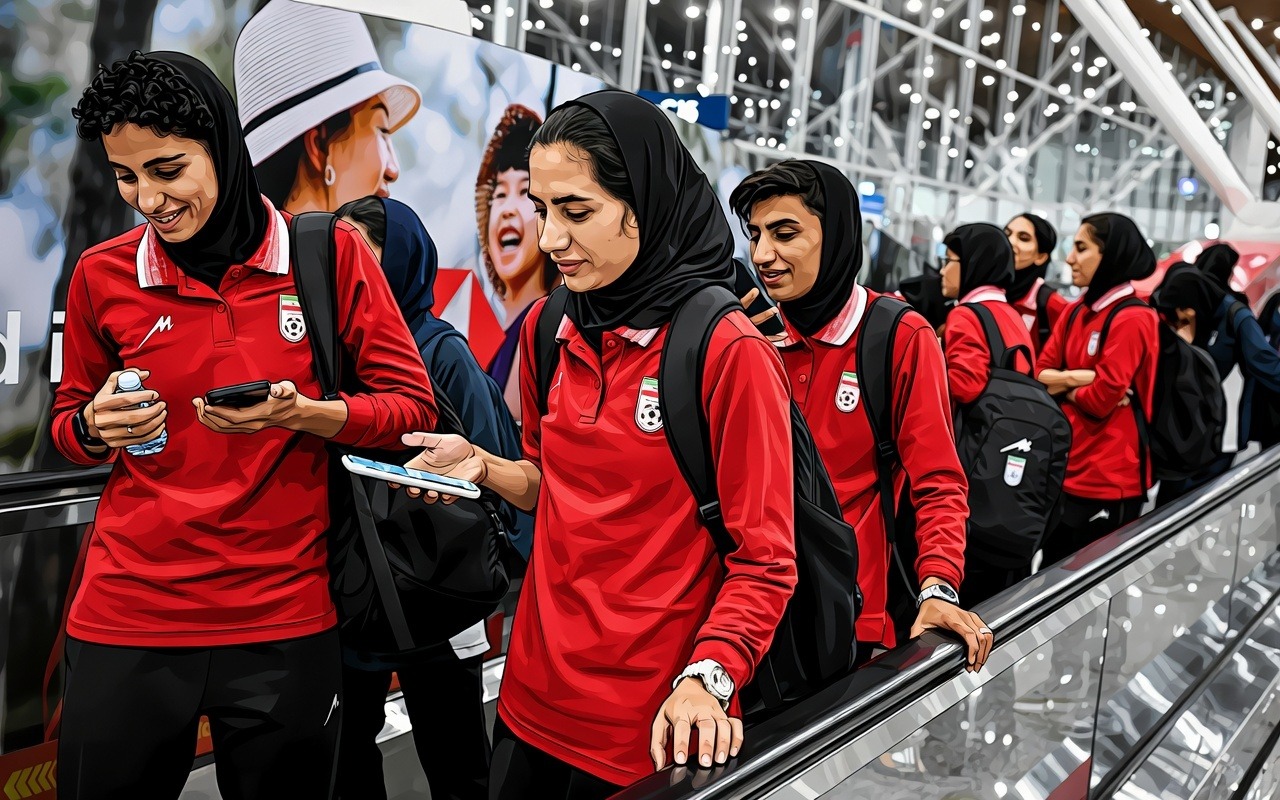
At the 2026 AFC Women’s Asian Cup in Australia in early March 2026, members of Iran’s women’s national football team triggered a major controversy that has drawn international attention and raised questions about athlete rights, political expression, and the safety of athletes under authoritarian governments.
Ahead of their opening match against South Korea on March 3, 2026, the Iran women’s national team refused to sing the Islamic Republic’s national anthem, instead remaining silent as the anthem played. The gesture — widely interpreted as a silent protest linked to broader political unrest and opposition to Iran’s hardline leadership — was seen by some supporters as an act of solidarity with those opposing the Iranian regime and by others as a sensitive political statement amid rising tensions in the country.
The team’s refusal to perform the anthem drew immediate domestic backlash. Iranian state media and government commentators labeled the players “traitors” and “wartime traitors,” language that alarmed human rights advocates and diaspora activists who warned that the players could face severe reprisals if they returned to Iran.
Under intense pressure from Iranian authorities and amid explicit threats that extended to players’ family members, the squad reportedly sang the national anthem before their second group match on March 5, 2026. Temporary compliance did little to ease concerns, however, after members of the team were seen making what appeared to be SOS hand signals from their team bus following their final group match on March 8, 2026.
As fears for their safety mounted, five players — including forward Zahra Ghanbari, the team’s all-time top scorer — left the team’s training camp in Australia on March 9 and sought refuge with the assistance of the Australian authorities. These players were granted humanitarian visas by the Australian government, which cited serious concerns that they would be persecuted if forced to return to Iran.
News of the asylum bids sparked an international debate. U.S. President Donald Trump publicly urged the Australian government to protect the athletes, saying Iran would likely punish them severely if they returned home. Human rights groups and diaspora activists also called for broader asylum offers and protections for the players in the wake of the protests.
The controversy has spread beyond sport into broader diplomatic and human rights discussions. Critics of Tehran’s response pointed to the lack of freedom of expression and the risks faced by women in Iran who challenge political orthodoxy, while others stressed that major sporting events should not be platforms for coercive state politics.
The situation remains fluid. Reports emerged that two additional team members also received visas and chose to stay in Australia, taking the total number of asylum seekers to at least seven. Meanwhile, concerns persist for remaining members of the delegation who had returned to Iran and for the safety of the families of players abroad.
The dispute highlights the delicate balance between athletic competition and political expression, and the risks faced by those who defy their governments on the international stage. Even as the players’ actions have been lauded by many observers as courageous, they have also underscored how sport can become entwined with national politics and human rights issues, especially in contexts where dissent carries significant personal danger.


