


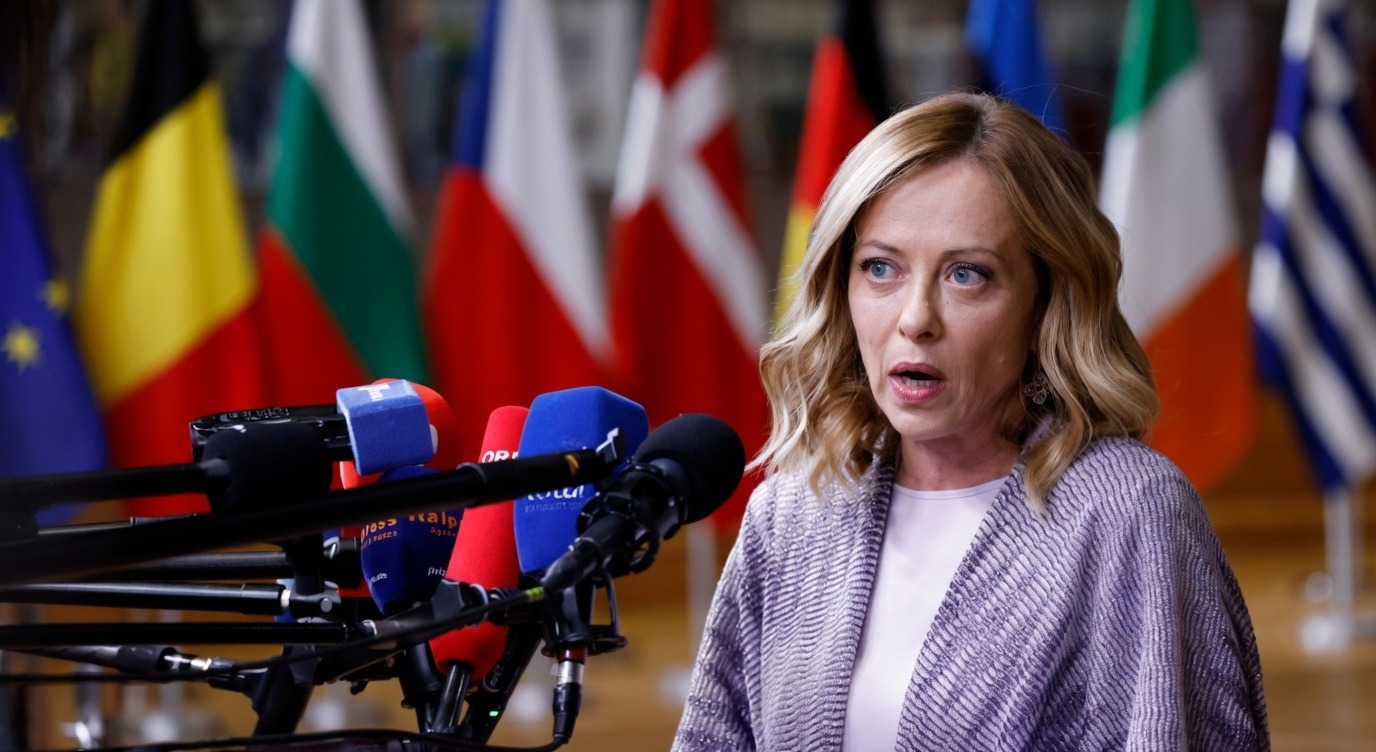
Italian Prime Minister Giorgia Meloni is facing mounting political pressure at home over her government’s perceived alignment with U.S. President Donald Trump amid the ongoing Middle East conflict involving the United States, Israel, and Iran. The backlash comes as opposition leaders, analysts, and civic groups criticize Meloni’s close ties with Washington, warning that Italy risks compromising its credibility within Europe while entangling itself in an increasingly unpopular and volatile foreign conflict.
Meloni, who has led Italy since October 2022 and heads the right-wing coalition party Brothers of Italy (Fratelli d’Italia), publicly reaffirmed Italy’s support for U.S. and Israeli military operations during a press briefing in Rome on March 11, 2026. She described the U.S. and Israel as “key partners in maintaining security and stability in the Middle East” and signaled Italy’s readiness to provide diplomatic, logistical, and intelligence support to ongoing operations.
The remarks drew immediate criticism from opposition leaders. Enrico Letta, leader of the Democratic Party (PD), denounced Meloni’s comments on March 12, calling them “an abdication of Italy’s independent foreign policy” and accusing her of prioritizing Washington’s agenda over European cohesion and humanitarian concerns. Letta emphasized the rising civilian toll in Tehran, Beirut, and Dubai, stating, “Italy should advocate for restraint and diplomacy, not position itself as a junior partner in a conflict that endangers innocent lives.”
Matteo Renzi, former Prime Minister and head of Italia Viva, similarly criticized Meloni on March 12, warning that uncritical alignment with Trump could undermine Italy’s standing in the European Union and risk entangling the nation in a military confrontation it cannot control. Renzi added that Italy’s energy and economic interests are particularly vulnerable, given the spike in oil and gas prices resulting from disruptions in the Strait of Hormuz and missile threats across the Gulf.
The Italian public response has also been increasingly vocal. Opinion polls conducted between March 11–13, 2026, indicate that a majority of citizens oppose Italy’s overt alignment with U.S. military operations in the Middle East. Street protests in Rome, Milan, Naples, and Turin drew hundreds of demonstrators demanding Italian neutrality and advocating for humanitarian interventions rather than political or military entanglement. Protesters carried banners calling for peace and criticized both the Trump administration and Meloni’s government for escalating tensions in the region.
Economists and security analysts warn that Italy’s position could have broader repercussions for the national economy. Italy imports a substantial share of its oil and natural gas from the Gulf, and disruptions to maritime transport and rising crude prices have already contributed to inflationary pressures. The spike in Brent crude above $100 per barrel as of March 12–13, 2026, is exacerbating energy costs for businesses and households, prompting concerns about domestic economic stability amid the political controversy.
At the European level, Meloni’s stance has drawn cautionary statements from key figures. Josep Borrell, EU High Representative for Foreign Affairs, emphasized from Brussels on March 12 that “European unity and coordinated diplomacy are essential in responding to the Middle East crisis. Italy’s unilateral alignment with the United States could complicate collective European efforts to mediate and protect civilian populations.” Analysts note that Italy’s reputation as a credible intermediary in EU foreign policy may be at stake if it appears to prioritize U.S. objectives over collective European interests.
Within Meloni’s own coalition, the debate is intensifying. Some centrist and moderate members express concern over growing domestic unrest, while hardline supporters applaud the government’s firm stance as a demonstration of loyalty to a key strategic partner. Chief of Staff Gianluca Giorgetti has defended the government’s position, stressing that Italy’s support is largely diplomatic and logistical rather than combat-related. Giorgetti also highlighted that no Italian troops have been deployed to active combat zones in the Middle East.
Political analysts note that the situation presents a delicate balancing act for Meloni. While maintaining a strong alliance with the United States may enhance Italy’s influence in transatlantic affairs, the growing domestic backlash, rising energy costs, and potential erosion of credibility within the European Union pose significant risks. Analysts also warn that continued civilian casualties in Tehran, Beirut, Dubai, and other conflict zones, along with rising global attention, will keep Italian foreign policy under scrutiny.
International observers have pointed to the Middle East conflict as a test of Italian diplomacy. Humanitarian organizations, including the United Nations and Red Cross agencies, have urged Italy and other European nations to advocate for restraint and civilian protection. Failure to do so, critics argue, could leave Italy vulnerable to accusations of complicity in escalating violence or neglecting international humanitarian norms.
As of March 13, 2026, Meloni continues to defend her government’s position, reiterating Italy’s commitment to global security, NATO obligations, and partnership with the United States. However, opposition leaders, civic groups, and a growing number of analysts suggest that political costs may continue to rise, with potential implications for Meloni’s domestic support, parliamentary negotiations, and Italy’s role in European diplomacy.


