


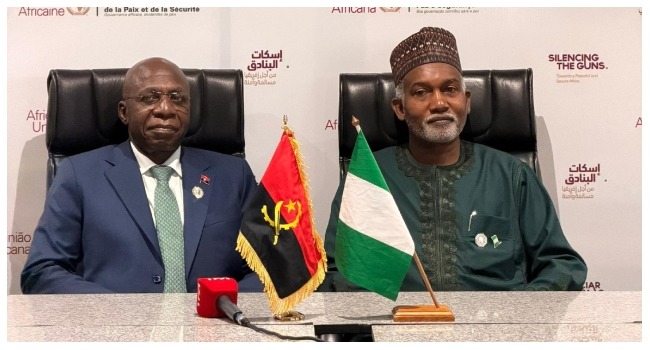
The Federal Government of Nigeria and the Republic of Angola have formalized a diplomatic mobility agreement aimed at easing the movement of diplomats and government officials between the two nations. The signing ceremony took place on Monday, 10 February 2026, at the Ministry of Foreign Affairs in Abuja, marking a significant milestone in the ongoing efforts to strengthen bilateral relations and regional cooperation.
The ceremony was attended by Nigeria’s Minister of Foreign Affairs, Geoffrey Onyeama, and Angola’s Minister of External Relations, Tete António, along with senior diplomats, permanent secretaries, and senior government officials from both countries. Speaking at the event, Minister Onyeama noted that the pact would streamline visa and travel procedures for accredited diplomatic personnel, reduce bureaucratic delays, and create a framework for smoother official interactions. He emphasized that efficient diplomatic mobility is essential to fostering timely communication and collaboration on political, economic, and security matters between the two countries.
Minister Tete António, representing Angola, highlighted the agreement as a testament to the shared commitment of both governments to enhance bilateral engagement. He noted that the pact would facilitate the movement of consular officials, government envoys, and diplomatic staff, enabling them to undertake official duties with greater efficiency. “This agreement lays the groundwork for strengthened cooperation in trade, investment, security, and cultural exchanges,” António said, adding that it underscores Angola’s dedication to deepening partnerships with West African countries.
The diplomatic mobility pact provides for a number of practical measures, including simplified visa issuance for diplomatic personnel, reciprocal recognition of diplomatic privileges, and the establishment of joint committees to monitor and review the implementation of the agreement. Both governments have agreed to hold periodic consultations to address any challenges and ensure that the pact continues to meet the operational needs of diplomatic missions in Abuja, Lagos, and Luanda.
Analysts note that the timing of the agreement coincides with growing cooperation between Nigeria and Angola in several strategic areas. These include energy partnerships, particularly in oil and gas exploration; regional security collaborations targeting cross-border crime and militancy; and trade facilitation aimed at expanding imports, exports, and investment opportunities between West and Southern Africa. By reducing administrative obstacles for diplomats, the agreement is expected to accelerate decision-making processes and strengthen communication channels at the highest levels of government.
The agreement also complements existing bilateral treaties and frameworks, including trade agreements, cultural exchange programs, and regional security initiatives under the Economic Community of West African States (ECOWAS) and the Southern African Development Community (SADC). Observers suggest that the enhanced diplomatic mobility could pave the way for joint projects, academic partnerships, and coordinated policy responses to regional challenges such as climate change, migration, and public health crises.
Both Ministries of Foreign Affairs have pledged to ensure that the agreement is implemented fully, with training and guidance provided to diplomats and administrative staff to facilitate the new procedures. The Nigerian and Angolan governments have also emphasized the importance of transparency, efficiency, and mutual respect in carrying out the provisions of the pact.
Experts have described the agreement as a forward-looking initiative that could serve as a model for diplomatic cooperation across Africa, promoting more seamless interactions between governments and strengthening continental integration. By enabling diplomats and officials to move more freely and carry out their responsibilities effectively, the pact is expected to contribute not only to stronger bilateral relations between Nigeria and Angola but also to regional stability, economic growth, and enhanced political dialogue across Africa.
The signing of this agreement has been welcomed by business communities, civil society groups, and international observers, who anticipate that it will lead to faster implementation of bilateral projects, increased foreign investment, and greater opportunities for cultural and educational exchanges between the two countries. Both governments are expected to issue guidelines in the coming weeks to operationalize the pact fully, ensuring that diplomatic personnel, government officials, and accredited agencies can benefit immediately from the new arrangements.
In conclusion, the Nigeria-Angola diplomatic mobility agreement represents a strategic effort to facilitate official travel, strengthen bilateral cooperation, and promote more robust regional partnerships. By reducing bureaucratic hurdles and improving the ease of movement for diplomats and government representatives, both nations have taken a concrete step toward deeper engagement, mutual understanding, and sustained collaboration across political, economic, and social sectors.


