


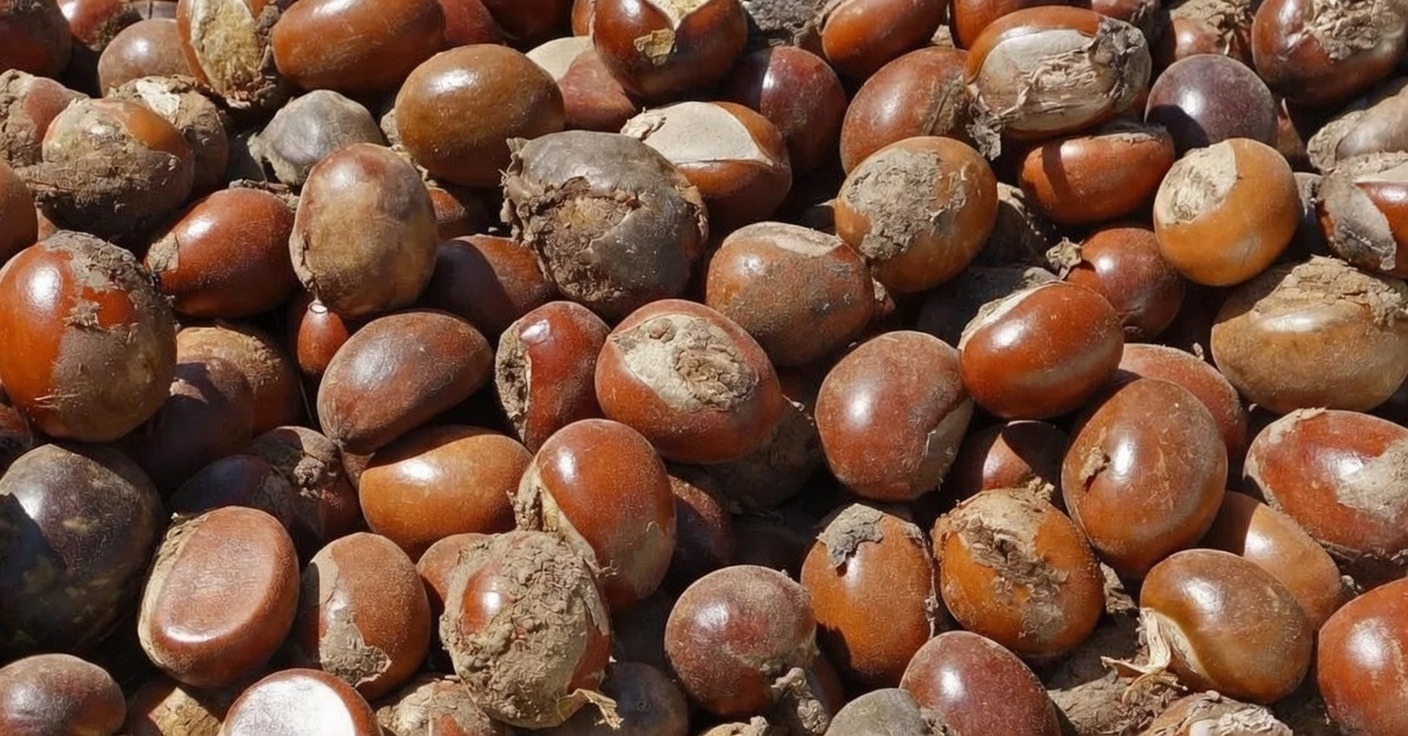
President Bola Ahmed Tinubu has approved a far-reaching overhaul of Nigeria’s shea nut export policy, withdrawing previously issued waivers and extending the ban on the export of raw shea nuts for another 12 months, in what officials describe as a decisive step toward strengthening local processing capacity and increasing non-oil export earnings.
The directive was formally communicated on 26 February 2026 following a Federal Executive Council briefing in Abuja. Senior government officials said the renewed restrictions are part of the administration’s industrialisation agenda aimed at deepening value addition in Nigeria’s agricultural commodities sector.
Under the revised policy framework, exporters will no longer be permitted to ship unprocessed shea nuts abroad. Only semi-processed or fully processed derivatives such as shea butter, stearin, and refined shea-based products will qualify for export clearance. Officials at the Federal Ministry of Industry, Trade and Investment confirmed that all outstanding waivers previously granted to selected exporters have been revoked with immediate effect.
Government sources explained that the extension of the ban followed a policy review which concluded that the earlier suspension period had not fully achieved its objective of stimulating domestic refining capacity. According to the presidency, Nigeria continues to lose significant export value by shipping raw shea nuts to Europe and Asia, where they are processed into high-value cosmetics, confectionery fats, and pharmaceutical ingredients.
Nigeria is widely regarded as one of the largest producers of shea nuts globally, with production concentrated in states such as Niger, Kwara, Kebbi, Oyo, and Benue. The shea tree, which grows naturally across the savannah belt, supports hundreds of thousands of rural households, particularly women involved in harvesting and primary processing. Industry data indicate that the global demand for shea derivatives has increased steadily over the past decade, driven by expanding markets for organic cosmetics and plant-based food substitutes.
At a policy briefing in Abuja, the Executive Director of the Nigerian Export Promotion Council, Nonye Ayeni, said the new directive aligns with Nigeria’s broader strategy to expand non-oil exports and reduce vulnerability to fluctuations in crude oil revenue. She noted that exporting processed shea products could generate significantly higher foreign exchange earnings compared to raw nut shipments.
“We are repositioning the shea industry to move up the global value chain,” Ayeni said. “This policy is designed to encourage investment in processing plants, create skilled jobs, and ensure that more of the economic benefit remains within Nigeria.”
The Nigeria Customs Service has been directed to intensify border monitoring and ensure strict compliance with the renewed export restrictions. Customs officials are expected to deploy enhanced tracking systems at major land borders and seaports, including Lagos and Port Harcourt, amid concerns that smuggling networks could attempt to circumvent the ban through informal cross-border routes.
Industry stakeholders have expressed mixed reactions. Local processors and manufacturing associations have welcomed the extension, arguing that it provides policy certainty that could attract both domestic and foreign investment into refining facilities. Several operators in Niger and Kwara states said the decision could stimulate the establishment of modern extraction plants capable of meeting international quality standards.
However, some exporters have warned of short-term disruptions, particularly for traders who rely on established overseas contracts for raw nut supply. A commodities trader based in Minna, Niger State, said that while the long-term objective is understandable, transitional support mechanisms will be necessary to prevent income losses among small-scale aggregators.
Economic analysts say the effectiveness of the ban will depend heavily on complementary reforms, including improved access to credit for agro-processors, stable electricity supply, and infrastructure upgrades to reduce logistics costs. They caution that without adequate domestic processing capacity, production bottlenecks could emerge, potentially affecting rural incomes.
President Tinubu’s administration has consistently emphasised economic diversification since taking office in May 2023. The shea nut export reform is seen as part of a broader push to transition Nigeria from a raw commodity exporter to a value-added manufacturing hub. Similar policy debates have emerged in relation to cocoa, cashew, and solid mineral exports, where stakeholders have called for stronger domestic beneficiation frameworks.
Policy observers note that the success of the shea export overhaul will likely be assessed over the next 12 months, with periodic reviews expected to measure its impact on export volumes, processing capacity growth, and foreign exchange inflows. Government officials indicated that the ban could be reassessed at the end of the extended period, depending on measurable progress within the sector.
As global demand for sustainable and ethically sourced agricultural products continues to rise, Nigeria’s attempt to reposition its shea industry reflects a broader ambition to capture greater value within international supply chains while strengthening rural economic resilience.