


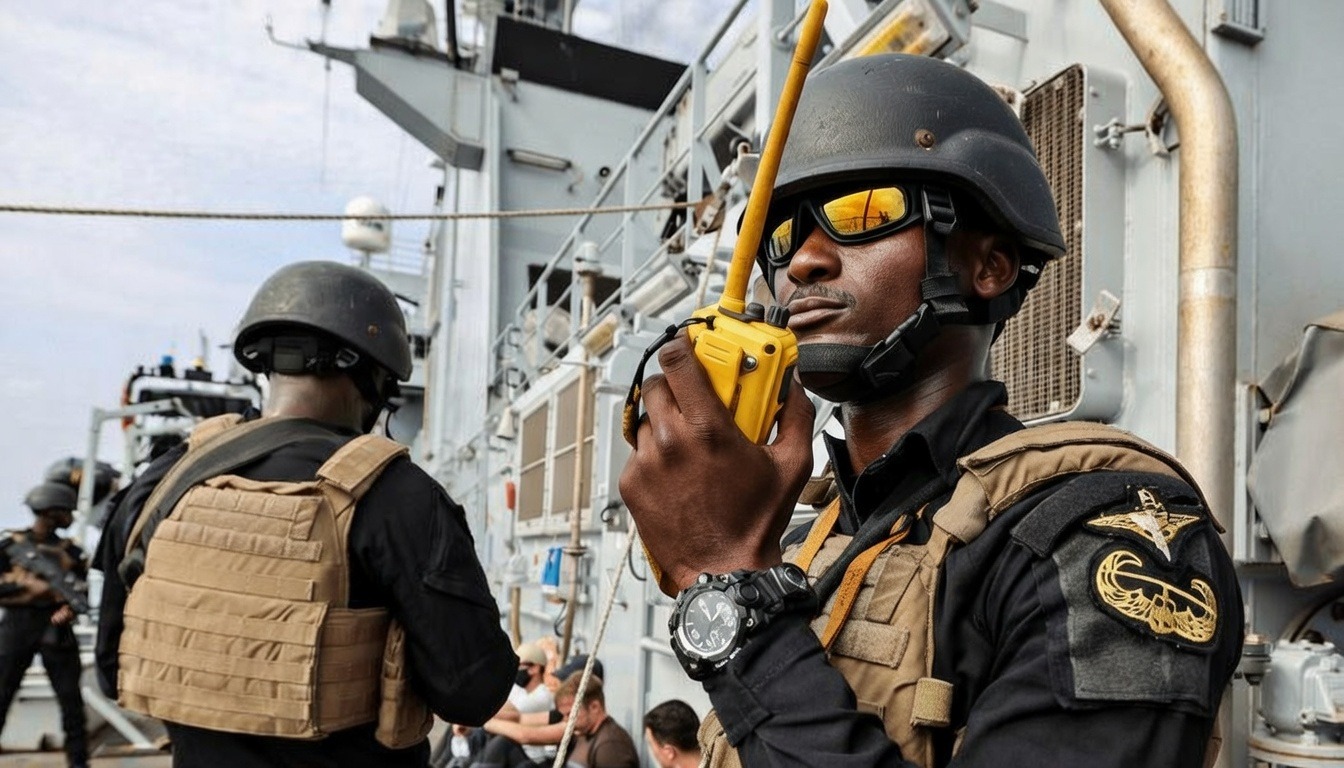
The Federal Government of Nigeria has intensified efforts to expand investment in the nation’s security and defense sector through a comprehensive set of reforms aimed at strengthening domestic military production, modernizing defense infrastructure, and attracting international investment into the country’s defense industry.
The initiative is anchored on reforms linked to the Defence Industries Corporation of Nigeria, particularly the implementation of the Defence Industries Corporation of Nigeria Act 2023, which was signed into law by President Bola Ahmed Tinubu on 18 November 2023 in Abuja. The new legislation replaced earlier legal frameworks governing the corporation and introduced sweeping reforms intended to transform Nigeria’s defense manufacturing sector into a modern and technologically advanced industry.
Government officials say the new law significantly expands the mandate and operational capacity of the Defence Industries Corporation of Nigeria by allowing it to establish subsidiaries, form partnerships with private investors, collaborate with foreign defense manufacturers, and expand production facilities across the country.
The Defence Industries Corporation of Nigeria, headquartered in Kaduna, was originally established in 1964 to supply military equipment to the Nigerian armed forces. Over the years, however, limited investment, outdated infrastructure, and reliance on imported technology constrained its production capabilities.
Under the current reforms, the Nigerian government aims to reposition the corporation as a central pillar of the country’s military-industrial development.
Speaking during a defense policy briefing on 12 February 2026 in Abuja, Nigeria’s Minister of Defence, Mohammed Badaru Abubakar, said the government is prioritizing local defense manufacturing as a strategic national objective.
Badaru explained that strengthening domestic production capacity will reduce Nigeria’s dependence on imported weapons and military hardware while ensuring that the Nigerian Armed Forces have reliable and timely access to essential equipment.
According to the minister, the reforms will enable Nigeria to expand the local production of military equipment such as small arms, ammunition, armored vehicles, protective gear, and other tactical systems required for modern military operations.
Badaru also noted that the government intends to attract foreign investors and defense technology partners who can contribute technical expertise and advanced manufacturing capabilities to Nigeria’s growing defense sector.
The Director-General of the Defence Industries Corporation of Nigeria, Babatunde Ibrahim Alaya, said the corporation has already begun forming strategic partnerships with private companies and international defense firms to accelerate modernization efforts.
Speaking on 21 July 2025 in Kaduna, Alaya confirmed that DICON had entered into a major joint venture agreement worth approximately two billion dollars with private investors to develop new production facilities capable of manufacturing ammunition, drones, armored equipment, and other advanced defense technologies within Nigeria.
He explained that the investment is expected to expand Nigeria’s defense manufacturing capacity significantly while also supporting technology transfer and technical training for local engineers and defense technicians.
The Chief of Defence Staff, Christopher Musa, has also emphasized the importance of building a strong domestic defense industry in order to enhance the operational effectiveness of Nigeria’s military.
During a security briefing on 20 January 2026 in Abuja, Musa said Nigeria must strengthen its internal capacity to produce military equipment if it hopes to respond effectively to emerging security threats across the country.
Nigeria has faced multiple security challenges in recent years, including insurgency in the northeastern region associated with extremist groups operating around the Lake Chad Basin, widespread banditry in the northwestern states, and communal conflicts in parts of the central region.
These security threats have placed increasing pressure on the government to strengthen the operational readiness of its armed forces and ensure a more reliable supply chain for military equipment.
Security analysts say the modernization of the Defence Industries Corporation of Nigeria could significantly improve the country’s ability to equip its military while also reducing the financial and logistical burdens associated with importing defense hardware from foreign suppliers.
Beyond military considerations, government officials say the expansion of Nigeria’s defense manufacturing sector is also expected to generate economic benefits.
The defense industry reforms are projected to create new employment opportunities for engineers, technicians, researchers, and manufacturing specialists while stimulating growth in related sectors such as metallurgy, electronics, and industrial engineering.
As part of the broader modernization effort, the Ministry of Defence has also initiated partnerships between DICON and academic institutions to strengthen research and development in defense technologies.
On 2 May 2024, the Ministry of Defence announced a collaboration between DICON and the University of Abuja aimed at supporting innovation in the design and production of military hardware.
The partnership is expected to encourage scientific research, technological innovation, and knowledge transfer between Nigerian universities and the defense industry.
Officials say the long-term objective of the reforms is to build a self-sustaining military-industrial complex capable of supporting Nigeria’s security needs while positioning the country as a leading defense manufacturing hub in West Africa.
If successfully implemented, the modernization of Nigeria’s defense industry could transform the country into a major producer of military equipment within Africa, supplying both domestic forces and potentially exporting defense products to allied countries across the continent.
Government officials say the reforms represent a critical step toward strengthening national security, enhancing technological capacity, and advancing Nigeria’s long-term strategic and economic interests.