


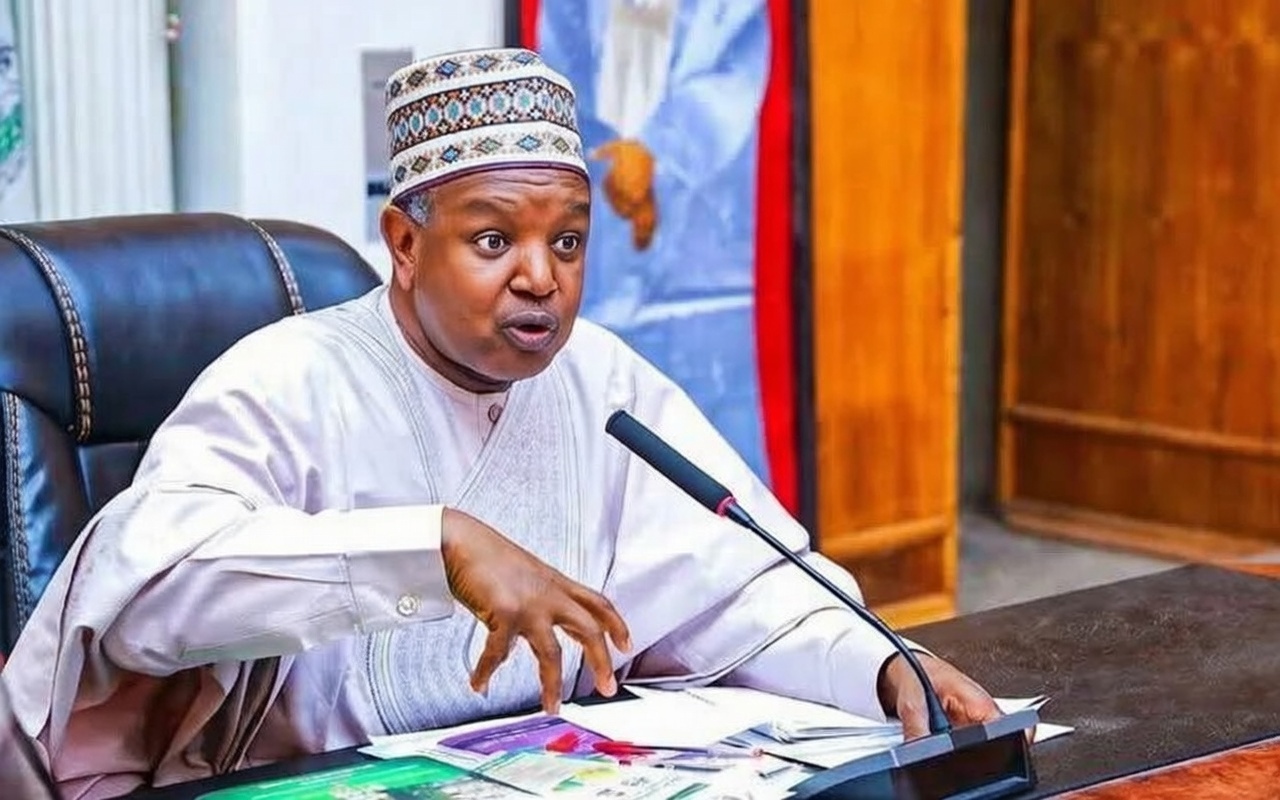
The Federal Government of Nigeria has reaffirmed its commitment to achieving net-zero carbon emissions, with the Minister of Marine and Blue Economy, Adegboyega Oyetola, declaring that the country remains firmly aligned with global climate obligations and determined to accelerate decarbonisation across key sectors of the economy.
Oyetola made the remarks on 26 February 2026 during a high-level stakeholder consultation in Abuja, attended by senior officials from the Federal Ministry of Environment, representatives of the Nigerian Maritime Administration and Safety Agency (NIMASA), industry operators, and climate policy experts. He said Nigeria’s climate strategy is being strengthened to ensure consistency with the objectives of the Paris Agreement and the country’s own Climate Change Act of 2021.
According to the minister, Nigeria’s pledge to attain net-zero emissions by 2060 remains unchanged, despite economic headwinds and global energy market volatility. He stressed that climate responsibility and economic development are not mutually exclusive, noting that Nigeria’s transition pathway must reflect its developmental realities as Africa’s largest oil producer and most populous nation.
“Our net-zero target is not symbolic. It is anchored in law, policy, and measurable sectoral reforms,” Oyetola said. “We are developing a coordinated National Action Plan that will guide emissions reduction across transportation, maritime, oil and gas, power generation, and industrial production.”
He explained that the maritime sector has become a central focus of Nigeria’s decarbonisation agenda, particularly as global shipping regulations tighten under the oversight of the International Maritime Organization. The IMO has adopted increasingly ambitious greenhouse gas reduction strategies aimed at achieving net-zero emissions from international shipping by mid-century, a shift that directly affects countries with major ports and shipping routes.
Nigeria’s ports in Lagos, Port Harcourt, and Calabar handle a substantial volume of West African trade, making regulatory compliance and environmental sustainability critical to maintaining competitiveness. Oyetola said the National Action Plan would incorporate incentives for cleaner marine fuels, adoption of energy-efficient vessel technologies, improved waste management systems in ports, and the development of green shipping corridors.
Officials at the meeting indicated that NIMASA is reviewing existing maritime guidelines to incorporate stricter emissions monitoring frameworks and digital tracking systems. The agency is also exploring partnerships with foreign investors and multilateral institutions to finance port modernisation projects that reduce carbon intensity.
Climate analysts note that Nigeria’s reaffirmation comes amid increased international scrutiny of emerging economies’ climate commitments. At COP28 in Dubai in December 2023, participating nations were urged to submit updated nationally determined contributions (NDCs) with clearer implementation roadmaps. Nigeria subsequently pledged to deepen energy efficiency measures and expand renewable energy capacity, including solar and gas-based transitional power infrastructure.
Despite these commitments, Nigeria’s economy remains heavily reliant on fossil fuel exports, with crude oil accounting for the majority of foreign exchange earnings. This dependence has complicated the pace of transition, particularly as the government seeks to stabilise revenues and address domestic energy shortages. Experts argue that balancing economic stability with climate ambition will require sustained policy coherence and transparent funding mechanisms.
Dr. Amina Yusuf, a climate governance researcher based in Abuja, said Nigeria’s focus on maritime decarbonisation reflects a strategic understanding of global trade trends. “International markets are increasingly factoring carbon intensity into trade and investment decisions. If Nigeria modernises its ports and shipping systems early, it could strengthen its competitive advantage in regional commerce,” she said in an interview on Thursday.
Oyetola also emphasised the concept of a “just transition,” assuring stakeholders that workers and communities dependent on carbon-intensive industries would not be left behind. He stated that retraining programmes, green job initiatives, and private sector incentives would form part of the broader implementation framework coordinated by the National Council on Climate Change.
The council, established under Nigeria’s Climate Change Act signed in 2021, is mandated to oversee inter-ministerial coordination and monitor progress toward emissions reduction targets. Officials confirmed that periodic reviews and public reporting mechanisms will be integrated into the National Action Plan to enhance transparency and accountability.
International observers have suggested that Nigeria’s climate diplomacy could shape its standing ahead of COP31 scheduled for late 2026. By reaffirming its net-zero target and expanding sector-specific strategies, Nigeria appears intent on positioning itself as a leading voice in African climate negotiations while safeguarding its energy-driven economy.
As global pressure mounts for accelerated climate action, Nigeria’s renewed pledge underscores the government’s attempt to balance environmental responsibility with economic pragmatism, navigating the complex intersection of development, energy security, and international climate governance.