


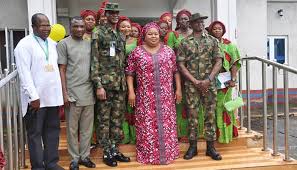
The 176 Guards Battalion of the Nigerian Army has completed a four-day Skill Acquisition and Entrepreneurship Programme for 103 wives of its personnel, offering practical training and starter-kits to support sustainable livelihoods.
Held at the General O.A. Azazi Barracks in Gwagwalada, Abuja, the initiative organized by the battalion’s Commanding Officer, Lt. Col. Oladimeji Ajongbo was themed “Entrepreneurship Wisdom to Maximise Skills and Opportunities,” and focused on equipping participants with income-generating skills.
Over the course of the training, participants were taught small-scale business skills, including paint manufacturing, yoghurt and granola production, scented-candle making, and general entrepreneurship and business management techniques. A special “showcase” was held where items produced during the training—branded under “Hawk Yoghurt” and “Hawk Paints”—were unveiled.
Upon completion, the women received starter kits and certificates. In addition, five beneficiaries were issued business-registration certificates by the Corporate Affairs Commission (CAC), signalling official recognition and facilitating their planned independent business operations.
As part of a hands-on conclusion to the programme, participants engaged in practical application painting two buildings within the barracks using the newly produced “Hawk Paints” underscoring the training’s real-world relevance and community impact.
Military analysts and advocacy groups have increasingly argued that empowering spouses of service members helps stabilize military families and by extension supports operational morale and national security reinforcing that economic stability at home can strengthen commitment on duty.
The empowerment drive is part of broader efforts by the Army to support welfare and entrepreneurial opportunities for military families, especially in recognition of the challenges faced by spouses given frequent relocations, deployments, and absence of their partners.