


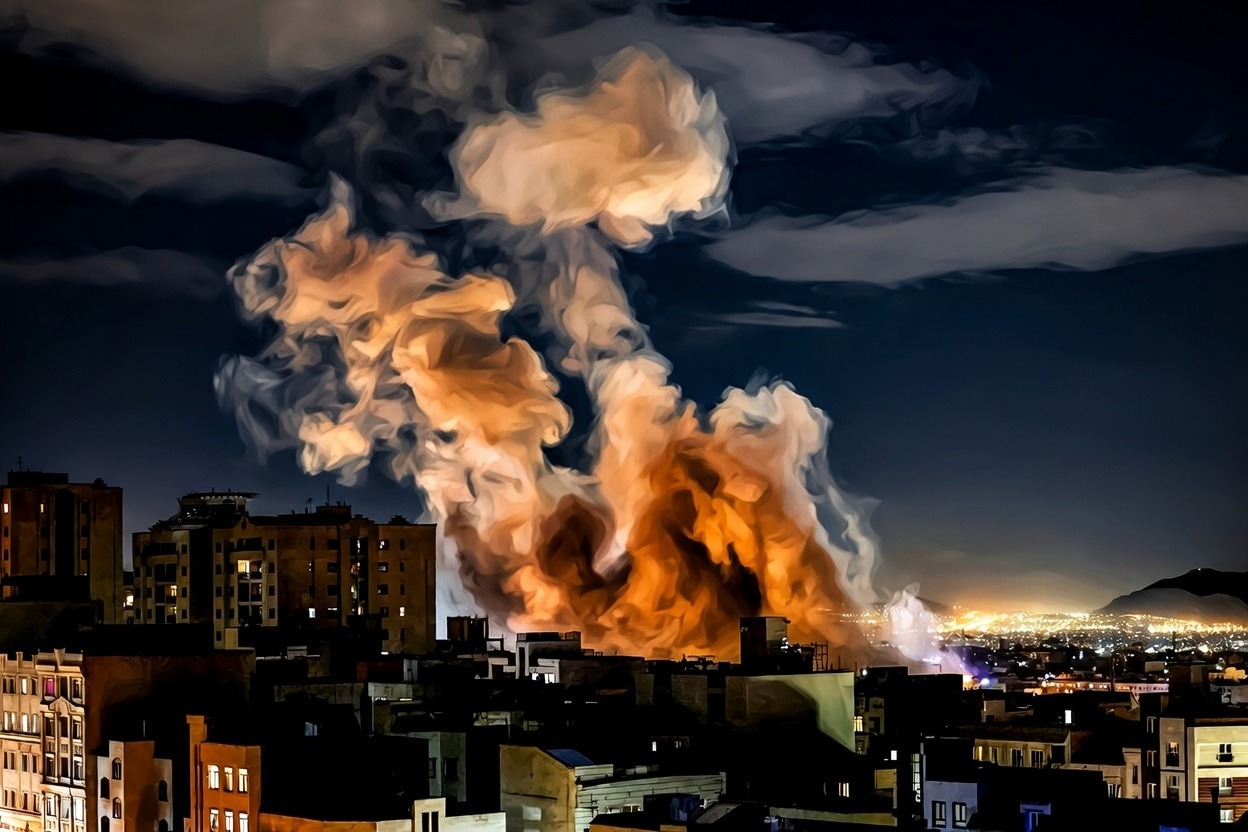
The conflict in the Middle East deepened significantly on Monday, March 2, 2026, as intensifying hostilities involving Israel, Iran and the Lebanese armed group Hezbollah expanded across multiple fronts, raising fears among regional leaders and international observers of a wider and more prolonged regional war.
The Israel Defense Forces confirmed that rockets and drones were launched from southern Lebanon toward northern Israeli communities in the early hours of Monday. Air raid sirens were activated across towns in the Galilee region, including communities near the Lebanese border, sending thousands of residents into shelters. Israeli military spokesperson Rear Admiral Daniel Hagari said several projectiles were intercepted by Israel’s air defense systems, while others landed in open areas. Emergency medical services reported a number of minor injuries and property damage, but no immediate large-scale casualties were confirmed on the Israeli side.
Israeli authorities ordered precautionary closures of schools and public institutions in several northern municipalities, while additional Iron Dome batteries were reportedly repositioned to reinforce air defenses. Prime Minister Benjamin Netanyahu held consultations with senior defense officials in Tel Aviv, emphasizing Israel’s readiness to respond decisively to further cross-border attacks.
In retaliation, Israeli fighter jets and artillery units launched what the military described as extensive and targeted strikes against Hezbollah positions in southern Lebanon. According to Israeli defense officials, the strikes focused on weapons storage facilities, rocket launch infrastructure, and operational command centers in areas including Tyre, Bint Jbeil, Marjayoun and Nabatieh. Thick plumes of smoke were seen rising above parts of southern Lebanon, and residents reported powerful explosions throughout the day.
Lebanese medical authorities said dozens of people were killed and many more wounded as a result of the strikes, though casualty figures continued to fluctuate as rescue operations progressed. Hospitals in Beirut and southern cities were placed on emergency status, with ambulances transferring casualties from border villages and densely populated districts. The Lebanese Red Cross reported that teams were working under difficult conditions amid continued bombardment.
Lebanese Prime Minister Najib Mikati convened an emergency cabinet meeting in Beirut and condemned the Israeli strikes as a serious violation of Lebanese sovereignty. He called on the international community and the United Nations to intervene urgently to prevent further escalation. Hezbollah officials, in statements carried by Lebanese media, defended their rocket fire as a response to Israeli military actions and signaled that operations would continue if Israeli strikes persisted.
The confrontation unfolded against the backdrop of heightened tensions between Israel and Iran. Reports of explosions in Tehran and Isfahan over the weekend had already intensified concerns of a direct confrontation between the two longtime adversaries. Iranian President Ebrahim Raisi, speaking in Tehran, condemned what he described as Israeli aggression and warned that Iran would not hesitate to defend its sovereignty and regional allies. Iranian military commanders were reported to be assessing response options amid heightened alert levels across key installations.
The crisis extended beyond the immediate Israel-Lebanon front when a British military installation in Cyprus was reportedly targeted by a suspected drone. The facility, part of the United Kingdom’s sovereign base areas on the island, plays a strategic role in regional surveillance and logistics. The United Kingdom’s Ministry of Defence confirmed that an unmanned aerial vehicle had been intercepted near the base perimeter. British Prime Minister Rishi Sunak described the development as deeply concerning and said the United Kingdom would take necessary measures to protect its personnel. Cypriot President Nikos Christodoulides announced heightened national security measures, citing the island’s proximity to the expanding conflict.
International diplomatic efforts intensified as the scale of the confrontation became clearer. United Nations Secretary-General António Guterres called for an immediate cessation of hostilities and urged all sides to exercise maximum restraint to avoid a humanitarian catastrophe. Diplomatic sources in New York indicated that consultations were underway regarding a possible emergency session of the Security Council. The United States Department of State reiterated support for Israel’s right to self-defense while urging de-escalation to prevent a broader regional conflagration. The European Union also appealed for calm, warning that further escalation could destabilize not only the Middle East but also global energy and security systems.
Financial markets reacted swiftly to the deteriorating security environment. Oil prices climbed sharply in early trading amid concerns about potential disruptions to critical shipping lanes and energy infrastructure in the Gulf. Airlines across Europe and Asia rerouted flights to avoid Israeli, Lebanese and parts of Iranian airspace, while several carriers temporarily suspended services to Tel Aviv and Beirut.
Security analysts noted that the current phase of the conflict marks a significant departure from previous cycles of limited cross-border exchanges. The combination of Hezbollah’s active engagement along Israel’s northern frontier, reported Israeli-linked operations inside Iran, and the targeting of a Western military installation in Cyprus suggests a rapidly widening theatre of operations. Experts warned that miscalculation or further retaliatory strikes could draw additional regional actors into the conflict.
As of Monday evening, March 2, 2026, no clear path to de-escalation had emerged. Military activity remained high on multiple fronts, civilian populations on both sides of the Israel-Lebanon border were on heightened alert, and diplomatic channels were working urgently to contain the crisis. Regional observers cautioned that the coming days would be decisive in determining whether the conflict can be contained or whether the Middle East is entering a sustained and far more destabilizing period of warfare.