


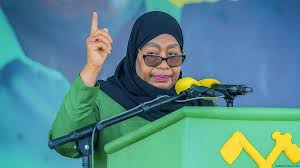
President Samia Suluhu Hassan was sworn in Monday November 3rd at a ceremony restricted to invited guests after winning a disputed October 29 general election that sparked days of violent protests in multiple cities. The inauguration, held on government grounds in the administrative capital Dodoma, represented a departure from past open-to-the-public swearing-in ceremonies and came amid heightened security across the country.
The election that produced the result was marred by the barring of two main opposition figures, widespread demonstrations and clashes between protesters and security forces. Protesters in Dar es Salaam, Shinyanga and Morogoro took to the streets to contest the vote and, in some places, to try to halt counting; authorities deployed the military to assist police in quelling unrest. Internet connectivity was reportedly intermittent in several regions during and after voting.
Tension remained high in Dar es Salaam on Monday after three days of demonstrations, with gas stations and shops closed and many employees working from home. The UN human rights office said there were credible reports of at least 10 deaths in Dar es Salaam, Shinyanga and Morogoro, though Tanzanian authorities have not published an official death toll.
Political fallout followed the announcement: the main opposition party, CHADEMA, rejected the result, calling it illegitimate and saying “no genuine election took place.” Several regional leaders — including the presidents of Mozambique, Zambia, Burundi and Somalia — attended Hassan’s inauguration; Kenya’s President William Ruto, who did not travel, urged calm and dialogue among stakeholders.
The government postponed the reopening of universities that had been scheduled for early November and closed the Namanga border crossing with Kenya after cross-border tensions and trade disruptions. With the security environment fragile, international diplomatic missions urged restraint and called for transparent investigation of the events surrounding the vote.


