


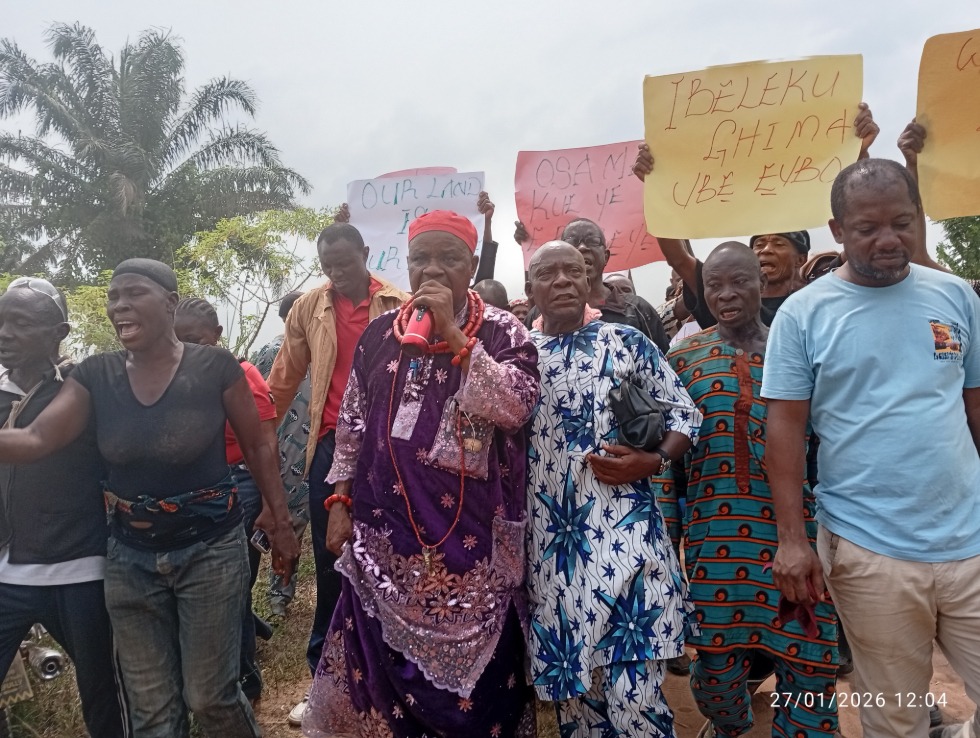
Tensions continue to escalate in Uhunmwonde as residents of the Aduhanhan community have strongly opposed government plans to reassign their pineapple farmland to oil palm investors, raising deep concerns about livelihoods, land rights, food security, and the social fabric of the community. The dispute, which has intensified throughout February 2026, reflects the growing friction between rural communities and commercial agribusiness initiatives in Edo State, highlighting broader questions about land governance, customary tenure systems, and the participation of local stakeholders in decisions that affect their land.
On February 14, 2026, community leaders, including Chief Emmanuel Eghosa and Madam Patience Okiemute, convened a town hall in Aduhanhan to strategize resistance to the proposed reassignment. Farmers at the meeting emphasized that pineapple cultivation has historically served as the backbone of the community’s economy, supporting not only household incomes but also seasonal employment for dozens of laborers and traders in surrounding markets. According to local accounts, the farmlands targeted for oil palm development cover several hectares and have been under family or communal stewardship for three to four generations. Residents insist that any shift in land use would not only threaten their economic livelihoods but also erode centuries of agricultural knowledge and cultural heritage tied to pineapple farming.
During the town hall, Chief Emmanuel Eghosa told attendees, “This is not just about crops; it is about our heritage, our families, and the food security of our community. We will not allow decisions to be imposed without our input or consent.” Madam Patience Okiemute added, “We are not opposed to development, but we insist that it must respect our rights and livelihoods. Pineapple farming sustains our families and local markets — it cannot simply be replaced with investors’ oil palm plantations without consultation.” Residents also announced plans to submit petitions to the Uhunmwonde Local Government Council and engage state-level representatives to ensure their concerns are formally recorded.
The controversy has drawn the attention of the Uhunmwonde Local Government Council, which is responsible for approving land use changes within the Local Government Area. On February 15, 2026, the council chairman, Honorable Godwin Osayande, defended the initiative, stating that the project is part of a broader strategy to attract agribusiness investment, diversify agricultural production, and stimulate economic growth in the region. He emphasized that oil palm is a high-value cash crop with both domestic and export potential. However, critics argue that the council has conducted minimal consultation with affected communities and has yet to provide a formal compensation or benefit-sharing framework, fueling resentment and distrust among local residents.
Civil society organizations, including the Edo State Farmers Association, have also intervened, warning that inadequate community engagement in farmland reassignment often leads to social unrest. Analysts note that disputes between investors and rural landowners in Nigeria frequently escalate when traditional land tenure arrangements clash with commercial interests. In Aduhanhan, residents have mobilized petitions, legal notices, and informal committees to ensure their voices are heard, signaling that the dispute could intensify if not addressed promptly and transparently.
Environmental concerns are also central to the debate. Pineapple cultivation in Aduhanhan has historically been smallholder-driven, promoting biodiversity, maintaining soil fertility, and supporting local ecosystems. Agronomists, including Dr. Adewale Okon, have cautioned that the conversion of these lands to large-scale oil palm monoculture could negatively affect soil quality, water availability, and local biodiversity. Community elders have warned that the shift could permanently alter the rural landscape and reduce resilience to climate variability, impacting food security and long-term agricultural sustainability.
The socio-economic implications of the dispute are significant. Many households in Aduhanhan depend entirely on pineapple farming for income and food supply. Any disruption could lead to unemployment, loss of local trade networks, and increased poverty. Traders and market operators in nearby towns, including Auchi and Igarra, have expressed concern that the reassignment may disrupt local market supplies and inflate prices for pineapples, a staple fruit in the region.
State-level observers note that how the Uhunmwonde Local Government Council and Edo State authorities respond could set a precedent for future farmland development projects in the state. Transparent negotiation, inclusive consultations, and equitable benefit-sharing mechanisms may be necessary to reconcile investor ambitions with community interests. Some analysts suggest establishing a formal land-use committee, including local leaders, farmers, and investor representatives, to mediate disputes and ensure sustainable development practices.
As of February 18, 2026, Aduhanhan residents continue to organize, seeking dialogue with local authorities, investors, and state officials. The dispute reflects a broader challenge across Nigeria: balancing commercial agricultural expansion with the protection of rural livelihoods, customary land rights, and social cohesion. Without proactive engagement and clear policies that respect community ownership, analysts warn that investor-community relations could deteriorate, leading to wider social unrest in Uhunmwonde and neighboring Local Government Areas.
The Aduhanhan case underscores the complex intersection of economic development, traditional land stewardship, and modernization in rural Nigeria. Community leaders, including Chief Emmanuel Eghosa and Madam Patience Okiemute, continue to stress the importance of meaningful participation in decisions that affect land and livelihoods. Until such measures are implemented, tensions in Uhunmwonde are likely to remain high, with both economic and social stakes continuing to rise and potential implications for policy, investor confidence, and regional stability.