


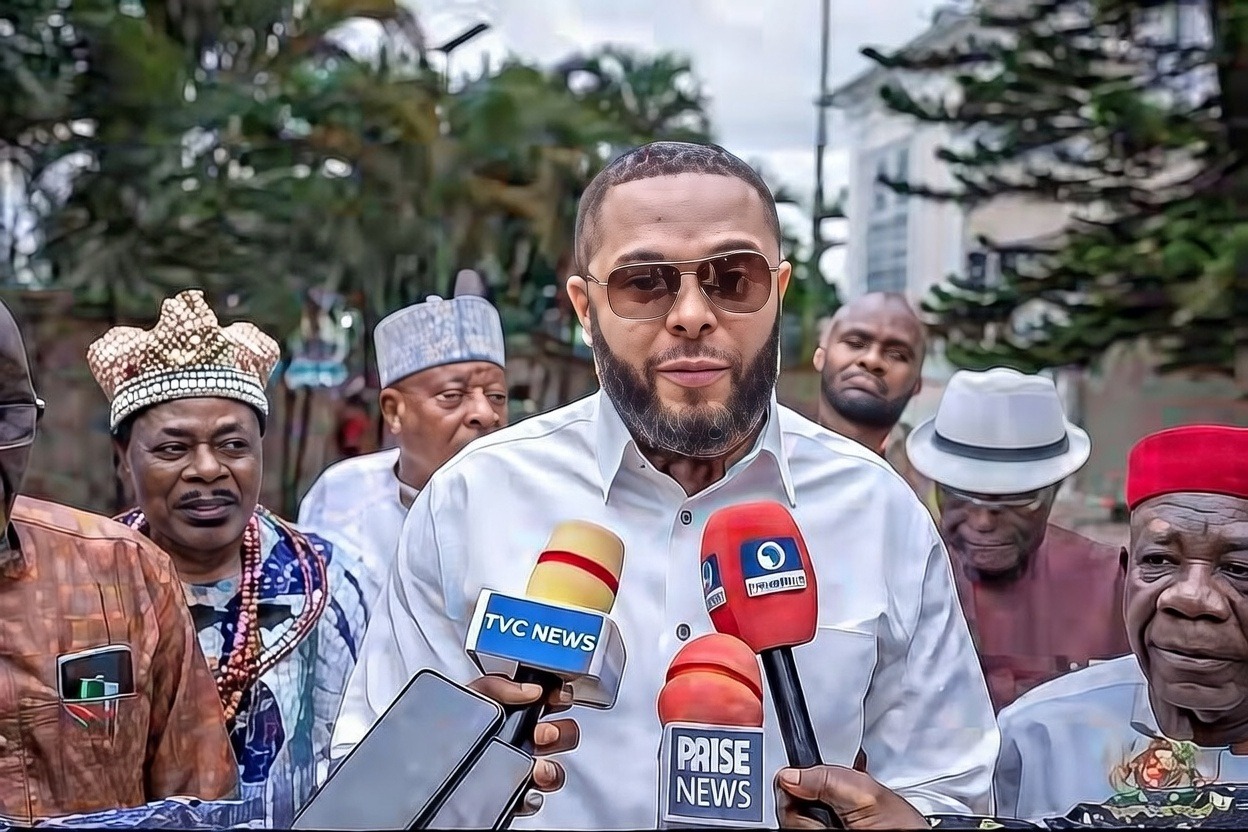
On February 25, 2026, a tense exchange unfolded at the National Assembly Complex in Abuja, Federal Capital Territory, as Alex Mascot Ikwechegh, the member representing Aba North/Aba South Federal Constituency of Abia State, confronted the Minister of Finance and Coordinating Minister of the Economy, Wale Edun, over what he described as the unexplained disappearance of capital project funds despite trillions of naira in loans and record-breaking government revenues.
The confrontation occurred during an oversight hearing of the House of Representatives Committee on Aids, Loans and Debt Management on Wednesday, February 25, 2026. The session was convened to review the status of loan disbursements, capital releases, and implementation performance under the 2025 Appropriation Act and preliminary releases tied to the 2026 fiscal cycle. Lawmakers had summoned the Minister of Finance and senior officials from the ministry to provide clarifications on borrowing patterns and capital project execution nationwide.
Speaking during the session in Abuja, Ikwechegh questioned how Nigeria’s expanding debt profile has failed to produce commensurate improvements in infrastructure across key sectors. He referenced borrowing approvals granted by the National Assembly between 2023 and 2025, noting that trillions of naira had been secured from both domestic and international lenders to finance projects in transportation, healthcare, education, agriculture, and power.
According to Ikwechegh, constituencies across the country, including Aba North and Aba South in Abia State, have witnessed stalled or non-existent capital projects despite official reports indicating substantial budgetary allocations. He argued that while revenue figures presented by the Ministry of Finance suggest improved government earnings following economic reforms, the impact has not been visibly felt at the grassroots level.
The lawmaker pressed the minister for a detailed breakdown of project-specific disbursements, including dates of release, beneficiary ministries, contractors awarded the projects, and current stages of completion. He insisted that mere aggregate figures were insufficient and warned that continued opacity could undermine public confidence in fiscal management.
Nigeria’s debt stock has grown significantly in recent years, particularly under the administration of President Bola Ahmed Tinubu, who assumed office on May 29, 2023. The government has defended its borrowing strategy as necessary to stabilize the economy, fund critical infrastructure, and manage inherited fiscal pressures. However, critics argue that rising debt servicing obligations are placing additional strain on public finances.
During the February 25 hearing, Ikwechegh emphasized that legislative approval of loan requests does not absolve the executive arm of its constitutional responsibility to ensure transparent utilization. He noted that members of the House Committee on Aids, Loans and Debt Management are mandated to monitor how borrowed funds are applied and to ensure compliance with the terms and conditions attached to each facility.
Responding to the allegations, Wale Edun maintained that all borrowings undertaken by the Federal Government followed due legislative processes and were aligned with national development priorities. He stated that capital releases are subject to revenue performance and macroeconomic realities, including foreign exchange fluctuations and debt servicing commitments. The minister further assured lawmakers that the Ministry of Finance remains committed to transparency and is working to strengthen monitoring mechanisms across ministries, departments, and agencies.
Edun also highlighted ongoing economic reforms aimed at improving revenue generation and reducing leakages. He explained that the government’s fiscal strategy involves balancing developmental needs with debt sustainability considerations, adding that comprehensive reports would be made available to the committee.
Despite the minister’s assurances, Ikwechegh insisted that Nigerians deserve clear, project-by-project accountability. He called for the submission of comprehensive documentation within a specified timeframe and suggested that failure to provide satisfactory explanations could prompt further investigative action by the House of Representatives.
The exchange has sparked renewed debate within political and economic circles in Abuja and beyond, with policy analysts noting that public scrutiny of loan utilization is intensifying as Nigeria grapples with high inflation, infrastructure deficits, and mounting debt obligations. Observers suggest that the February 25 confrontation may mark the beginning of a broader legislative probe into capital project implementation and fiscal transparency across federal institutions.


