


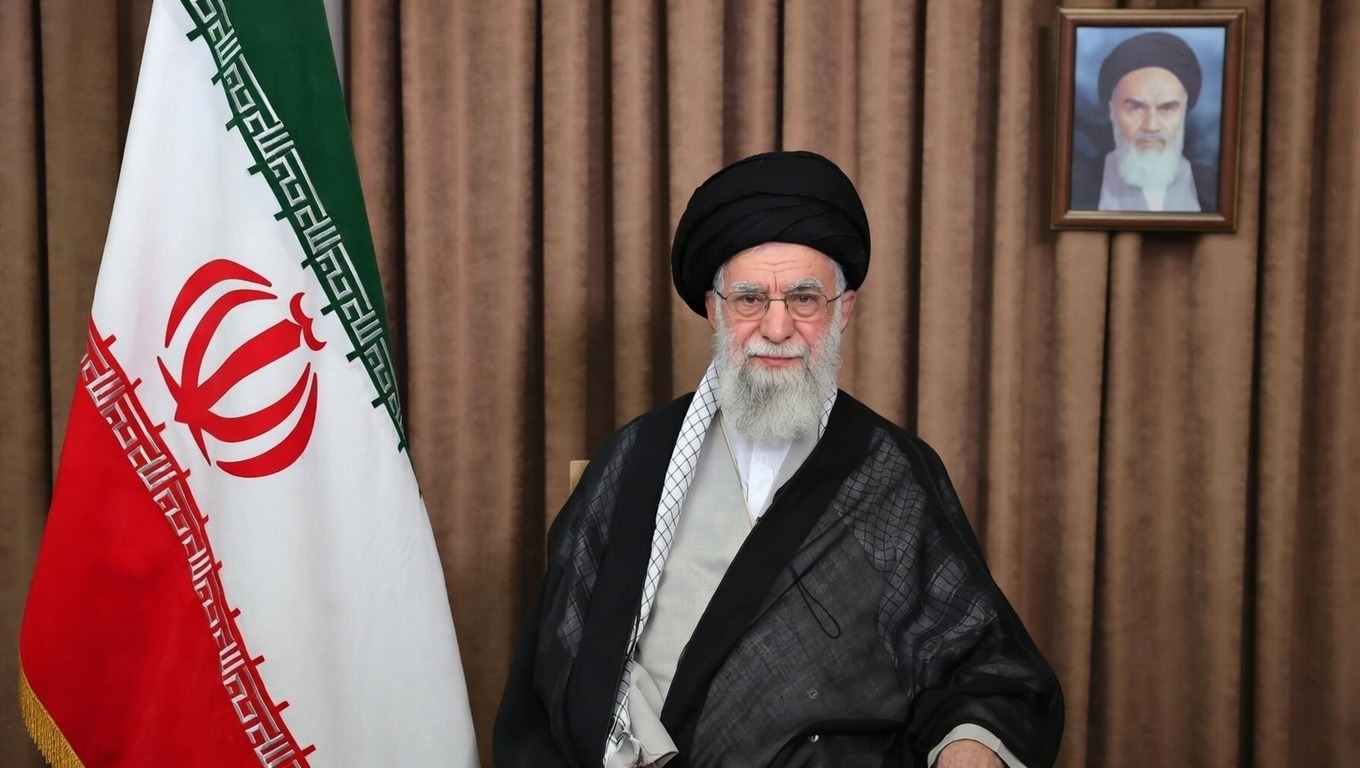
Dark skies hang over Tehran. In one district, mourners dressed in black gather in solemn rows, whispering prayers beneath towering portraits. In another, smaller groups move cautiously through side streets, some celebrating quietly, others watching events unfold with guarded anticipation. The atmosphere is tense, uncertain, historic.
The reported killing of Ali Khamenei, Iran’s Supreme Leader for more than three decades, marks one of the most consequential turning points in modern Middle Eastern history. For a nation built on revolutionary ideology and centralized clerical authority, the sudden removal of its most powerful figure does more than shock the political establishment—it shakes the foundation of the Islamic Republic itself.
This is not merely the death of a leader. It is the destabilization of a political architecture carefully constructed around singular authority.
On February 28, 2026, reports emerged of a precision military operation targeting Beit-e Rahbari—the heavily fortified “House of Leadership” in central Tehran. Within hours, Iranian state media confirmed what many had considered unimaginable: the Supreme Leader was dead. The operation was allegedly authorized by U.S. President Donald Trump and supported by Israeli Prime Minister Benjamin Netanyahu, described by Western officials as a “decapitation strike” aimed at dismantling Iran’s command structure and neutralizing what they termed an existential nuclear and missile threat.
Among those reportedly killed were senior commanders of the Islamic Revolutionary Guard Corps, the powerful force that has served as both guardian of the revolution and enforcer of domestic control. The symbolism was unmistakable. For the first time since the 1979 Islamic Revolution, Iran’s Supreme Leader had been removed not by succession, but by force.
To grasp the magnitude of this moment, one must understand the man whose authority defined an era. Ali Khamenei assumed leadership in 1989 following the death of revolutionary founder Ruhollah Khomeini. Initially perceived as a compromise figure lacking the commanding religious stature of his predecessor, Khamenei gradually consolidated power with remarkable precision. Over three decades, he strengthened the constitutional authority of the Supreme Leader, aligned closely with the Revolutionary Guard, marginalized reformist factions, and entrenched his influence across Iran’s political and security institutions.
Under his watch, Iran expanded its regional footprint significantly. Tehran deepened its alliance with Hezbollah in Lebanon, supported President Bashar al-Assad in Syria, backed Shiite militias in Iraq, and provided assistance to Houthi forces in Yemen. This network of partnerships, often described as the “Axis of Resistance,” positioned Iran as a formidable counterweight to Western and Israeli influence in the Middle East.
To supporters, Khamenei was a steadfast defender of Iranian sovereignty and Islamic values, a leader who resisted foreign pressure and preserved the ideological integrity of the revolution. To critics, he embodied authoritarianism—his tenure marked by economic hardship under sanctions, political repression, and recurring waves of domestic unrest. His leadership was not merely administrative; it was ideological, strategic, and deeply institutional.
The scenes unfolding across Iran in the aftermath of his death reflect the country’s internal contradictions. In Tehran’s Enghelab Square, thousands have gathered to mourn a figure they viewed as a guardian of national independence. Yet in other cities, particularly in southern regions, videos have surfaced showing celebrations—crowds expressing relief, some viewing this moment as an opportunity for change.
Iran has endured years of economic strain driven by sanctions, inflation, and internal governance challenges. Protests in recent years, especially in 2025, were met with forceful crackdowns that deepened societal divisions. The sudden absence of the Supreme Leader reopens questions long suppressed: about accountability, reform, and the future direction of the Islamic Republic.
Iran’s constitution outlines a succession process through the Assembly of Experts, the clerical body responsible for selecting a new Supreme Leader. In the interim, a temporary leadership structure has reportedly assumed control, including President Masoud Pezeshkian and senior judicial and clerical figures. Yet succession in a moment of national shock is unlikely to be straightforward.
Speculation surrounds possible contenders, including Mojtaba Khamenei, the late leader’s son. However, hereditary succession presents ideological tensions in a republic born of revolution. Another possibility lies in the further consolidation of power by the Revolutionary Guard. Over time, the IRGC has expanded its reach beyond military affairs into economic enterprises and strategic infrastructure. Should it assert dominant authority during this transition, Iran could shift from clerical supremacy toward a more overtly militarized governance model.
Beyond Iran’s borders, the consequences are equally profound. Khamenei’s influence shaped the strategic posture of multiple regional actors. In Lebanon, Hezbollah faces uncertainty regarding its principal patron. In Syria and Iraq, Iranian-aligned militias must recalibrate command and coordination. In Yemen, Houthi forces may adjust tactics amid the evolving power structure in Tehran.
Israel, long viewing Iran as its primary security threat, now confronts the volatility of leadership transition in a rival state. Gulf countries, including Saudi Arabia and the United Arab Emirates, are reassessing whether this moment heralds reduced tension or greater unpredictability. At the center of global concern remains the Strait of Hormuz, a critical chokepoint for international oil supplies. Instability in Iran carries immediate implications for energy markets and global economic stability.
The international response underscores the broader geopolitical stakes. Washington has framed the strike as strategic and preventative. Critics warn that such action risks escalating conflict and destabilizing an already fragile region. The memory of past interventions in the Middle East looms large, particularly the lessons drawn from Iraq in 2003, where the removal of centralized authority triggered prolonged instability.
British Prime Minister Keir Starmer has emphasized the necessity of lawful basis and careful planning in military engagements, referencing the importance of learning from past conflicts. Meanwhile, China’s Foreign Minister Wang Yi has expressed support for Iran’s sovereignty and cautioned against unilateral military escalation, signaling that global power alignments may shift in response to this development.
Three potential trajectories for Iran now dominate expert analysis. The first envisions hardline continuity, with a successor maintaining ideological rigidity and preserving the current structure of power. The second anticipates fragmentation and internal unrest, as rival factions compete and societal grievances resurface. The third suggests the possibility of gradual reform, with pragmatic elements seeking economic stabilization and cautious political recalibration.
Each scenario carries significant risks—not only for Iran but for the broader Middle East and global stability.
Ali Khamenei’s legacy will remain a subject of enduring debate. He institutionalized clerical authority, expanded Iran’s regional influence, and framed a narrative of resistance that defined his era. At the same time, his tenure coincided with economic hardship, social repression, and deepening polarization within Iranian society. Whether remembered primarily as a guardian of sovereignty or an architect of authoritarian entrenchment will depend largely on what follows.
As Tehran adjusts to a future without its Supreme Leader, the structures he fortified remain in place, but their resilience is being tested. The psychological and political impact of his sudden removal cannot be overstated. For ordinary citizens, uncertainty dominates. For regional actors, strategic calculations intensify. For global markets, volatility lingers.
The fall of the Supreme Leader marks not just the end of a chapter, but the opening of an unpredictable new one—one whose consequences will shape Iran, the Middle East, and international relations for years to come.


