


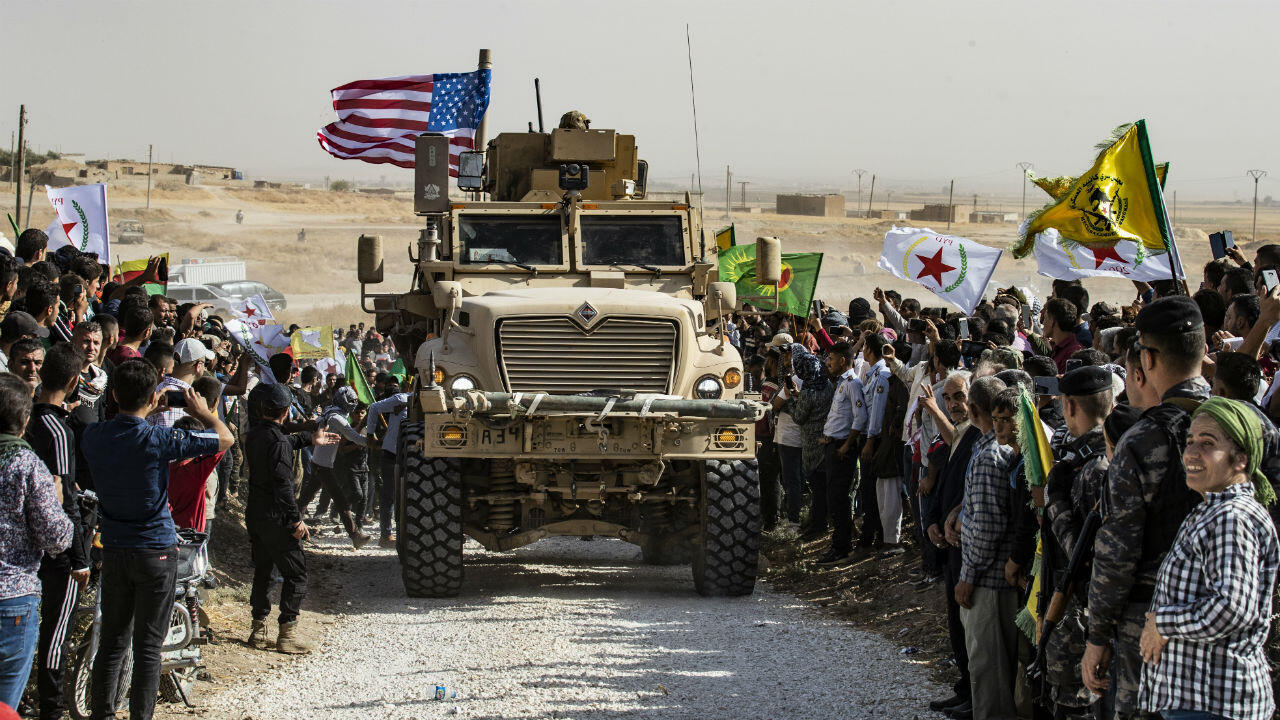
The Pentagon announced on Wednesday, February 19, 2026, that it plans to withdraw nearly all remaining U.S. troops from Syria over the coming two months, effectively ending a decade-long American military presence in the country. The announcement was made at the Pentagon headquarters in Arlington, Virginia, by U.S. Secretary of Defense Lloyd Austin.
“This withdrawal reflects a recalibration of U.S. military priorities while maintaining support for regional partners,” Austin said during the briefing. “We will continue to monitor developments in Syria and provide assistance through diplomatic channels, intelligence cooperation, and targeted operations where necessary.”
U.S. forces were first deployed to Syria in 2014 under the Obama administration to combat the Islamic State (IS), with missions including airstrikes, special operations, and support for the Syrian Democratic Forces (SDF) in northern and eastern Syria. Over the years, the mission expanded to include protection of oil fields in Deir ez-Zor, training of local security forces, and humanitarian support for civilians affected by the ongoing Syrian civil war. At its peak, the U.S. had several thousand troops stationed across Al-Hasakah, Raqqa, and other strategic locations in northeastern Syria.
The withdrawal will be conducted gradually, with U.S. troops redeployed to bases in Iraq and other regional hubs. Pentagon officials emphasized that the drawdown will be coordinated with allied forces to minimize security gaps. Austin stated that the process would prioritize the safety of U.S. personnel and the protection of regional stability.
Regional analysts have warned that the pullout could create a security vacuum. Kurdish forces, who have relied heavily on U.S. support, may face increased pressure from both the Syrian government under President Bashar al-Assad and Turkish military operations along the northern border. Additionally, remnants of IS may attempt to exploit reduced U.S. oversight, while Russia and Iran could recalibrate their military strategies in eastern Syria and along key supply routes.
President Joe Biden, in a statement released by the White House, described the withdrawal as a “responsible realignment” rather than a complete disengagement from the Middle East. Biden emphasized that the United States would continue counterterrorism operations, intelligence sharing, and diplomatic engagement in Syria and neighboring countries.
The drawdown marks the conclusion of a significant chapter in U.S. military engagement in Syria, which included key operations such as the 2017 recapture of Raqqa from IS and support for stabilization initiatives in liberated areas. Pentagon officials noted that drone surveillance, intelligence operations, and rapid response capabilities will continue, ensuring that U.S. partners are not left unsupported.
As the withdrawal progresses, U.S. military planners will maintain close coordination with allies, including European forces, to ensure a stable transition and to support reconstruction and humanitarian efforts in northeastern Syria. Observers note that the decision reflects a broader U.S. strategy to pivot resources toward other strategic priorities, including the Indo-Pacific, while sustaining counterterrorism vigilance in the Middle East.
The U.S. military withdrawal from Syria effectively ends more than a decade of direct American engagement in the country’s civil conflict, concluding a mission that spanned three U.S. administrations. While reactions have been mixed internationally, officials maintain that the United States remains committed to supporting regional stability, combating terrorism, and assisting local partners such as the SDF and humanitarian organizations operating in Syria.


