


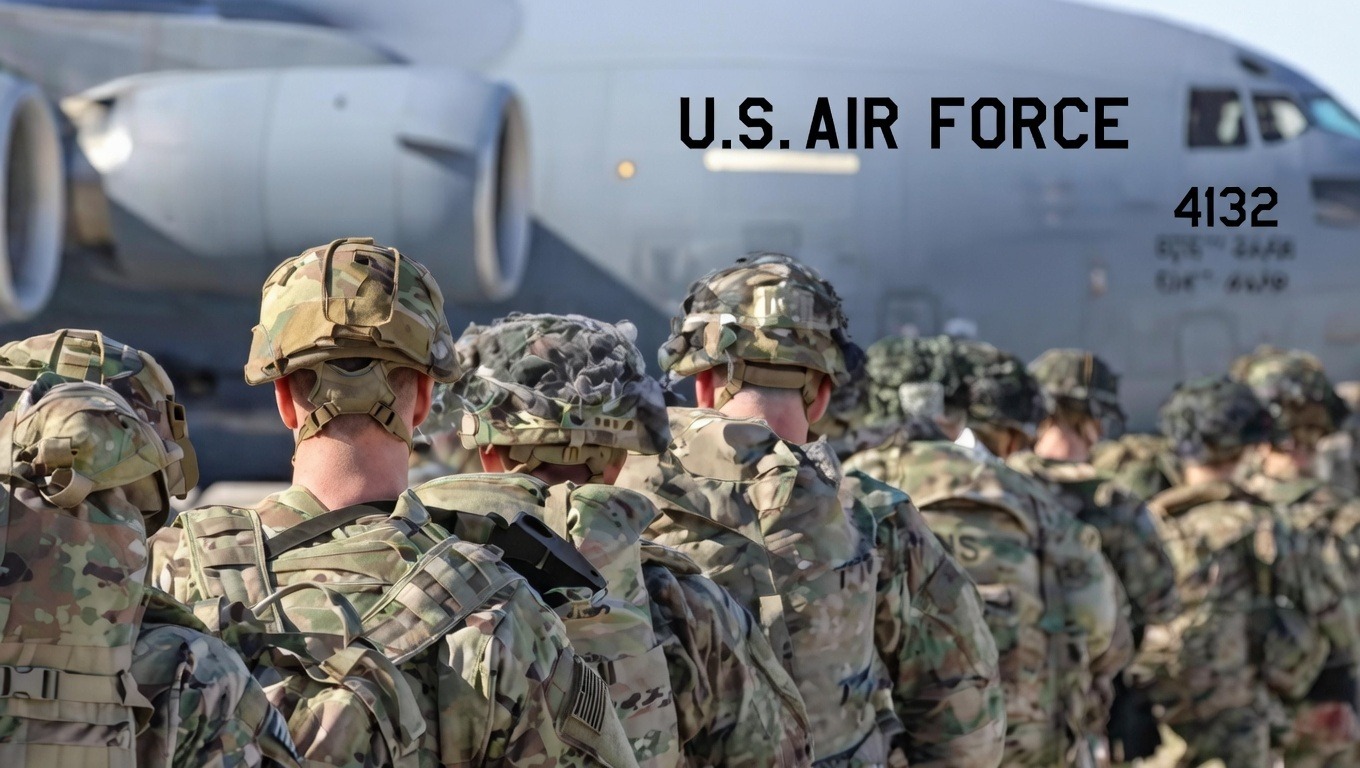
The Federal Government of Nigeria has confirmed that approximately 100 U.S. military personnel arrived in the country on February 14, 2026, to support counter-insurgency and security operations amid ongoing extremist violence and banditry.
Nigeria’s Minister of Defence, Mohammed Badaru Abubakar, disclosed the development in Abuja on February 16, 2026, stating that the U.S. personnel are deployed strictly for training, intelligence sharing, logistics coordination, and technical advisory support. He emphasized that the troops will not engage in direct combat operations and will operate fully under the command of the Nigerian Armed Forces.
According to military sources, the U.S. contingent is expected to collaborate closely with Nigerian units operating in Maiduguri, Borno State, where insurgent activity remains concentrated. The Chief of Defence Staff, Christopher Musa, stated that the partnership aims to enhance intelligence fusion, surveillance operations, counter-IED capabilities, and special operations planning.
The renewed cooperation comes amid continued threats from Boko Haram and its breakaway faction, the Islamic State West Africa Province, both of which operate across parts of Borno, Yobe, and Adamawa States, as well as in the broader Lake Chad Basin region. Security analysts note that insurgent cells have recently intensified attacks on rural communities and military formations in Konduga, Damboa, and Gwoza Local Government Areas.
Beyond the North-East, insecurity linked to armed banditry continues to affect states such as Zamfara, Katsina, and Niger State, prompting broader federal security reforms. Officials say the U.S. support will also focus on improving aerial reconnaissance and intelligence coordination across affected regions.
The deployment follows renewed diplomatic engagement between Abuja and Washington, D.C., particularly after high-level security consultations held on January 28, 2026, between Nigerian officials and representatives of the United States Department of Defense. The U.S. Ambassador to Nigeria, Richard M. Mills Jr., reaffirmed Washington’s commitment to supporting Nigeria’s sovereignty and regional stability efforts.
Authorities in Nigeria have stressed that the mission is rotational and subject to periodic review. Defence officials maintain that the objective is long-term capacity building — strengthening Nigeria’s independent operational capability rather than introducing foreign combat forces.