


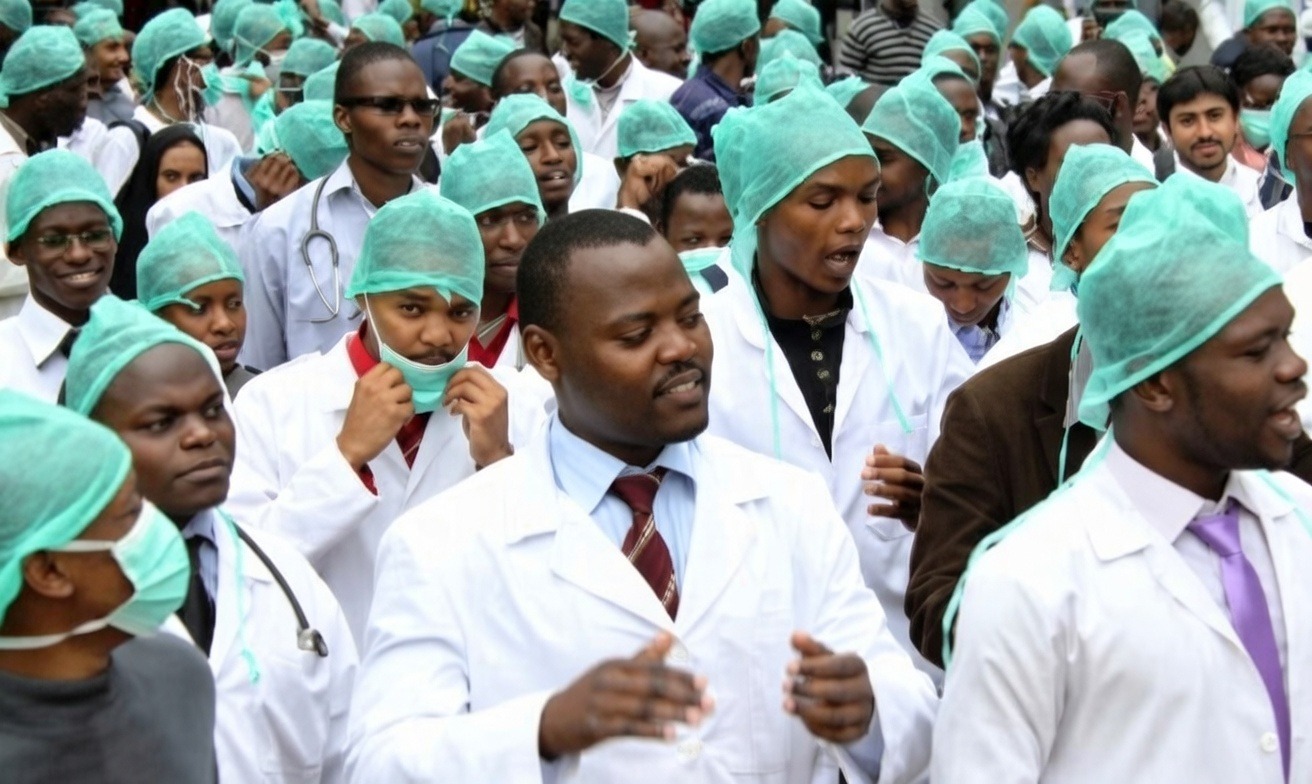
Resident doctors across Nigeria on Tuesday, 3 February 2026, commenced an indefinite strike action, bringing clinical services in public tertiary hospitals to a near standstill and raising fresh concerns over access to specialised healthcare nationwide.
The industrial action, which took effect at exactly 12:00 a.m. on Monday night, 2 February 2026, is being coordinated by the Nigerian Association of Resident Doctors (NARD) and involves an estimated 11,000 doctors undergoing residency training. The strike has affected operations in more than 90 teaching hospitals, federal medical centres, and specialist hospitals spread across the six geopolitical zones of the country.
NARD leadership confirmed that the decision to embark on the strike followed the expiration of several ultimatums issued to the Federal Government and relevant agencies over unresolved welfare and professional concerns. According to the association, the last notice to government lapsed on Sunday, 1 February 2026, without any concrete response or implementation of previously agreed resolutions.
In a statement released on Tuesday, NARD said the strike was necessitated by persistent delays in the payment of salary arrears, non-implementation of agreed allowances, and worsening working conditions for resident doctors. The association listed outstanding issues to include unpaid hazard allowances, irregular payment of call duty allowances, delayed adjustment of residency training salaries, and severe manpower shortages in most tertiary hospitals.
NARD also expressed concern over the impact of poor infrastructure, limited access to essential medical equipment, and increasing workloads caused by the continuous emigration of medical professionals, a trend that has intensified over the past few years.
Our members have shown patience for months while engaging with government officials through formal meetings and correspondence, the statement said. As of February 2026, there has been no meaningful progress on these issues. The indefinite strike is therefore unavoidable.
Resident doctors constitute a critical workforce in Nigeria’s tertiary healthcare system, providing frontline care in emergency units, wards, operating theatres, and specialist clinics under consultant supervision. Their withdrawal of services is expected to significantly disrupt emergency care, elective surgeries, outpatient clinics, and inpatient management across affected facilities.
Reports from several teaching hospitals on Tuesday morning indicated that elective procedures scheduled for 3 and 4 February 2026 had been postponed, while patients requiring specialist attention were advised to seek alternative arrangements where possible. Hospital managements have reportedly activated skeletal services using consultants and other medical personnel, though capacity remains limited.
Health sector analysts warn that if the strike extends beyond the first week of February, it could further weaken an already strained healthcare system, particularly affecting patients with chronic illnesses, trauma cases, and those requiring specialised interventions.
This recurring cycle of strikes reflects deeper structural problems in the health sector, a public health expert in Abuja said. Agreements reached in previous years are often not fully implemented, leading to repeated industrial actions.
Resident doctors shut down tertiary hospitals nationwide over unpaid entitlements


- Advertisment -