


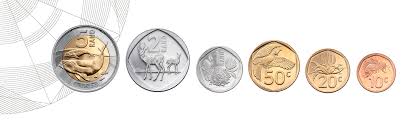
South Africa’s currency, the rand, weakened sharply in early trading on Friday as a stronger U.S. dollar and rising global oil prices dampened investor confidence across emerging markets.
The rand traded at 16.6426 against the dollar in early deals, representing a decline of about one per cent from its previous close, as traders reacted to mounting global economic uncertainty and shifting market sentiment.
Financial analysts said the South African currency came under pressure as investors moved toward safer assets amid renewed concerns over inflation, possible interest rate hikes, and escalating geopolitical tensions affecting global trade and energy markets.
The U.S. dollar strengthened against a basket of major currencies and was on track for its biggest weekly gain in more than two months, boosted by expectations that the U.S.
Federal Reserve could maintain tighter monetary policies for longer following stronger-than-expected economic data.
Market attention also remained focused on the final day of high-level talks between U.S.
President Donald Trump and Chinese President Xi Jinping, with investors closely watching for signals on trade relations, energy cooperation, and broader global economic stability.
Global oil prices climbed by more than one per cent after Trump disclosed that China was interested in purchasing oil from the United States. The rise in crude prices was further driven by lingering security concerns in the Strait of Hormuz, a critical global shipping route for oil exports.
Although Iran stated that about 30 vessels had safely passed through the waterway, fears over ship attacks and vessel seizures in the region continued to unsettle global markets, contributing to volatility in commodity and currency trading.
Currency strategist Andre Cilliers of TreasuryONE said the rand’s decline reflected broader weakness across emerging market and commodity-linked currencies.
According to him, investors are increasingly worried about the impact of higher oil prices on inflation, especially for import-dependent economies like South Africa, where rising fuel costs could place additional pressure on households and businesses.
Analysts noted that the rand, often regarded as a risk-sensitive currency, typically reacts strongly to global developments, including geopolitical conflicts, commodity price swings, and shifts in investor appetite for riskier assets.
The currency has remained particularly vulnerable since the outbreak of tensions involving the United States, Israel, and Iran earlier this year, with ongoing uncertainty continuing to influence market behaviour.
Treasury specialist Adam Phillips of Umkhulu Treasury said the rand had initially benefited from stronger commodity prices, especially platinum, but lost momentum overnight as commodity prices retreated and oil prices surged.
He explained that the combination of weaker commodity demand and higher energy prices reduced investor confidence in emerging market assets, leading to heavy pressure on the South African currency.
South Africa’s bond market also reflected the cautious sentiment, with the benchmark 2035 government bond weakening slightly as yields edged higher to 8.765 per cent in early trading.
Economic observers say the direction of the rand in the coming days will largely depend on developments from the Trump-Xi summit, movements in global oil markets, and investor expectations regarding U.S. interest rates and inflation trends.
The latest market movements underscore the continued vulnerability of emerging economies to global political tensions, energy price shocks, and shifts in international financial conditions.


