


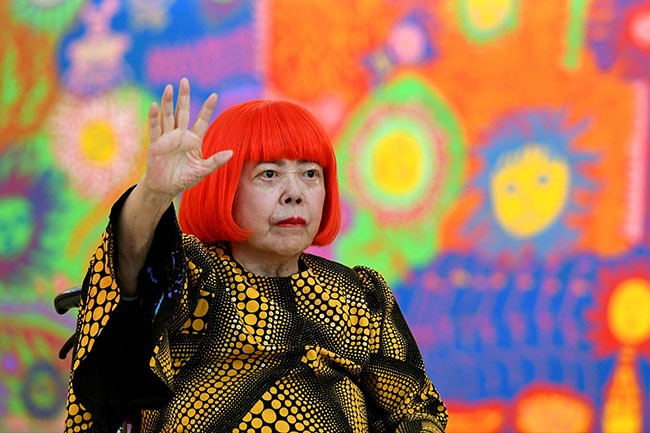
Yayoi Kusama, the Japanese artist whose colourful polka dots, infinity rooms and immersive installations made her one of the most recognisable figures in contemporary art, has died at the age of 97.
Kusama’s company announced her death on Thursday, saying the artist died on August 14 after a remarkable career that spanned more than seven decades.
Known around the world as the “Polka Dot Queen,” Kusama transformed personal struggles and hallucinations into bold works filled with dots, nets, pumpkins and infinity motifs.
Her company described her as a pioneering avant-garde artist whose work extended beyond visual art to include performance, fiction and poetry.
It said Kusama continued painting until her final days, remaining committed to her artistic practice throughout her life.
From Japan To New York
Born in 1929 into a wealthy but conservative family, Kusama began creating art at just 10 years old.
She later recalled experiencing vivid hallucinations as a child, including an incident where a floral pattern appeared to spread across a room and cover her body.
After studying art in Japan, Kusama moved to the United States in the late 1950s, eventually settling in New York with encouragement from renowned artist Georgia O’Keeffe.
She quickly became involved in the city’s avant-garde art scene.
Despite facing discrimination as a Japanese woman, Kusama gained attention for her large-scale paintings and provocative performances during the 1960s.
Her work included experimental “happenings” involving body painting, nudity and her trademark polka dots.
She also ventured beyond traditional art, launching a fashion line and staging unconventional performances that challenged social norms.
A Life Devoted To Art
Kusama returned to Japan in the 1970s and voluntarily entered a psychiatric hospital in Tokyo, where she lived and continued working for the rest of her life.
Her international reputation grew dramatically from the 1980s onward, eventually turning her into one of the most commercially successful contemporary artists in the world.
Her famous Infinity Mirror Rooms, pumpkin sculptures and immersive installations attracted millions of visitors and became some of the most photographed works of contemporary art.
Her signature yellow polka-dot pumpkin on Japan’s Naoshima island became particularly iconic.
Art curator Alexandra Munroe, who organised a major Kusama retrospective in New York in 1989, described the artist as a major inspiration and a transformative figure in avant-garde art.
Kusama’s influence extended far beyond museums, with her distinctive visual style appearing in fashion, popular culture and major collaborations with international brands.
Tributes Pour In
News of Kusama’s death has sparked tributes from museums, artists, fans and cultural figures around the world.
The Museum Ludwig in Germany, which hosted a major Kusama exhibition that attracted about 480,000 visitors in 2026, praised the “special power” of her art and described her as experimental, feminist and distinctive.
The Stedelijk Museum in Amsterdam also announced plans to turn its upcoming Kusama retrospective into a tribute to her life and career.
Apple CEO Tim Cook described Kusama as a “true visionary”, praising her ability to push the boundaries of creativity.
For many admirers, however, Kusama’s greatest achievement was her ability to turn her personal experiences into art that connected with people regardless of their familiarity with contemporary art.
Her colourful installations, bold patterns and endless reflections created a visual language that became unmistakably hers.
After nearly a century of life and decades of artistic experimentation, Yayoi Kusama leaves behind a legacy that has permanently changed the world of contemporary art.


