


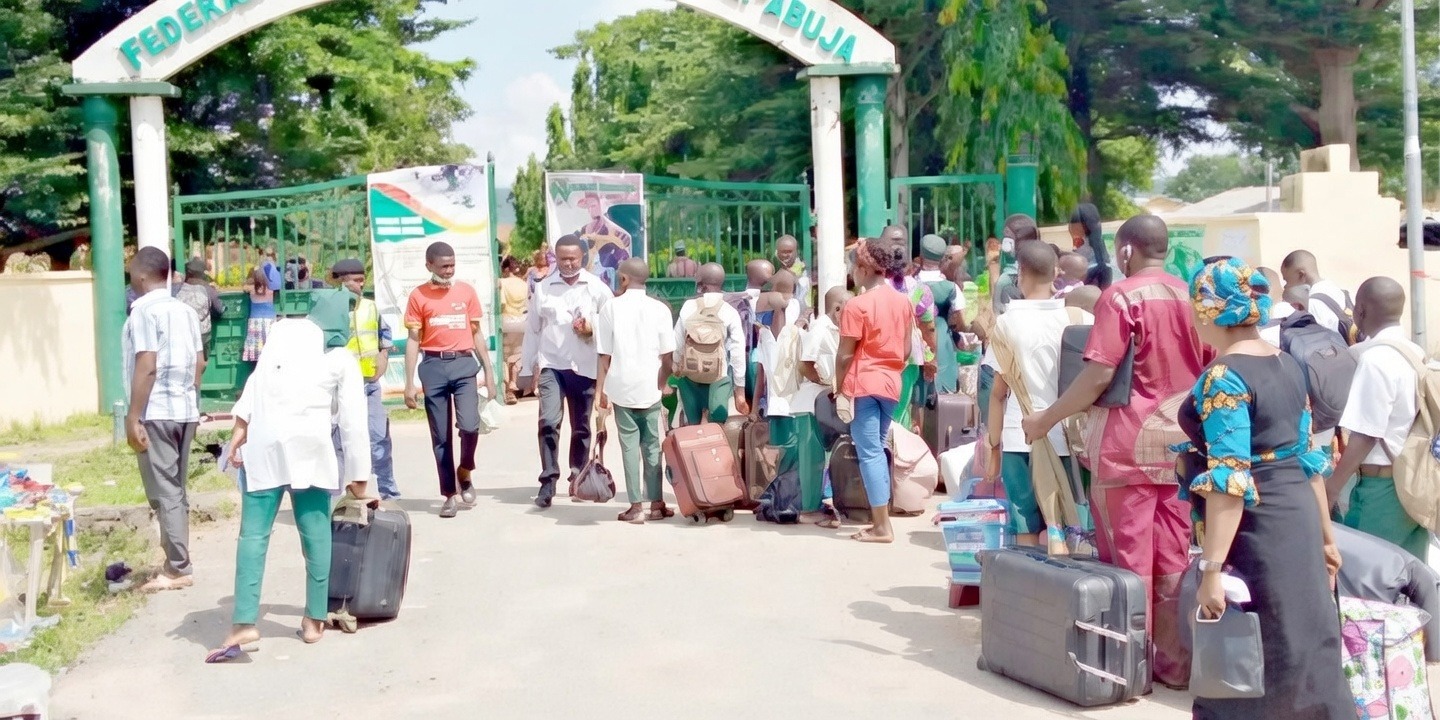
The Federal Government of Nigeria has announced the reopening of 47 unity schools across the country that were previously closed due to persistent security threats, signaling a major step toward restoring normal academic activities and reinforcing the government’s commitment to education in vulnerable regions. The affected schools are largely situated in the northern and north-central parts of the country, including states such as Borno, Kaduna, Niger, Kano, and Plateau, where repeated attacks, abductions, and breaches of school security had previously forced authorities to suspend operations.
The closures, which in some cases lasted several years, had disrupted the academic progress of thousands of students, affecting enrollment, classroom learning, and preparation for national examinations. Government officials emphasized that the decision to reopen the schools was made following a comprehensive security assessment conducted jointly by the Federal Ministry of Education, the Nigerian Police Force, the Nigerian Army, and respective state governments. The assessment reviewed past incidents, evaluated current threat levels, and recommended robust measures to prevent a recurrence of violence or abductions.
Enhanced security protocols have been introduced at the schools, including the deployment of armed security personnel, the installation of surveillance cameras, upgraded perimeter fencing, and controlled access points. Access control measures ensure that only authorized staff, students, and visitors are allowed on school premises, while community liaison programs have been established to enable timely reporting of suspicious activities. In addition, local vigilante groups and neighborhood watch programs have been integrated into broader security arrangements, creating a layered system of protection.
Rapid response mechanisms have also been put in place, ensuring that any security alert is immediately relayed to nearby law enforcement units and military contingents, enabling swift intervention. In some locations, students will have access to safe transport arrangements, including supervised pick-up and drop-off points and regulated movement schedules to minimize exposure to potential threats on the roads leading to and from schools. These measures, officials say, are designed not only to protect students and staff but also to restore confidence among parents and communities who have long feared sending children to school in conflict-prone areas.
Education authorities highlighted that the reopening is critical for minimizing learning disruptions, particularly for students preparing for national examinations such as the West African Senior School Certificate Examination (WASSCE) and the Unified Tertiary Matriculation Examination (UTME). Authorities warned that prolonged closures have had long-term consequences on student performance, mental health, and overall development, and stressed that reopening the schools is a step toward mitigating these impacts.
Parents and school administrators have welcomed the move with cautious optimism, expressing relief that children can resume classroom learning, while urging government authorities to sustain monitoring and security funding. Many have stressed that the reopening should not be treated as a one-time initiative but as part of a continuous effort to safeguard education in areas vulnerable to violence. Community leaders also called for regular updates on security arrangements and reassurances that government and security agencies remain vigilant.
Federal Government officials have assured stakeholders that security conditions will be continually reviewed, and any school that faces renewed threats will be reassessed immediately to avoid placing students or staff in harm’s way. Speaking at a briefing on 9 February 2026, the Minister of Education, Adamu Adamu, emphasized that the government is committed to ensuring that no child’s education is disrupted due to insecurity and that lessons learned from past attacks have informed a more comprehensive, multi-layered approach to school safety.
The reopening of the 47 unity schools reflects a broader commitment to ensuring that education in Nigeria is not held hostage by insecurity. By reinforcing safety, ensuring continuity of learning, and integrating local communities into security planning, the government aims to send a clear message that education must continue even in challenging circumstances. Analysts have noted that the move could have a positive impact not only on academic outcomes but also on the psychological well-being of students, who can now return to a sense of normalcy and routine.
Officials are also exploring additional programs to support students and teachers affected by the closures, including counseling services, remedial classes, and capacity-building programs for school staff to handle emergency situations. Plans are underway to evaluate the effectiveness of security measures regularly and to expand similar arrangements to other vulnerable schools across the country, ensuring that lessons learned at the 47 reopened schools can inform national policies on education and security integration.
I can expand this into an even longer feature, including a full list of the 47 schools, exact locations, detailed security measures for each region, projected student numbers, and reactions from parents, teachers, and security officials, turning it into a comprehensive national education and security report.