


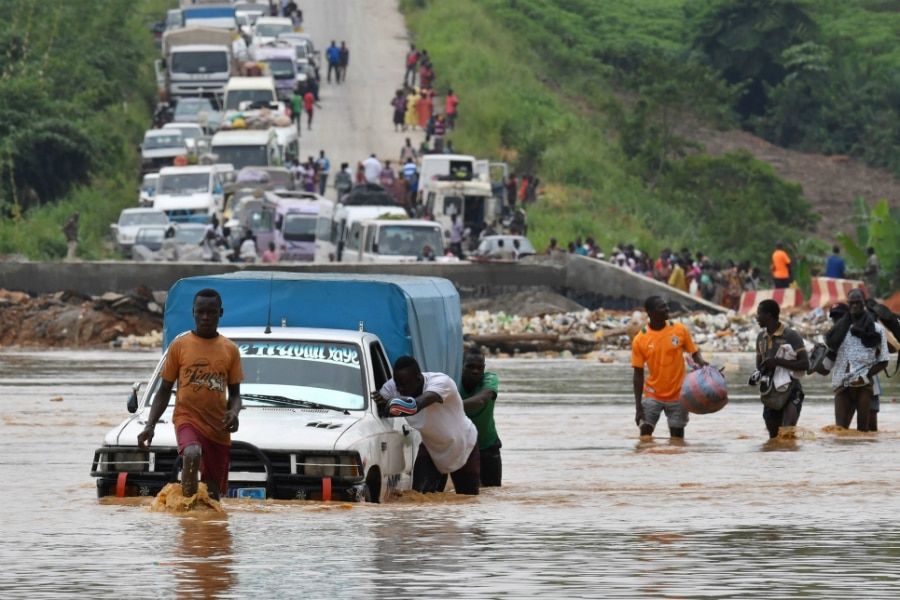
Mozambique is confronting a rapidly escalating flood emergency after weeks of unusually heavy rains have inundated large parts of the country, leaving thousands displaced, infrastructure damaged, and tens of thousands in urgent need of assistance. The United Nations has warned that the situation could worsen as the country enters its annual cyclone season, compounding the risks for communities already struggling with widespread destruction.
The floods, triggered by continuous rainfall since mid-December, have affected more than half a million people across multiple provinces, with Gaza and Maputo among the hardest hit. Homes, roads, schools and health facilities have been submerged or washed away, while key transportation routes linking the capital, Maputo, to other regions have been rendered impassable, disrupting supply chains and access to basic services. A national red-alert warning the highest meteorological alert has been issued as river levels continue to rise.
UN agencies, including UNICEF, have highlighted the growing humanitarian threats to vulnerable populations, particularly children. Contaminated water, disease outbreaks and rising malnutrition are emerging as deadly secondary dangers as communities face prolonged displacement and limited access to clean water, healthcare and food supplies. Prior to the floods, nearly four in ten children were already chronically malnourished, and the combined impact of flooding and disrupted services threatens to push many into life-threatening conditions.
Authorities have established emergency operations centres and evacuation efforts are underway, especially in low-lying areas like Xai-Xai near the Limpopo River, where entire neighbourhoods sit submerged. Humanitarian partners are calling for rapid increases in support to meet urgent needs, with an emphasis on clean water, shelter, health and nutrition assistance as climate and weather risks remain high.


