


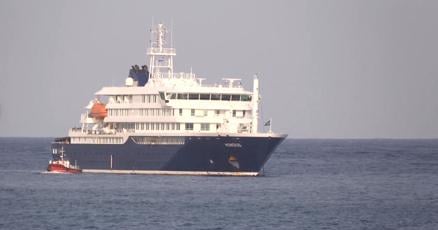
Spain has authorised a luxury cruise ship affected by a deadly hantavirus outbreak to dock in the Canary Islands after being stranded off the coast of Cape Verde, amid growing international concern over the health emergency on board.
The MV Hondius, a Dutch-flagged expedition vessel carrying 147 passengers and crew from 23 countries, will be allowed to berth in either Tenerife or Gran Canaria after Cape Verde confirmed it was unable to receive the ship. Spain’s Health Ministry said it accepted responsibility due to its proximity and capacity to manage medical evacuations, adding it had a “moral and legal obligation” to assist those on board, including Spanish nationals.
Deadly outbreak at sea
The vessel has been linked to a rare hantavirus outbreak that has already killed a Dutch couple and a German passenger during the voyage. A British national who was evacuated earlier is currently in intensive care in South Africa, where he tested positive for the virus.
Two additional crew members are reported to be in urgent need of medical attention, while another case remains under observation with mild symptoms. A Dutch ship doctor, who is also seriously ill, is being transferred for emergency medical care in coordination with Dutch authorities.
Complex international evacuation
Spanish authorities say a medical evacuation operation is being prepared in coordination with the World Health Organization (WHO), the European Centre for Disease Prevention and Control, and the Dutch government. Once urgent cases are evacuated, the ship will proceed to the Canary Islands for further assessment, isolation, and repatriation of passengers.
Strict containment measures will be enforced, including controlled transport, isolation facilities, and medical screening to prevent any contact with the local population or healthcare workers.
Investigation into transmission
The WHO has confirmed that most passengers on board are from Britain, the United States, Spain, and other European countries. Experts are investigating how the outbreak spread, noting that hantavirus is usually transmitted from infected rodents through urine, droppings, or saliva.
While human-to-human transmission is rare, officials say limited spread between close contacts such as couples sharing cabins cannot be ruled out in this case. The WHO believes some infections may have occurred before passengers boarded the ship, possibly during travel in South America.
The cruise had previously visited remote regions including Antarctica, South Georgia, and other isolated islands, where passengers participated in nature excursions that may have increased exposure risks.
Public health concerns
Despite the seriousness of the outbreak on board, health officials stress that the risk to the general public remains low, particularly as there is no evidence of rodents on the vessel.
Passengers are now expected to undergo medical evaluation, isolation where necessary, and eventual repatriation once the ship arrives in the Canary Islands. Authorities across Europe and South Africa are continuing contact tracing and monitoring as investigations into the outbreak continue.

