


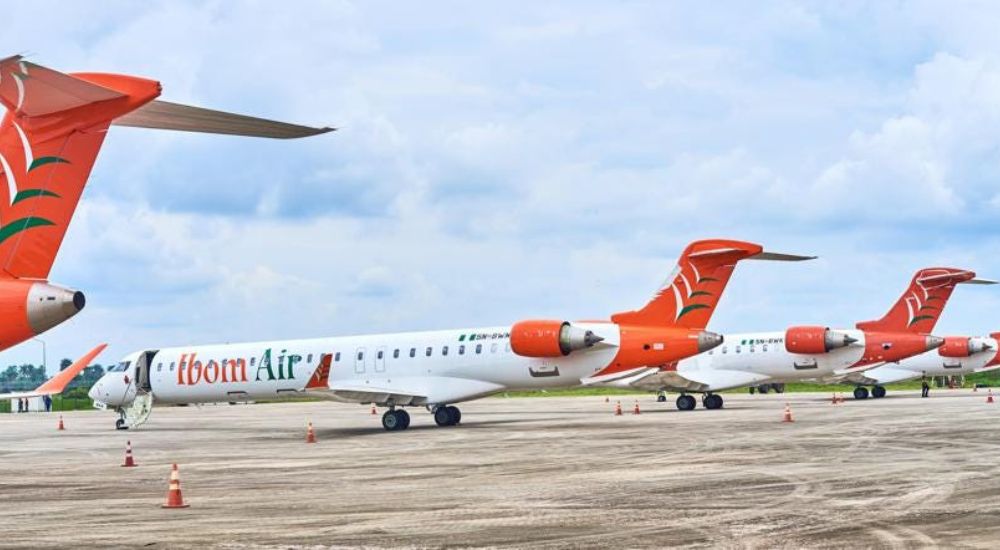
Ibom Air Fleets
Ibom Air Warns of Possible Capacity Cuts Over Sharp Rise in Jet Fuel Costs
Ibom Air has warned that it may be forced to reduce flight frequency in the coming days as soaring aviation fuel prices place severe pressure on domestic airline operations.
In a statement issued on Monday and signed by the airline’s Group Manager for Marketing and Communication, Aniekan Essienette, the carrier described the current Jet A1 pricing environment as an unprecedented crisis that is becoming financially unsustainable for Nigerian airlines.
The airline said the rapid increase in fuel costs has significantly altered the economics of domestic air travel, raising fears that operators may soon struggle to maintain schedules without major adjustments.
Fuel Costs Rise by More Than 350 Percent
According to Ibom Air, the cost of fuelling a single flight has risen dramatically within a matter of weeks.
The airline disclosed that in January, it spent an average of ₦2.1 million to fuel one flight. By April 26, that figure had surged to approximately ₦7.6 million per flight.
This represents an increase of more than 350 percent in just seven weeks.
Industry observers note that aviation fuel remains one of the largest cost components for airlines, often accounting for a substantial share of total operating expenses. Such a sharp rise in a short period places immediate strain on profitability, route planning, and service continuity.
Concerns Over Domestic Pricing Structure
Ibom Air also questioned what it described as a contradiction in current fuel market conditions.
The airline noted that local supply of Jet A1 fuel has improved in recent months, with much of the increase linked to output from Dangote Refinery.
Despite this improvement in domestic supply, the carrier said aviation fuel prices in Nigeria remain significantly above international benchmarks.
This, the airline argued, has created an uneven operating environment in which local carriers face disproportionately high costs compared with airlines operating in other markets.
The company suggested that stronger local refining capacity should ordinarily help reduce import dependence, ease supply constraints, and lower prices for domestic users.
Airlines Absorbing Costs to Protect Passengers
Ibom Air said Nigerian airlines have continued to absorb rising costs in order to keep ticket prices relatively stable and maintain services for passengers.
The statement noted that international carriers often respond to smaller fuel increases by cutting capacity, adjusting schedules, or passing costs directly to travellers through fare increases.
By contrast, many domestic operators in Nigeria have tried to sustain operations despite worsening input costs.
However, the airline warned that the situation has now reached a critical point.
“It is clear to us that the current conditions are unsustainable,” the statement said.
“We will have to take whatever ameliorating actions we can in the days ahead, including reducing our capacity if necessary.”
Possible Impact on Travellers
If Ibom Air proceeds with capacity reductions, passengers could experience fewer available flights, tighter booking options, and possible fare adjustments across affected routes.
Reduced airline capacity can also lead to increased pressure on other domestic carriers, particularly on high-demand routes such as Lagos, Abuja, Uyo, and Port Harcourt.
Travel experts say any prolonged disruption in flight frequency may affect business travel, tourism, cargo movement, and regional connectivity.
Call for Immediate Industry Action
Ibom Air urged fuel marketers to urgently review the current pricing model and adopt measures that reflect improved local supply conditions.
The airline warned that if present trends continue, carriers may soon find themselves operating mainly to pay fuel bills, with little remaining revenue to cover staffing, aircraft maintenance, insurance, airport charges, and other critical operating costs.
Analysts say the issue highlights broader structural challenges within Nigeria’s aviation sector, including foreign exchange pressure, infrastructure costs, regulatory charges, and limited financing options.
Wider Industry Concerns
The warning from Ibom Air is likely to intensify calls for coordinated intervention from regulators, fuel suppliers, and government agencies to stabilise operating conditions for local airlines.
Nigeria’s domestic aviation market plays a vital role in connecting key commercial centres and supporting national productivity. Industry stakeholders warn that sustained cost pressure could weaken service reliability and reduce sector growth.
For now, passengers and market observers will be watching closely to see whether fuel prices ease or whether one of Nigeria’s leading airlines is forced to scale back operations in response to mounting costs.