


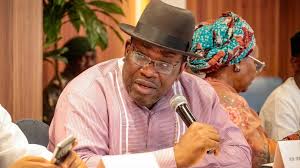
National Leader of the Nigeria Democratic Congress, Senator Seriake Dickson, has declared that the party’s future and stability must take precedence over the ambitions of individual politicians, insisting that no member, aspirant, or support group is bigger than the political platform itself.
Speaking with journalists in Abuja, Dickson dismissed reports suggesting that the party is facing internal divisions involving its presidential candidate, Peter Obi, and vice-presidential candidate, Senator Rabiu Musa Kwankwaso. He maintained that the party leadership remains united and committed to building a formidable opposition capable of challenging the ruling government in future elections.
According to Dickson, the NDC holds both Obi and Kwankwaso in high esteem and believes their combined political influence could attract widespread support from Nigerians seeking an alternative political direction. However, he stressed that party discipline, institutional integrity, and respect for leadership structures must remain central to the party’s operations.
The former Bayelsa State governor warned supporters of both the Obidient Movement and the Kwankwasiyya political movement against actions capable of undermining party cohesion. He noted that while supporters have the right to advocate for their preferred candidates, such efforts should not come at the expense of the party’s unity and long-term objectives.
Dickson rejected allegations that party leaders imposed candidates or manipulated the nomination process, insisting that decisions were reached through consultations with stakeholders at various levels. He described himself as a political organizer focused on institution-building rather than personal political gain.
He emphasized that the NDC, being a relatively new political platform, requires collective commitment and protection from internal conflicts that could weaken its chances of becoming a viable national force. According to him, the party was established to provide Nigerians with a credible alternative and should not be distracted by unnecessary controversies.
Addressing concerns surrounding party primaries, Dickson acknowledged that disagreements and competing interests are common features of democratic politics. However, he argued that such disputes should be managed through transparent processes and effective conflict-resolution mechanisms.
The NDC leader also criticized aspects of the current Electoral Act, particularly provisions requiring direct primaries for political parties. He argued that direct primaries present significant logistical and financial challenges, especially for opposition parties with limited resources compared to governing parties.
To improve internal democracy, Dickson revealed that the party is exploring the introduction of digital voting systems for future primaries. He said technology-driven processes could enhance transparency, reduce costs, and make participation easier for party members across the country.
He further assured aggrieved aspirants and party stakeholders that reconciliation efforts are ongoing, stressing that the leadership is committed to resolving disputes through dialogue and consultation. According to him, maintaining unity within the party is essential as preparations continue for future electoral contests.
Political analysts say Dickson’s comments reflect the challenges facing emerging political parties as they attempt to balance the influence of high-profile politicians with the need to build strong institutions. They note that successful political parties often depend on effective leadership, internal democracy, and the ability to manage competing interests without creating divisions.
As political realignments continue ahead of future elections, observers believe the ability of opposition parties to maintain cohesion and present a united front will play a crucial role in shaping Nigeria’s evolving political landscape.


