


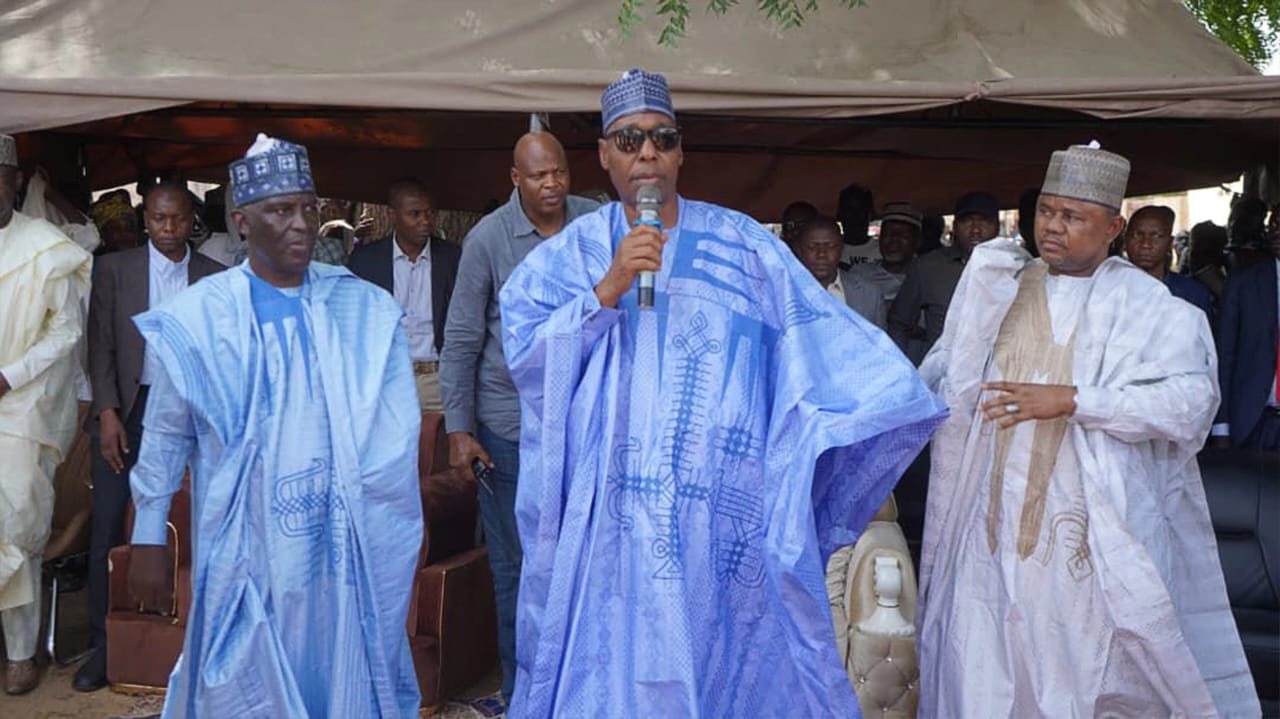
The Borno State Government has reintegrated 720 repentant former Boko Haram fighters, along with 992 women and 2,050 children, into their respective communities after successfully completing a comprehensive rehabilitation, deradicalisation, and reintegration programme.
The beneficiaries, who had voluntarily surrendered to security forces at different times during ongoing counter-insurgency operations in the North-East, underwent months of disarmament, psychological counselling, vocational training, and civic reorientation at the Hajj Camp rehabilitation centre in Maiduguri.
Speaking during the reintegration ceremony, Special Adviser on Security to Governor Babagana Umara Zulum, retired Brigadier General Abdullahi Ishaq, described the programme as one of the most successful non-military approaches to conflict resolution and counter-extremism in recent history.
According to him, the initiative, popularly known as the “Borno Model,” has encouraged thousands of insurgents and their families to abandon violence and embrace peaceful coexistence. He revealed that more than 350,000 individuals have voluntarily left insurgent camps and surrendered to security forces since the programme began.
The latest batch, identified as Batch Nine, brings the total number of former insurgents formally reintegrated through the programme to 9,680. Previous batches accounted for 8,960 beneficiaries who had already completed rehabilitation and returned to civilian life.
General Ishaq explained that many of the former fighters were persuaded to surrender by colleagues who had previously gone through the programme and successfully reunited with their families. Upon surrendering, they were subjected to thorough screening, documentation, and security profiling before being admitted into the rehabilitation process.
As part of the reintegration ceremony, the former combatants publicly pledged to renounce violence and extremism. Many were required to swear on the Holy Quran that they would never return to insurgent activities, a symbolic step intended to reinforce their commitment to peace and lawful conduct.
The state government also provided starter packs and livelihood support to help the beneficiaries establish businesses, learn trades, and rebuild their lives. Authorities believe that economic empowerment is essential to preventing a return to violence and ensuring long-term stability.
The beneficiaries came from several local government areas that were heavily affected by the insurgency, including Bama, Konduga, Maiduguri Metropolitan Council, Jere, Mafa, Dikwa, Gwoza, Damboa, Marte, Monguno, Kukawa, Ngala, Kala-Balge, and Gubio.
Before approval for reintegration, the former insurgents underwent extensive screening by community leaders, security agencies, and members of the Civilian Joint Task Force (CJTF).
The process was designed to ensure that only individuals who had genuinely abandoned extremist ideologies and posed no immediate threat to public safety were returned to their communities.
The programme forms part of broader efforts by the Borno State Government and federal authorities to complement military operations with non-kinetic strategies aimed at addressing the root causes of insurgency. Officials argue that while military action remains necessary to neutralize active threats, rehabilitation and reintegration provide a pathway for sustainable peace by reducing recruitment into extremist groups.
However, the initiative has continued to generate debate among security analysts and victims of terrorism. While supporters view reintegration as an effective tool for ending decades of conflict, critics have raised concerns about accountability, justice for victims, and the challenges of monitoring former insurgents after their return to society.
Despite these concerns, Borno authorities maintain that the programme remains a critical component of the state’s post-conflict recovery strategy. They say successful reintegration not only helps reduce the number of active fighters in the bush but also promotes reconciliation, community healing, and long-term stability across the North-East region.
Officials urged the reintegrated individuals to remain law-abiding citizens, contribute positively to their communities, and serve as advocates for peace, warning that any return to criminal or extremist activities would attract the full force of the law.
As Nigeria continues its fight against insurgency, the Borno Model is increasingly being cited as a significant experiment in combining security operations with rehabilitation, reconciliation, and community-based peacebuilding efforts.


