


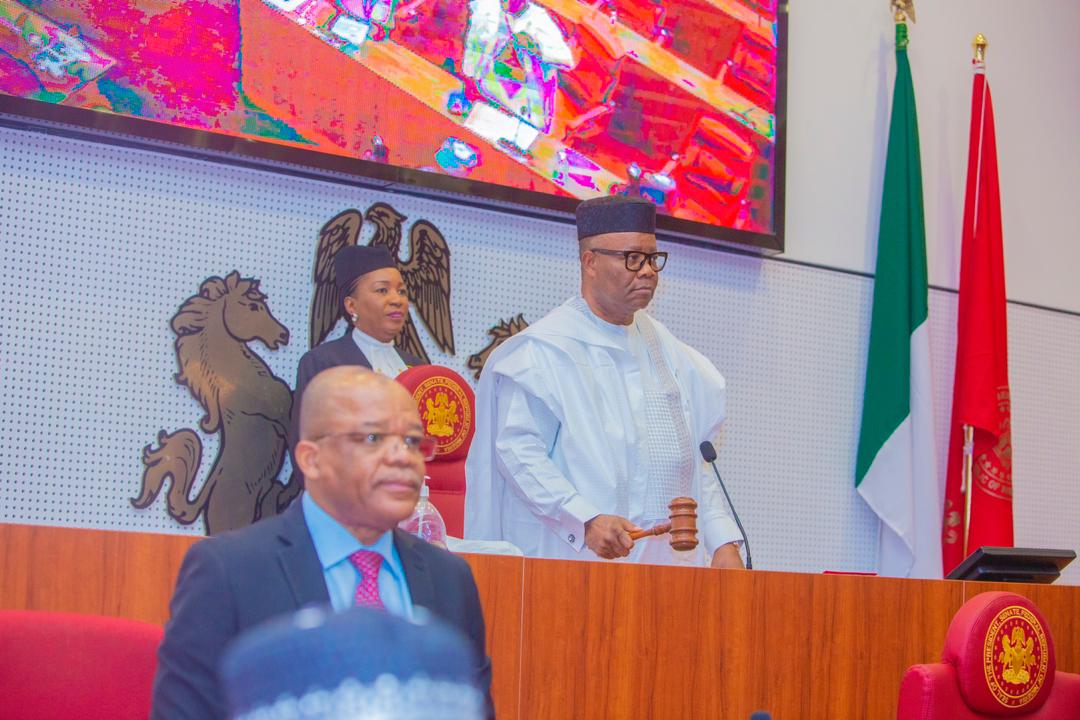
As the 10th National Assembly marks its third anniversary, attention is not only focused on legislative achievements and policy reforms but also on the communication style of Senate President Godswill Akpabio, whose tenure has been punctuated by a number of controversial remarks, verbal slips, and widely debated public statements.
Since assuming office in June 2023, Akpabio has emerged as one of the most visible political figures in the country. While supporters describe him as charismatic, witty, and approachable, critics argue that his frequent off-the-cuff remarks have sometimes distracted from the work of the Senate and exposed the institution to unnecessary public criticism.
Political analysts note that in an era dominated by social media, instant video sharing, and heightened public scrutiny, even minor verbal mistakes can quickly become national controversies. For a Senate President who regularly addresses lawmakers, government officials, and the public, communication has become as important as legislation itself.
One of the most talked-about incidents occurred in July 2025 when Akpabio mistakenly referred to President Bola Ahmed Tinubu while discussing the burial and state honours accorded to former President Muhammadu Buhari. In what many observers described as a classic slip of the tongue, he inadvertently suggested that President Tinubu had been buried before quickly correcting himself.
Although the correction came almost immediately, the clip spread rapidly across social media platforms, generating widespread reactions and becoming one of the most discussed political moments of the year. The incident highlighted the speed at which public figures can find themselves at the centre of controversy in the digital age.
Another major controversy emerged in August 2023 when Akpabio informed senators during a plenary session that a “token” had been credited to their accounts to support their holiday plans before attempting to withdraw the statement and replace it with a reference to “prayers.” The comment came at a time when many Nigerians were grappling with rising inflation, subsidy removal, and increasing economic hardship.
The remark attracted criticism from sections of the public who viewed it as evidence of a disconnect between political leaders and ordinary citizens. Although supporters argued that the statement was taken out of context, it nevertheless became a defining moment in public discussions about governance and accountability.
The Senate President also faced scrutiny following comments made while dismissing a fake report linking him to former United States President Donald Trump. During the exchange, Akpabio jokingly remarked, “Who am I to answer Trump?” While intended as humour, the statement generated debate about national pride and diplomatic posture after some lawmakers responded by emphasising Nigeria’s sovereignty and independence.
In addition to genuine verbal slips, Akpabio has also been the subject of misinformation campaigns. Several viral social media posts falsely attributed controversial statements to him, including claims that he encouraged Nigerians to seek “free food” and allegations that he prioritised the purchase of a presidential jet over citizens’ welfare. Subsequent fact-checks and official clarifications showed that the quotes had either been taken out of context or entirely fabricated.
These incidents have underscored a broader challenge facing public officials: distinguishing between legitimate criticism and deliberate misinformation. Analysts argue that political leaders must not only communicate carefully but also develop rapid-response mechanisms to counter false narratives before they gain traction.
Questions about communication management also emerged in June 2025 when differing figures were publicly presented regarding the legislative achievements of the 10th Senate. While Akpabio cited one set of statistics on bills introduced and passed, another Senate leader later provided different numbers. Though the discrepancy appeared administrative rather than political, it raised concerns about consistency in official communication and data management within the legislature.
Observers say the recurring controversies surrounding Akpabio reveal both the strengths and weaknesses of his leadership style. His informal, conversational approach often helps ease tensions in a chamber filled with powerful political actors and can make legislative proceedings appear more accessible to the public. However, the same style can create vulnerabilities when remarks are misinterpreted, taken out of context, or amplified by political opponents.
Communication experts argue that modern political leadership requires a delicate balance between spontaneity and discipline. In a political environment where every statement is recorded, analysed, and shared within seconds, public officials must be increasingly mindful of how their words may be perceived by different audiences.
Despite the controversies, supporters point to the Senate’s legislative activities, oversight functions, and engagement with key national issues as evidence that the institution has remained focused on its constitutional responsibilities. They argue that occasional verbal slips should not overshadow broader legislative achievements.
As the 10th National Assembly enters its fourth year, political observers say one of the key lessons from the first three years is the growing importance of strategic communication in governance. For legislative leaders, every statement now carries the potential to shape public perception, influence political debates, and impact institutional credibility.
In an age of viral content and intense public scrutiny, the experience of Senate President Akpabio serves as a reminder that in politics, words can be as consequential as actions, and communication mistakes can sometimes generate as much attention as policy decisions themselves.