


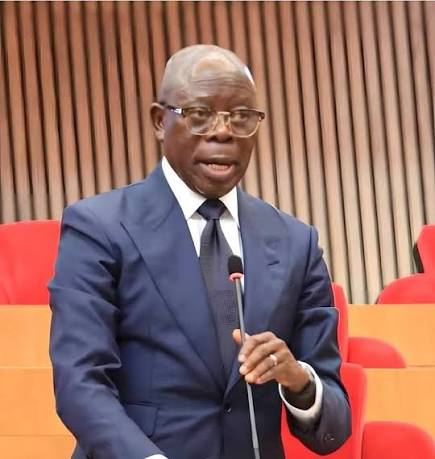
Fresh cracks may be emerging within Nigeria’s Senate following allegations by Senator Adams Oshiomhole that Senate President Godswill Akpabio harbours a longstanding bias against him and would prefer to see him excluded from the National Assembly.
Speaking during a podcast interview, the senator representing Edo North accused the Senate President of maintaining an unfriendly disposition toward him, despite their shared membership of the ruling All Progressives Congress (APC) and their support for President Bola Tinubu’s administration.
Oshiomhole claimed that many lawmakers within the Senate are aware of what he described as Akpabio’s negative perception of him. According to the former Edo State governor, the Senate President mistakenly views him as a political threat and often reacts with discomfort whenever he interacts closely with fellow senators on the floor of the chamber.
The lawmaker said he could not definitively explain the reason behind the alleged hostility but maintained that the strained relationship has become noticeable to many members of the Senate. He suggested that the situation reflects broader concerns among lawmakers regarding the current leadership style within the upper legislative chamber.
According to Oshiomhole, dissatisfaction is quietly growing among senators who feel uncomfortable with the manner in which legislative affairs are being managed. He predicted that future assemblies may adopt a different leadership culture that encourages wider consultation, inclusiveness and stronger internal democracy.
The former national chairman of the APC cited an incident involving Senator Abdulaziz Yari, former governor of Zamfara State, as an example of the atmosphere within the Senate. He alleged that when Yari expressed interest in becoming vice chairman of the Senate Committee on Interior, Akpabio jokingly suggested that such a move could be linked to efforts to challenge his position as Senate President.
Although the comment was reportedly made in a light-hearted manner, Oshiomhole argued that it reflected a level of suspicion within the leadership structure of the Senate and demonstrated concerns about perceived political alliances among lawmakers.
The allegations come at a time when the National Assembly is facing increased public scrutiny over its oversight responsibilities and internal cohesion. The Senate has recently been involved in high-profile investigations, including ongoing inquiries into the financial records of the Nigerian National Petroleum Company Limited (NNPCL).
Oshiomhole has been one of the prominent voices pushing for greater accountability in the investigation. He recently supported a motion seeking the arrest of former NNPCL Group Chief Executive Officer, Mele Kyari, after the former oil executive reportedly failed to appear before lawmakers examining audit reports covering the period between 2017 and 2023.
The Senate Public Accounts Committee is currently reviewing financial records and audit queries linked to transactions reportedly worth more than ₦210 trillion. The investigation is aimed at clarifying discrepancies and unresolved entries contained in audit reports submitted to lawmakers.
Political observers note that Oshiomhole’s remarks could intensify discussions about unity within the Senate and the management of internal disagreements among senior lawmakers. While differences of opinion are common in legislative institutions, public disagreements involving top-ranking members often attract significant political attention because of their potential impact on lawmaking and governance.
Analysts also argue that the episode highlights the delicate balance between leadership authority and collegial relationships within democratic institutions. Effective legislative leadership often depends on consensus-building, consultation and maintaining the confidence of members across different political tendencies.
As of the time of reporting, Senate President Godswill Akpabio had not publicly responded to the allegations. However, the comments have already generated debate within political circles, with supporters of both men offering differing interpretations of the relationship between two of the ruling party’s most influential figures.
The controversy underscores the evolving dynamics within the National Assembly as lawmakers continue to navigate political alliances, oversight responsibilities and preparations for future political contests ahead of the 2027 electoral cycle.


