


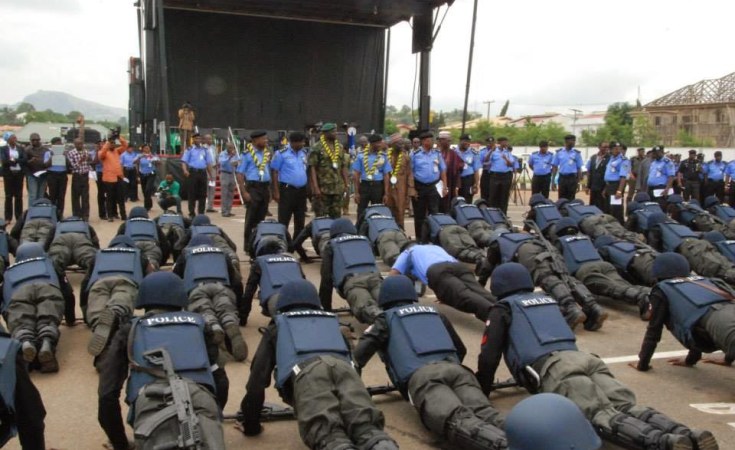
The Nigerian Army has revised its recruit training curriculum as part of a broader effort to enhance the combat readiness of newly enlisted soldiers and improve the military’s ability to respond to terrorism, insurgency, banditry, and other emerging security threats across the country.
The development was announced by the Commandant of the Nigerian Defence Academy (NDA), , during the award ceremony for the 90 Regular Recruits Intake at the Depot Nigerian Army in Zaria, Kaduna State.
Speaking as the Special Guest of Honour at the event, Olatoye said the curriculum review was necessitated by the changing nature of security challenges facing Nigeria and the need to ensure that military training keeps pace with evolving threats.
According to him, the Nigerian Army has adopted a more practical and operationally focused training approach designed to equip recruits with the skills, discipline, and tactical knowledge required for contemporary military operations.
He explained that greater emphasis has now been placed on counter-terrorism and counter-insurgency warfare, reflecting the realities of ongoing military engagements in various parts of the country. The revised curriculum aims to prepare soldiers for deployment in complex operational environments where asymmetric warfare, intelligence-driven operations, and rapid-response missions have become increasingly important.
“I am delighted to note that the training curriculum has been reviewed to reflect the current security realities facing our country. As a result, greater emphasis has been placed on counter-terrorism operations and other contemporary security challenges,” Olatoye stated.
The NDA Commandant noted that modern security threats require soldiers who are not only physically fit but also intellectually prepared to understand evolving battlefield dynamics. He said the new curriculum incorporates lessons learned from recent military operations and is designed to produce personnel capable of operating effectively in diverse terrains and conflict situations.
Under the revised programme, recruits are expected to receive enhanced instruction in areas such as intelligence gathering, tactical manoeuvres, fieldcraft, weapons handling, surveillance operations, crisis response, and civilian-military relations. The goal is to create a more versatile fighting force capable of responding to multiple security threats simultaneously.
Olatoye expressed confidence that the newly trained soldiers would make meaningful contributions to ongoing operations against terrorist groups, armed bandits, kidnappers, and other criminal elements threatening national security. He emphasized that the recruits have been prepared to support military formations across various theatres of operation nationwide.
The curriculum review comes at a time when Nigeria continues to face a range of security challenges, including insurgency in the North-East, banditry in parts of the North-West, kidnapping for ransom, communal conflicts, and attacks on critical infrastructure. Military authorities believe that strengthening training at the recruitment stage is essential to improving operational effectiveness and mission success.
Earlier in his remarks, the Commandant of Depot Nigerian Army, , said the award ceremony marked the successful completion of training activities for members of the 90 Regular Recruits Intake.
He disclosed that a total of 6,001 recruits initially commenced the training programme, while 5,876 recruits successfully completed the rigorous exercise and qualified to participate in the passing-out parade. The difference reflects the stringent standards maintained during military training, where recruits are assessed on physical fitness, discipline, academic performance, and operational competence.
Military officials noted that recruit training remains the foundation upon which professional military careers are built. Consequently, the Army continues to review and modernize its training systems to ensure that personnel are adequately prepared for the demands of contemporary warfare.
Security analysts have welcomed the curriculum overhaul, describing it as a necessary step toward strengthening Nigeria’s defence capabilities. They argue that modern conflicts require a combination of conventional military skills, technological competence, intelligence integration, and adaptability to rapidly changing threats.
The initiative is also expected to complement broader military reforms aimed at enhancing operational efficiency, improving troop welfare, modernizing equipment, and strengthening collaboration among security agencies.
As the newly trained recruits prepare for deployment across different parts of the country, military authorities remain optimistic that the enhanced training programme will contribute significantly to ongoing efforts to restore peace, protect communities, and safeguard Nigeria’s territorial integrity.
The curriculum review underscores the Nigerian Army’s commitment to building a more professional, responsive, and combat-ready force capable of addressing the complex security challenges confronting the nation in the years ahead.