


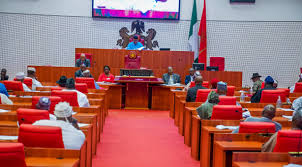
The Senate Committee on Petroleum Sector has pledged to resolve the long-standing jurisdictional dispute between the Nigeria Midstream and Downstream Petroleum Regulatory Authority (NMDPRA) and the Oil and Gas Free Zone Authority (OGFZA), a conflict lawmakers say has created uncertainty in Nigeria’s petroleum regulatory environment and affected investor confidence.
The commitment was made during a five-day legislative retreat held in Yenagoa, Bayelsa State, where lawmakers, regulators, and industry stakeholders gathered to examine overlapping mandates and operational friction between key agencies in the oil and gas sector.
Chairman of the Senate Committee on Downstream Petroleum Sector, Senator Sulaiman Abdulrahman Kawu Sumaila, said the retreat was designed as a neutral platform for dialogue and evidence-based review of the regulatory framework governing the petroleum industry.
According to him, the committee’s objective is to ensure that regulatory agencies operate within clearly defined mandates while avoiding duplication of functions that often lead to bureaucratic delays, conflicts of authority, and inefficiencies in the sector.
Senator Sumaila explained that the committee would, at the conclusion of the retreat, produce practical and implementable recommendations aimed at restoring harmony between the agencies while strengthening investor confidence, improving energy security, and supporting sustainable economic growth.
He noted that the discussions would focus on identifying ambiguities in existing laws, assessing whether legislative amendments are required, and developing a coordinated framework that ensures seamless regulation across the petroleum value chain.
“The committee will examine all submissions, presentations, and legal arguments made during this retreat. At the end of our deliberations, we will produce objective and evidence-based recommendations that address both immediate concerns and long-term regulatory challenges,” he said.
He further emphasized that where necessary, the Senate would not hesitate to propose legislative or policy reforms to eliminate jurisdictional overlaps and ensure that Nigeria’s regulatory institutions function efficiently in line with national interest.
Senator Sumaila added that the ultimate goal is to create a stable and predictable regulatory environment that promotes cooperation among agencies, strengthens accountability, and enhances Nigeria’s position as a leading energy hub in Africa.
Stakeholders at the retreat agreed that regulatory clarity is critical to attracting and sustaining investment in the petroleum sector, especially at a time when Nigeria is seeking to expand production, improve downstream efficiency, and compete in the global energy market.
In a goodwill message, the Managing Director of the Oil and Gas Free Zone Authority, , Alhaji Bamanga Usman Jada, called for greater cooperation among regulatory agencies and urged them to avoid actions that create confusion or uncertainty for investors operating in the sector.
He stressed that Nigeria’s Free Zone system is designed to operate as a one-stop investment framework, where multiple regulatory approvals are streamlined to facilitate ease of doing business and attract foreign direct investment.
Jada noted that successful free zone models around the world operate under coordinated regulatory structures that minimize bureaucratic bottlenecks and enhance investor confidence. He therefore urged Nigerian authorities to align with global best practices to strengthen the country’s competitiveness.
He specifically referenced major industrial and energy investments operating within Nigeria’s free zones, including large-scale projects such as those in the Dangote Industrial Free Zone, as examples of the importance of regulatory certainty in driving economic development.
According to him, Nigeria’s ambition to become a leading energy and industrial hub in Africa can only be achieved if regulatory institutions work collaboratively rather than in competition with one another.
The ongoing dispute between NMDPRA and OGFZA has been a subject of concern among industry operators, who argue that overlapping mandates often lead to delays in approvals, conflicting directives, and uncertainty in project execution. Analysts say such inefficiencies could discourage investment in a sector that is central to Nigeria’s revenue generation and foreign exchange earnings.
The Senate committee’s intervention is therefore seen as a critical step toward harmonizing Nigeria’s petroleum regulatory framework, improving institutional coordination, and ensuring that the sector operates under clear, efficient, and investor-friendly guidelines.
As deliberations continue, stakeholders are optimistic that the proposed reforms will help eliminate structural bottlenecks, strengthen governance in the oil and gas industry, and support Nigeria’s broader economic transformation agenda.


