


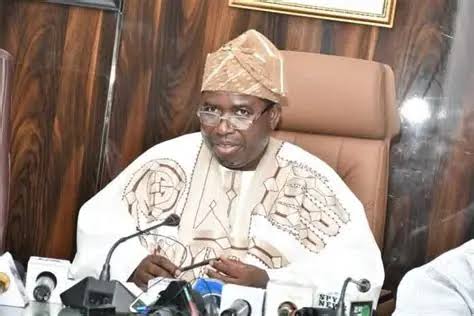
A former Special and Technical Adviser to the Chairman of the Independent National Electoral Commission (INEC), Prof. Mohammed Kuna, has argued that continuous amendments to Nigeria’s electoral laws will not automatically guarantee free, fair and credible elections, insisting that the country’s greatest challenge lies in the behaviour of political actors and the broader political culture.
Speaking during a public awareness webinar on electoral processes and result management, Prof. Kuna said Nigeria must move beyond the recurring practice of reviewing and amending electoral laws after every election cycle. According to him, while legal reforms remain important, the effectiveness of any electoral framework ultimately depends on the willingness of politicians, voters, institutions and stakeholders to respect democratic principles.
The webinar, titled “From Polling Unit to Collation Centre: Understanding Collation and Result Transmission under the Electoral Act 2026,” was organised by the EU-SDGN Judiciary and Legislature Cluster, a coalition of democracy-support organisations working to promote transparency, accountability and electoral integrity in Nigeria.
Kuna noted that Nigeria has repeatedly revised its electoral laws over the years in an effort to address shortcomings identified during previous elections. Electoral Acts enacted in 2002, 2006, 2010, 2022 and subsequent reforms were all designed to strengthen electoral administration and reduce opportunities for manipulation.
However, he observed that despite these legislative improvements, political actors continue to develop new methods of undermining the electoral process, suggesting that the root of the problem extends beyond legal provisions.
According to him, lawmakers cannot realistically draft legislation that anticipates every possible form of misconduct by political actors. Instead, he argued that greater attention should be given to promoting ethical political conduct, strengthening democratic values and fostering a culture of accountability among citizens and leaders.
He emphasized that democracy thrives not merely because of strong laws but because participants willingly respect the rules of engagement. In his view, building a healthy political culture is just as important as drafting effective legislation.
The former INEC adviser stressed that political competition should be driven by ideas, policies and service delivery rather than manipulation, intimidation and desperation for power. He warned that unless attitudes toward politics change, electoral malpractice may persist regardless of the number of legal reforms introduced.
While acknowledging that the Electoral Act 2026 contains several improvements aimed at strengthening transparency and efficiency, Kuna expressed concern over specific provisions that he believes could create challenges during future elections.
Particularly, he questioned Section 63(2) of the Electoral Act, which grants election officials authority to determine the authenticity of ballot papers during voting and collation processes. He warned that such discretionary powers could become controversial if not carefully reviewed and clarified before future national elections.
According to him, provisions that leave room for subjective interpretation may create disputes and undermine public confidence in electoral outcomes. He therefore called for urgent legislative attention to address any ambiguities that could affect the credibility of future polls.
Kuna also addressed the growing role of technology in electoral management, particularly the emergence of Artificial Intelligence (AI). He described AI as both an opportunity and a potential threat to election administration.
On one hand, he said AI could improve efficiency, voter education, data analysis and election monitoring. On the other hand, he warned that sophisticated actors could potentially exploit emerging technologies to spread misinformation, manipulate public opinion or attempt cyber intrusions into sensitive electoral systems.
Despite these concerns, he maintained that electoral institutions must embrace technological innovation rather than resist it, arguing that the future of election management will increasingly depend on the effective use of digital tools and secure technologies.
The former adviser identified transparency in result collation and transmission as one of the most critical factors in strengthening public trust in elections. He argued that citizens are more likely to accept election outcomes when they understand how votes are counted, collated and transmitted throughout the electoral process.
Also speaking during the webinar, election security expert Fatai Yusuf of The Kukah Centre highlighted several threats that continue to undermine electoral integrity in Nigeria.
According to Yusuf, vote-buying remains one of the most persistent challenges confronting Nigerian elections. He noted that the practice distorts democratic choice by allowing financial influence to determine electoral outcomes rather than the genuine preferences of voters.
Other major threats identified include ballot box snatching, voter intimidation, result-sheet manipulation, political violence, misinformation campaigns and the spread of fake news through digital platforms.
Yusuf observed that election-related violence has evolved over the years, often shifting from one region to another. This trend, he said, underscores the need for security agencies, electoral officials and citizens to remain vigilant before, during and after elections.
He further warned that kidnapping, terrorism, cult-related activities and armed attacks have emerged as significant security concerns capable of disrupting electoral processes in various parts of the country.
The security expert urged citizens to pay attention to early warning signs that may indicate impending electoral violence. These include unusual movements of suspicious individuals, stockpiling of weapons, inflammatory political rhetoric, organised voter intimidation and the distribution of money or gifts to influence voting behaviour.
He stressed that protecting democracy is a shared responsibility and called on citizens to actively participate in safeguarding the electoral process.
According to Yusuf, voters should collect their Permanent Voter Cards (PVCs), arrive early at polling units, report suspicious activities, reject inducements and document any irregularities observed during elections.
Political analysts say the remarks by Prof. Kuna and other stakeholders highlight a growing consensus that while legal reforms have strengthened Nigeria’s electoral framework, sustainable democratic progress will require broader institutional reforms, civic education and a transformation of political behaviour.
As Nigeria prepares for future elections, experts argue that the credibility of the electoral process will depend not only on the strength of the law but also on the integrity, transparency and commitment of all participants to democratic values and the rule of law.