


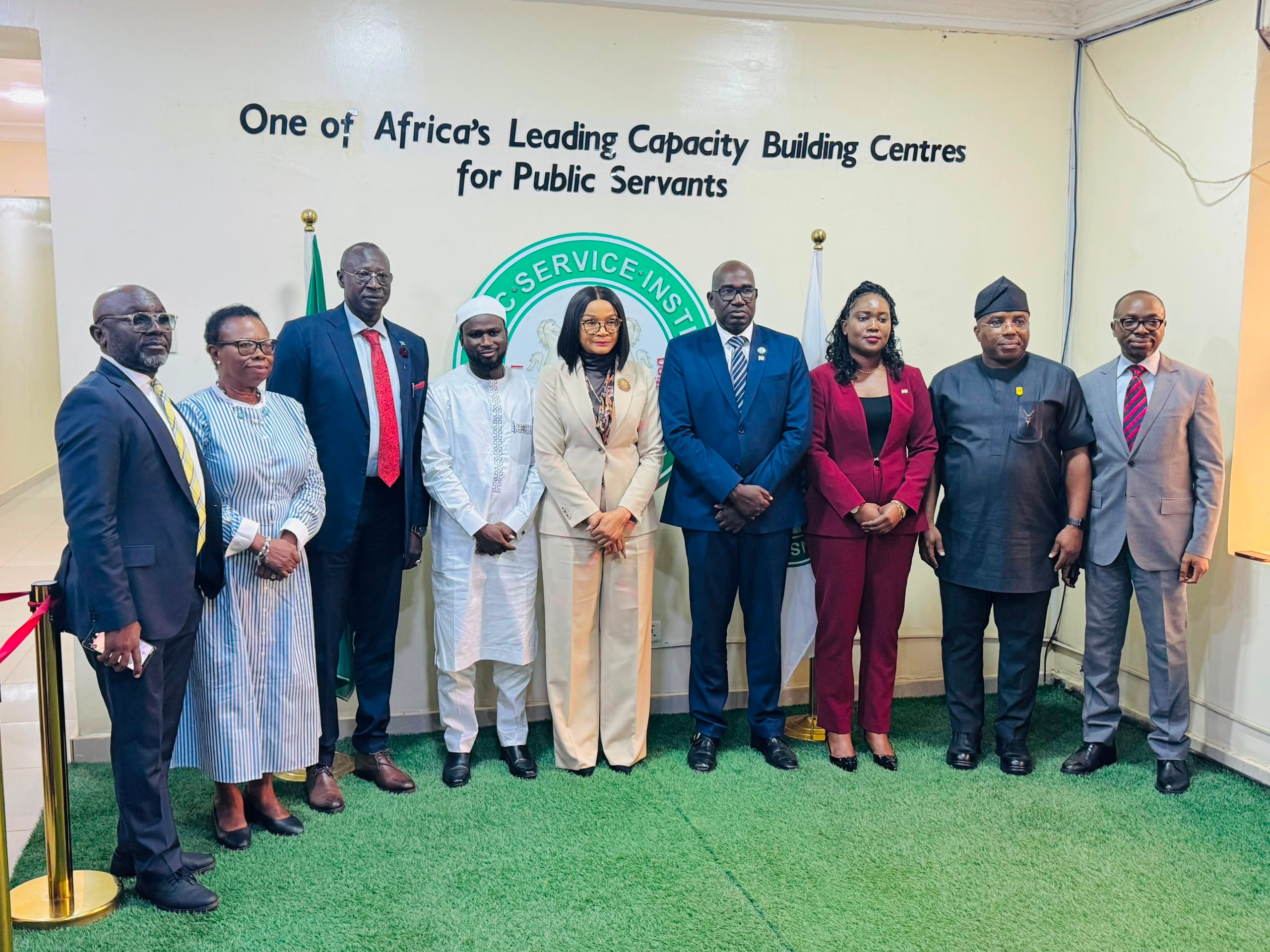
The Government of The Gambia has expressed its intention to adopt key aspects of Nigeria’s civil service reform model as part of efforts to enhance public sector efficiency, improve capacity development and modernise governance structures in the West African nation.
The disclosure was made by the Secretary to the Cabinet and Head of the Civil Service of The Gambia, Alieu Njie, during a study visit by a high-level Gambian delegation to the Public Service Institute of Nigeria (PSIN) in Abuja. The visit is aimed at examining Nigeria’s experiences in public sector transformation and identifying strategies that can be adapted to strengthen administrative institutions in The Gambia.
According to Njie, the Gambian government is keen on studying the reforms and innovations implemented by Nigeria in order to replicate successful models back home. He described Nigeria as a dependable partner and “big brother” whose contributions to regional development have benefited The Gambia in several strategic sectors.
He noted that Nigeria has consistently provided support to The Gambia in areas such as defence, healthcare, technical assistance and human capacity development, adding that the relationship between both countries extends beyond diplomacy to practical cooperation in nation-building.
“There are many things we can learn from Nigeria,” Njie said, emphasizing that the knowledge acquired during the visit would contribute significantly to ongoing efforts to strengthen governance and institutional performance in his country.
The Gambian civil service chief expressed satisfaction with the interactions and engagements held since the delegation’s arrival, saying the insights gathered have exceeded expectations and would have lasting value for public administration reforms in The Gambia.
Earlier, the Administrator and Chief Executive Officer of the Public Service Institute of Nigeria, Dr. Imeh Okon, described the visit as an opportunity to deepen bilateral cooperation and encourage the exchange of ideas between both countries. She said the engagement was not intended as a one-sided presentation but rather a platform for mutual learning and collaboration.
According to Okon, the institute remains committed to promoting excellence and innovation in public service delivery. She disclosed that PSIN has administered approximately 3,500 technology-driven promotion examinations across ministries, departments and agencies, reflecting ongoing efforts to digitise and modernise the Nigerian civil service.
She added that the institute has expanded its training programmes to equip civil servants with the skills needed to address emerging challenges and adapt to changing demands in governance and service delivery.
Also speaking during the engagement, consultant to the Office of the Head of the Civil Service of the Federation, Dr. Francisca Odeka, highlighted some of the reforms introduced by the Federal Government to institutionalise continuous learning and improve accountability within the civil service.
She explained that the government’s “One’s Knowledge” framework was designed to link professional training and capacity development directly to performance management and career progression. Under the framework, participation in training programmes contributes to the evaluation of civil servants and could influence promotion decisions.
According to her, reforms can only succeed when mechanisms are put in place to ensure accountability and consequences for non-compliance. She stressed that civil servants who fail to participate in mandatory training programmes risk losing valuable points that may affect their advancement within the system.
The exchange between Nigerian and Gambian officials underscores the growing importance of regional cooperation in public administration and institutional development. Experts believe that adopting best practices and sharing experiences among African countries can help strengthen governance, improve efficiency and enhance service delivery across the continent.
The visit also highlights Nigeria’s increasing role as a source of technical expertise and policy innovation within West Africa. Analysts say the country’s ongoing efforts to digitise public institutions, promote merit-based systems and enhance human capital development have positioned it as a model for administrative reforms in the region.
With both countries seeking stronger institutions and more efficient governance structures, the collaboration is expected to open new avenues for knowledge sharing, capacity building and long-term partnerships aimed at improving public service delivery and accelerating socio-economic development in West Africa.


