


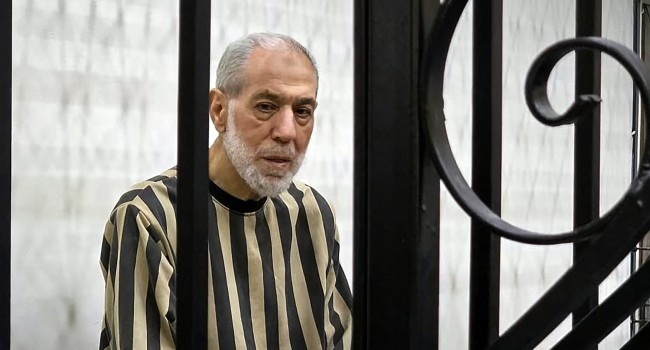
Syria’s former top Muslim cleric, Ahmed Hassoun, has been sentenced to life imprisonment after being found guilty of inciting sectarian violence and other crimes during the Assad era.
A Syrian court has sentenced former Grand Mufti Ahmed Hassoun to life imprisonment, marking the latest prosecution of a senior figure linked to the government of ousted President Bashar al-Assad.
Hassoun, 77, was convicted on Monday of several offences, including inciting civil war and sectarian strife, incitement to intentional homicide and complicity in intentional homicide.
The Fourth Criminal Court in Damascus also ordered the confiscation of his assets and their transfer to the public treasury.
Hassoun served as Syria’s highest-ranking Muslim cleric for 16 years and was known for his close relationship with Assad, frequently appearing alongside the former president during religious events.
First Religious Figure Sentenced
Hassoun is the 10th Assad-era figure to be sentenced since Syria’s new authorities began prosecuting officials from the former regime.
His case is particularly significant because he is the first religious figure to receive a sentence since the trials began in April.
The court handed Hassoun a life sentence for “inciting civil war and sectarian strife”, while additional convictions attracted prison terms ranging from three to 20 years.
He was arrested at Damascus airport in March 2025 while allegedly attempting to flee the country.
Assad Also Sentenced
The latest ruling comes shortly after Syrian authorities handed down death sentences against former President Bashar al-Assad, his brother Maher and five former security officials.
The verdicts were issued in absentia on August 11 over alleged atrocities committed during Syria’s long-running civil war.
Bashar al-Assad fled Syria after his government collapsed in December 2024 and is believed to be living in Russia.
Other members of the former regime, including Atif Najib and Wassim al-Assad, have also received death sentences after being tried in person.
Rights Groups Raise Concerns
The prosecutions have attracted scrutiny from international human rights organisations, particularly over the use of the death penalty and concerns about the independence of Syria’s judicial system.
Human Rights Watch said the recent sentences raise important legal questions and warned that bringing justice for crimes committed during the conflict requires more than convictions.
The organisation called for a judicial system capable of delivering impartial and independent justice.
Syria’s civil war began in 2011 after the government’s violent crackdown on pro-democracy protests. The conflict went on to kill more than half a million people, displace millions and leave tens of thousands missing.


