


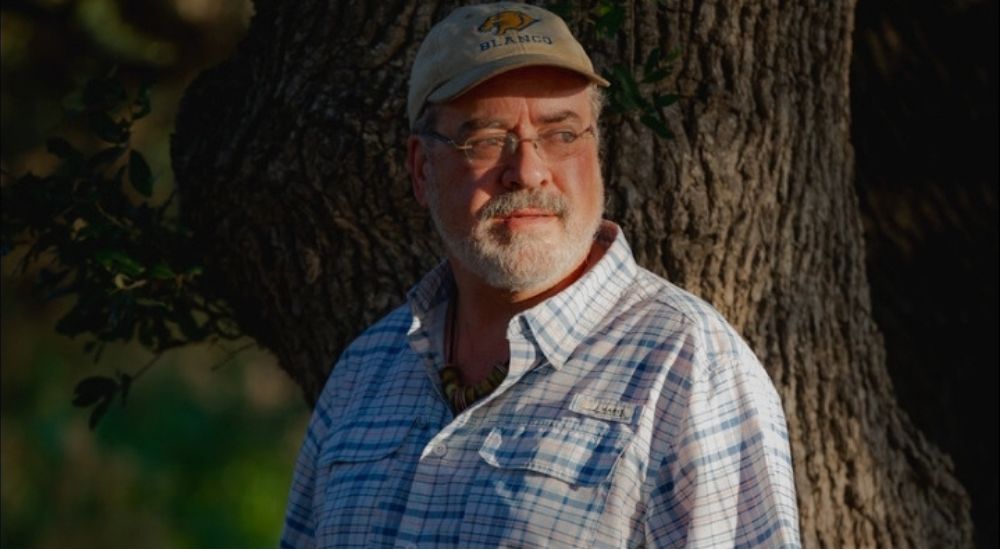
Mike Arnold
A former mayor in the United States, Mike Arnold, has told members of the US Congress that Nigeria is facing deep structural, historical, and humanitarian challenges that could threaten its long-term unity unless urgent reforms are undertaken.
Arnold made the remarks during a presentation to lawmakers titled Nigeria at the Crossroads: The Case for Action, where he argued that the country’s political future should be determined through a democratic referendum that allows citizens to decide on a new constitutional arrangement.
The former mayor, who is also founder and chairman of Africa Arise International and Africa Arise USA, said Nigeria’s current difficulties are rooted in colonial-era state formation and decades of unresolved political tensions.
According to Arnold, the structure of the Nigerian federation, inherited from British colonial rule, has continued to generate disputes over representation, regional autonomy, and access to power.
He argued that many post-colonial states created through externally imposed arrangements have eventually undergone separation, major restructuring, or constitutional redesign.
“Like so many other British colonial contraptions designed to fail, separation is likely inevitable and just,” Arnold said while presenting his analysis.
He cited historical examples such as the partition of India and Pakistan in 1947, the separation of Sudan and South Sudan in 2011, and constitutional disputes in Cyprus and Somaliland as evidence that some colonial state arrangements have required major change.
Arnold said the formal position of his organisation supports what he described as a “freely chosen constitutional future” for Nigeria through a referendum process.
Focus on Constitutional Debate
Calls for constitutional reform have remained a recurring issue in Nigeria for years, with political leaders, civil society groups, and regional organisations often demanding devolution of powers, state policing, fiscal federalism, and a review of the 1999 Constitution.
Arnold said a referendum would allow Nigerians to democratically determine whether to maintain the current federal system, restructure it, or pursue alternative constitutional arrangements.
Nigeria, Africa’s most populous nation, is home to more than 200 million people and hundreds of ethnic, linguistic, and religious communities.
Despite repeated political tensions, the country has remained united since the end of the civil war in 1970, though debates over equity, inclusion, and national identity continue.
Revisiting the Biafra War
Arnold, who has publicly expressed sympathy for the Biafra cause, also revisited the history of the Nigerian Civil War.
He described the former Eastern Region as an economically dynamic part of the country before the outbreak of conflict in 1967.
According to him, development policies under former Eastern Region Premier Michael Okpara helped produce one of the strongest regional growth records in Africa during the pre-war years.
Arnold also criticised the role of Britain during the war, alleging that British diplomatic and material support for the Federal Military Government influenced the outcome of the conflict.
He further claimed that the wartime blockade of Biafra contributed to mass starvation and humanitarian suffering, particularly among civilians and children.
Historians generally agree that the civil war, fought between 1967 and 1970, caused severe humanitarian devastation, with casualty estimates varying widely.
The conflict remains one of the most sensitive chapters in Nigeria’s history and continues to shape political memory, especially in the South-East.
Concerns Over Insecurity and Religious Violence
Beyond historical grievances, Arnold also raised concerns about present-day insecurity, religious violence, and humanitarian conditions in Nigeria.
He alleged that attacks on communities and incidents of impunity have continued despite growing international attention.
Arnold referenced Nigeria’s designation by the United States as a Country of Particular Concern under international religious freedom monitoring frameworks, saying the situation has worsened since then.
He cited recent violent incidents in parts of the country involving attacks on communities and places of worship.
Nigeria has in recent years faced multiple security challenges, including insurgency in the North-East, banditry in the North-West, farmer-herder conflicts in the Middle Belt, separatist unrest in the South-East, and kidnapping in several regions.
These overlapping crises have placed significant pressure on security agencies and humanitarian institutions.
Internally Displaced Persons
Arnold also criticised the treatment of internally displaced persons, claiming that many vulnerable populations have not received adequate recognition or humanitarian assistance.
He alleged that the under-reporting or non-recognition of some displacement camps could worsen suffering and limit access to international relief support.
Nigeria has one of Africa’s largest internally displaced populations, largely driven by insurgency, communal violence, and climate-related displacement.
International agencies, including the UNHCR and IOM, continue to work with Nigerian authorities and humanitarian partners to support affected communities.
No Official Nigerian Response Yet
As of the time of the presentation, there was no immediate official response from the Nigeria government to Arnold’s remarks.
Successive Nigerian administrations have consistently maintained that the country’s unity is non-negotiable while also acknowledging the need for reforms that promote fairness, security, and development.
Government officials have often argued that national challenges should be addressed through democratic institutions, legislative review, and inclusive dialogue rather than calls for disintegration.
Renewed Debate
Arnold’s presentation is likely to generate debate among policymakers, analysts, and members of the Nigerian diaspora, especially as discussions around constitutional reform and national cohesion continue.
Supporters of restructuring may see his comments as reinforcing long-standing concerns about governance imbalance and unresolved historical issues.
Critics, however, may view the remarks as external interference or an oversimplification of a complex national reality.
Nigeria remains one of Africa’s largest economies and a major diplomatic actor on the continent, despite persistent internal challenges.
For many observers, the core issue raised by the presentation is less about breakup and more about whether Nigeria can implement meaningful reforms that strengthen unity, improve security, and restore confidence among its diverse populations.
As the debate continues, the country’s future is likely to depend on how effectively it responds to longstanding demands for justice, inclusion, development, and constitutional balance.

