


With just two days remaining before the Independent National Electoral Commission (INEC) deadline for the completion of party primaries, Nigeria’s political landscape is becoming clearer as several political parties have confirmed their presidential candidates ahead of the 2027 general elections.
So far, at least six political parties have concluded their presidential primaries and officially presented candidates, while others are expected to complete ratifications and affirmations before the May 30 deadline fixed by INEC.
Among the parties that have concluded their exercises are the ruling All Progressives Congress (APC), the African Democratic Congress (ADC), the Peoples Redemption Party (PRP), the Social Democratic Party (SDP), the African Action Congress (AAC), and the faction of the Peoples Democratic Party (PDP) backed by former Rivers State governor, Nyesom Wike.
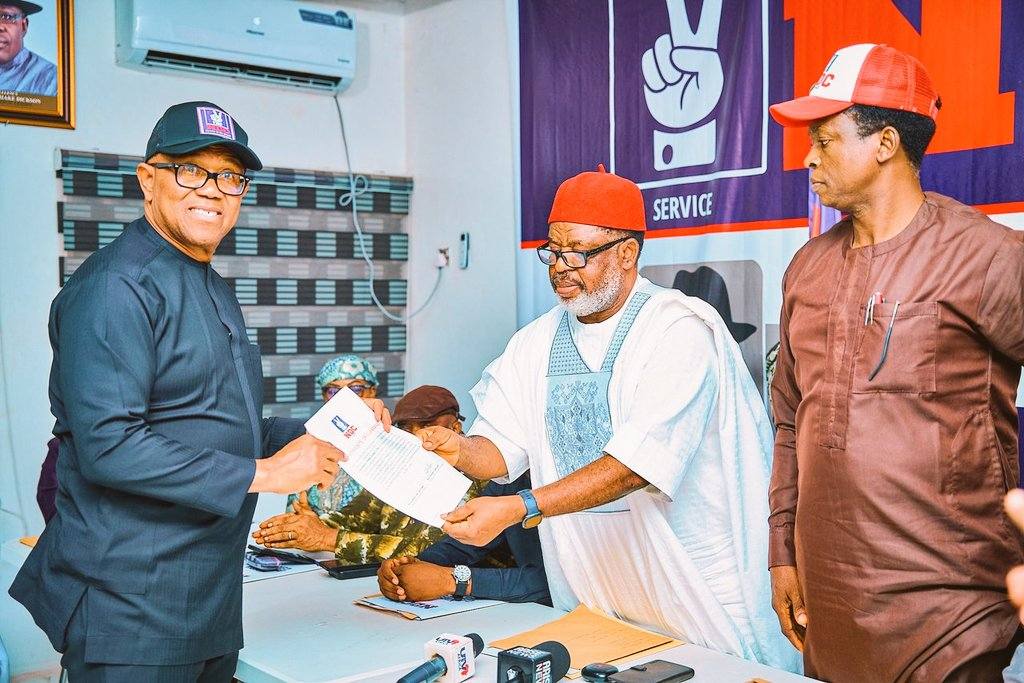
The Nigeria Democratic Congress (NDC) is also expected to formally ratify former Labour Party presidential candidate, Peter Obi, as its standard bearer, as he remains the sole aspirant seeking the party’s presidential ticket.
Political observers say the emergence of candidates across the parties signals the beginning of intense political alignments and campaigns expected to dominate the country’s political space in the coming months.
Tinubu Emerges APC Candidate
President Bola Ahmed Tinubu secured the presidential ticket of the APC after winning the party’s nationwide primary election conducted across the country’s 8,809 wards.
According to the results announced by the party, Tinubu polled over 10.9 million votes, defeating his only challenger, Stanley Osifo, who secured 16,504 votes.
The APC described the exercise as peaceful and transparent, while Osifo congratulated the president and accepted the outcome of the election.
Tinubu’s emergence positions him for a re-election battle in 2027 as he seeks another four-year mandate under the APC platform.
Atiku Defeats Amaechi in ADC Primary
Former Vice President Atiku Abubakar also emerged as the presidential candidate of the African Democratic Congress (ADC) after defeating former Rivers State governor, Rotimi Amaechi, and banker Mohammed Hayatu-Deen in a closely watched primary.
The ADC announced that out of its more than 3.1 million registered members, about 2.5 million participated in the exercise.
Atiku secured 1,846,370 votes, while Amaechi scored 504,117 votes and Hayatu-Deen polled 177,120 votes.
The primary, however, generated controversy, with allegations of vote manipulation and non-compliance with electoral guidelines raised by some aspirants and party members.
A chieftain of the ADC, Kola Ologbondiyan, said aggrieved aspirants were free to approach the party’s appeal committee to seek redress.
According to him, the party has established internal mechanisms for dispute resolution and believes concerns raised by contestants would be addressed through lawful processes.
Peter Obi Set for NDC Ratification
The Nigeria Democratic Congress is expected to officially affirm Peter Obi as its presidential candidate before Saturday’s deadline.
Obi, who contested the 2023 presidential election under the Labour Party, has emerged as the sole aspirant seeking the NDC ticket, making his ratification largely a formality.
His expected emergence is already generating reactions across the political space, especially among youth groups and supporters who continue to see him as a major force in the 2027 race.
Political analysts believe Obi’s candidacy could reshape opposition dynamics and influence coalition discussions ahead of the general election.
Donald Duke Returns to Presidential Race
The Peoples Redemption Party (PRP) has elected former Cross River State governor, Donald Duke, as its presidential candidate.
The party’s National Chairman, Dr Hakeem Baba-Ahmed, announced the results at the party’s national secretariat in Abuja.
According to the PRP, Duke secured 6,499 votes to defeat Kingsley Yakubu, who polled 2,699 votes, while academic and policy expert, Dr Nnaoke Ufere, came third with 784 votes.
Party officials described the primary as free, fair and credible. Duke’s return to the presidential race marks another attempt by the former governor to position himself as a moderate alternative in Nigeria’s political landscape.
Sowore Retains AAC Ticket
Human rights activist and publisher, Omoyele Sowore, also emerged as the presidential candidate of the African Action Congress (AAC).
He was adopted during the party’s presidential convention in Abuja.
Accepting the nomination, Sowore described the AAC as the only genuine opposition party in the country and pledged to continue advocating for social justice, transparency and good governance.
He criticised the major political parties, accusing them of failing ordinary Nigerians and turning democracy into what he called a “criminal conspiracy.”
Sowore’s candidacy is expected to once again focus on youth mobilisation, anti-corruption campaigns and governance reforms.
SDP Renominates Adewole Adebayo
The Social Democratic Party (SDP) also confirmed Prince Adewole Adebayo as its presidential candidate during its national convention in Bauchi.
Delegates from all 36 states and the Federal Capital Territory reportedly endorsed his candidacy.
In his acceptance speech, Adebayo lamented the economic hardship facing Nigerians, citing unemployment, insecurity and rising poverty as evidence of leadership failure.
He promised to provide purposeful leadership capable of restoring hope and rebuilding public confidence in government institutions.
Makinde, Hashim Await Affirmation
Oyo State governor, Seyi Makinde, is also expected to secure presidential affirmation under the Allied Peoples Movement (APM) following ongoing political realignments linked to divisions within the PDP.
Makinde had earlier entered into a strategic alliance with the APM alongside loyalists from the Tanimu Turaki faction of the PDP in Oyo State.
Under the arrangement, candidates loyal to his faction are expected to contest the 2027 elections on the platform of the APM.
Meanwhile, businessman and former presidential aspirant, Gbenga Olawepo-Hashim, has moved to the Accord Party and declared his intention to contest the presidency.
Hashim dismissed reports suggesting that the Accord Party would not field a presidential candidate, insisting that the party remained committed to participating fully in the election.
He claimed that over one million supporters had already been mobilised into the Accord Party ahead of the 2027 polls.
Defections and Internal Crisis Trail Primaries
The conduct of the primaries across parties has been overshadowed by complaints of manipulation, lack of transparency and internal disputes.
Several prominent politicians reportedly dumped their parties following disagreements over the process.
Among those said to have left their parties are former Minister of Communications and Digital Economy, Isa Pantami, former Inspector-General of Police, Mohammed Adamu, and former Deputy Senate President, Ovie Omo-Agege.
Analysts warn that unresolved disputes and defections could weaken some political parties ahead of the general election.
Countdown to INEC Deadline
INEC fixed May 30, 2026, as the deadline for all political parties to conclude their primaries and submit the names of candidates contesting for governorship, National Assembly, State Assembly and presidential elections.
The electoral body had earlier announced that party primaries and dispute resolution processes would run from April 23 to May 30.
With major parties now finalising their candidates, attention is expected to shift toward coalition building, campaign strategies and preparations for what could become one of Nigeria’s most competitive presidential elections in recent history.


