


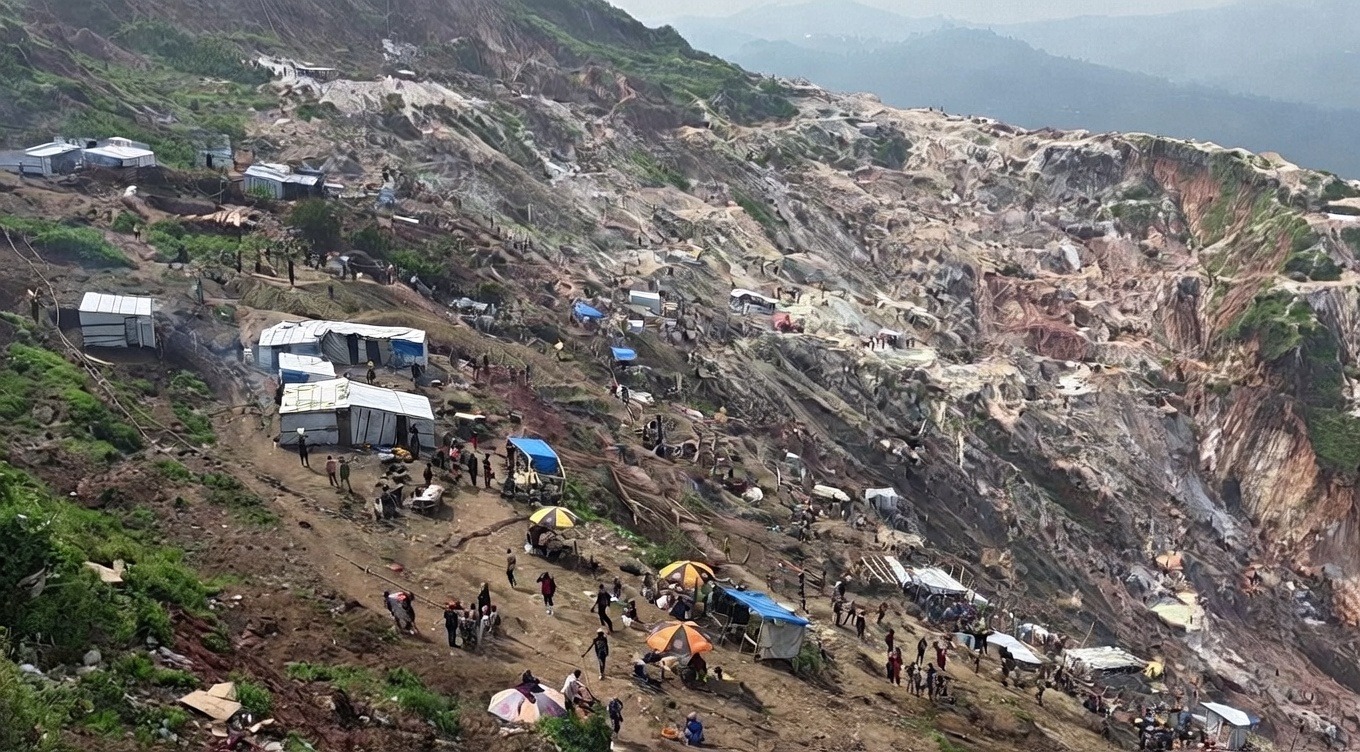
At least 200 artisanal miners are feared dead or missing following a catastrophic landslide at the Rubaya coltan mines in eastern Democratic Republic of Congo on Sunday, 1 February 2026. The disaster struck after days of relentless heavy rainfall caused several mine tunnels to collapse, trapping workers underground in a region already destabilised by on-going conflict.
The Rubaya mines, located in an area controlled by the M23 rebel group, are largely artisanal, with miners working in informal tunnels that lack formal safety measures. The landslide has destroyed significant portions of the mining infrastructure, leaving survivors and rescuers struggling to navigate unstable terrain. Local authorities said that the number of casualties could rise as search and rescue operations continue, but progress has been hampered by both the security situation and the risk of further tunnel collapses.
Eyewitnesses reported that miners were trapped for hours, many calling for help as mud and debris blocked exits. The tunnels collapsed suddenly, said one survivor, speaking from a temporary shelter near the mine. Some of us were able to escape, but many of our colleagues are still trapped. It is terrifying because rescue teams cannot reach all areas safely.
Efforts to evacuate survivors and recover bodies have been slowed by the dual challenges of the unstable mine shafts and the presence of armed groups controlling access to the area. Humanitarian agencies have expressed alarm over the conditions, warning that survivors face not only injury and trauma but also exposure, food insecurity, and limited access to medical care.
The Rubaya mines are a significant source of coltan, a mineral critical in the production of electronic devices such as smartphones and computers. Artisanal mining in eastern Congo has long been associated with high risk due to poor safety standards, lack of regulation, and operating in conflict-affected zones. Previous incidents in the region have resulted in similar large-scale fatalities, underscoring the vulnerability of miners.
International aid organisations have called for urgent humanitarian assistance, including search and rescue support, medical aid, and emergency relief for affected families. They also emphasised the need for long-term interventions to improve safety standards and protect miners working in informal operations across the country.
Local government officials, speaking on Monday, 2 February 2026, said that they are coordinating with community leaders and humanitarian groups to provide temporary shelters, food, and medical attention to survivors. They also appealed for external assistance to help locate missing miners and prevent further casualties in unstable areas.
The landslide at Rubaya adds to a troubling pattern of mining-related disasters in the Democratic Republic of Congo, particularly in areas affected by armed conflicts. Analysts say the incident highlights the urgent need for reforms in artisanal mining practices and the implementation of stronger safety protocols, particularly in high-risk, rebel-controlled zones where emergency access is limited.
As of 1 February 2026, rescue teams were continuing efforts to locate survivors, but the situation remains precarious, with many families awaiting news of missing relatives amid growing fears that the death toll may rise significantly.
Over 200 feared dead or missing after massive landslide at Congo coltan mine


- Advertisment -