


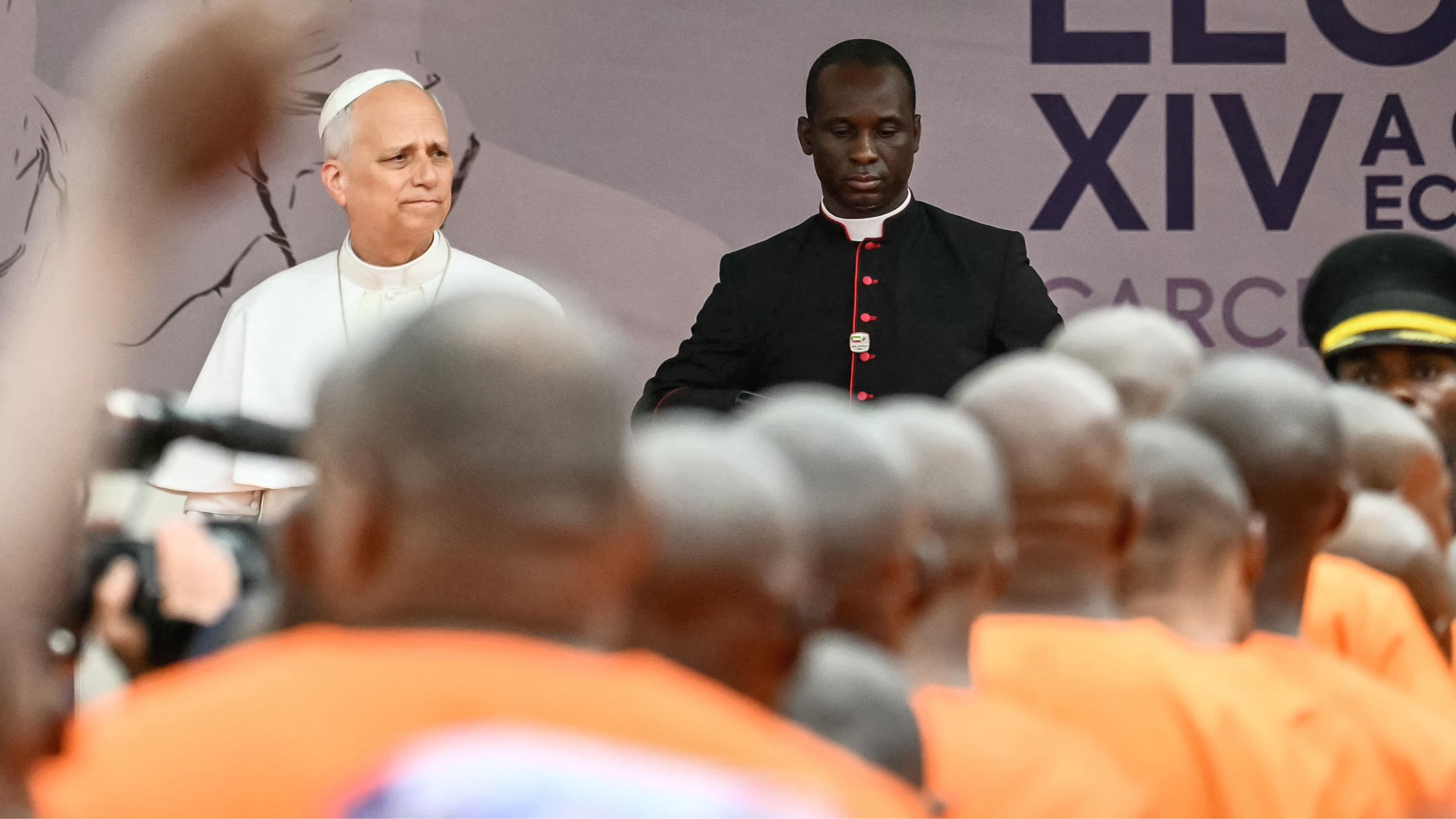
 Pope Leo XIV delivered a message of hope and solidarity to inmates at one of Equatorial Guinea’s most controversial prisons on Wednesday, telling prisoners that they were not forgotten and urging them to hold on to faith despite their circumstances.
The Pope visited the prison in Bata, the Central African nation’s main port city, during the final leg of his four-nation African tour. His stop continued a pastoral tradition established by Pope Francis, who frequently made prison visits during overseas trips as a gesture of compassion and a call for dignity toward incarcerated people.
However, Leo’s visit carried wider political and humanitarian significance, as it came amid renewed scrutiny of Equatorial Guinea’s justice system and human rights record.
Recent reports have drawn attention to controversial agreements under which several African nations, including Equatorial Guinea, were allegedly paid millions of dollars during the administration of Donald Trump to accept migrants deported from the United States to countries other than their own. Although officials confirmed that none of those migrants are being held at the Bata prison, the issue has intensified concerns over detention conditions and legal protections in the country.
Human rights organizations have for years criticized Equatorial Guinea over allegations of arbitrary detention, lack of judicial independence, poor prison conditions, and broader restrictions on civil liberties. The Pope’s visit therefore placed an international spotlight on issues campaigners say have long been ignored.
 A prisoner meets Pope Leo XIV in Bata, Equatorial Guinea, on Wednesday.
Speaking directly to inmates, Pope Leo XIV emphasized that imprisonment does not erase human dignity. He told prisoners that despite their mistakes or suffering, they remain valued in the eyes of God and society.
“You are not alone,” the Pope said in Spanish. “Your families love you and are waiting for you. Many people outside these walls are praying for you.”
He continued with a message aimed at prisoners who may feel abandoned or hopeless.
“If any of you fear being abandoned by everyone, know that God will never abandon you, and that the Church will stand by your side.”
The remarks were met with emotion among inmates gathered in the prison’s central courtyard. Witnesses said prisoners, dressed in newly issued neon orange and beige uniforms, listened attentively as the Pope addressed them under heavy humidity and heat.
Moments after Leo began speaking, a sudden rainstorm broke out, drenching the gathering but also bringing relief from the oppressive weather conditions. The downpour added a dramatic backdrop to the Pope’s words, as prisoners and officials remained in place during the address.
Observers noted that the prison itself appeared recently repainted in salmon pink, suggesting efforts by authorities to prepare for the papal visit. Still, campaigners argue that cosmetic improvements cannot substitute for structural reform of the prison system and judiciary.
In his message, Pope Leo XIV also spoke to government officials and prison authorities, reminding them that justice should not be reduced to punishment alone. He stressed that incarceration must serve the goals of rehabilitation, public protection, and human dignity.
“Justice is meant to protect society,” he said, while emphasizing that imprisonment should not be solely retributive.
The Pope’s comments echoed longstanding Catholic teachings on mercy, redemption, and the possibility of transformation for those who have committed crimes. They also aligned with broader international calls for prison reform, humane treatment of detainees, and stronger legal safeguards.
Equatorial Guinea, one of Africa’s top oil-producing nations, has long faced criticism over governance, despite its natural wealth. Rights groups say political repression, weak institutions, and lack of transparency have contributed to abuses within the justice system.
Authorities in the country have repeatedly rejected such accusations and insist they are committed to modernization and national stability.
Leo’s prison visit was one of the most symbolic moments of his African tour, underscoring the Vatican’s continued interest in marginalized communities and justice issues across the continent.
For many inmates, the Pope’s presence offered a rare moment of recognition from the outside world. For advocates, it served as a reminder that prison conditions and legal fairness remain pressing concerns in Equatorial Guinea and beyond.
As the visit concluded, Leo’s message remained clear: no person should be defined entirely by their worst moment, and even behind prison walls, dignity and hope must endure.

