


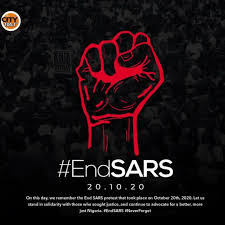
It has been four years since the night the Nigerian flag was stained with blood. Four years since young voices, chanting for justice under the glare of phone flashlights, were drowned out by the thunder of gunfire at the Lekki Toll Gate.
The night the country’s conscience was put on trial…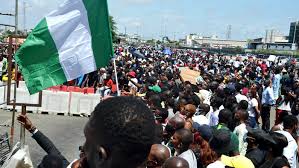
A Night Etched in Silence Those who were there say they felt the shift in the air, a strange stillness, the kind that comes before a storm.
“The lights went off, and suddenly the crowd went quiet,” recalls Tega, 29, a freelance videographer who had been livestreaming the protest. “I saw a flash before I heard anything. Then the sound, that sharp crack that makes your heart stop.”
He turned and saw a young man fall beside him. “At first I thought he tripped. But when I saw the blood pooling, I knew.”
A bullet grazed Tega’s shoulder minutes later. He ripped off his shirt, tied it around the wound, and dropped to the ground, playing dead.
“I remember thinking, so this is how I go, in my own country, waving the flag of the same country.”
Across the crowd, Ijeoma, now 33, was crouched near the stage where music had played hours earlier. She remembers the silence between shots, the heavy, terrified breathing of hundreds hiding under cars and banners.
“When I close my eyes, I still hear them,” she says quietly. “People were shouting, praying, calling for their mothers. The smell, it was metal, blood, and Lagos night air.”
When dawn came, the blood had been washed away. The barricades were gone.
But the city itself felt different, muted, as though ashamed.
“I walked back through that place weeks later,” Ijeoma says. “Even the sound of traffic seemed wrong.”
Not everyone made it home that night.
Chuka, a 31-year-old mechanic from Surulere, was among dozens picked up during the chaos. He was held for nearly two weeks.
“They said I was one of the rioters,” he recalls, shaking his head. “I told them, I was shouting End SARS because SARS killed my friend last year. They laughed and said, ‘Then you’ll join him.’”
He was released without charge, thinner and hollow-eyed.
“You come out and realize justice is not real,” he says. “You stop believing in the country. You just try to survive it.”
Some wounds never close.
Mrs. Ajayi keeps her son Daniel’s photograph on the table in her sitting room — a 23-year-old final-year student, headphones around his neck, smiling as though life had only just begun.
“He said, ‘Mummy, I’ll be back before curfew.’ That was the last call,” she says.
When she arrived at the hospital that night, no one could tell her where his body was. Weeks later, someone who had been with Daniel confirmed he didn’t make it.
Now, every October 20, she lights a candle by his photo.
“They said nobody died,” she whispers. “Then whose name do I call every night?”
The Forgotten Promises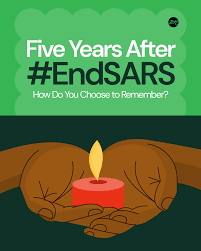
In the weeks that followed, the government promised justice. Panels of inquiry were set up; reports were written; statements made. But four years later, most of those promises are dust on paper.
The Lagos State Judicial Panel confirmed that security forces opened fire on unarmed protesters, calling it a “massacre in context.” Yet, accountability has been scarce. No officer has faced conviction. The victims’ families have received little more than silence.
Human rights lawyer Femi O. calls it “a national gaslighting.”
“The state acknowledged the deaths, paid compensation to a few, and then pretended the issue was settled. But how do you settle something that keeps happening?”
He’s referring to the continuing reports of police violence across the country — despite the supposed disbandment of the Special Anti-Robbery Squad. The names and uniforms may have changed, but the abuse, he says, hasn’t.
“The structure that allowed SARS to exist still breathes. And until that changes, we will keep repeating history.”
Lives Rebuilt, But Never the Same For survivors, moving on has been a complicated act. Some relocated out of Nigeria, unable to live under a system that turned its guns on them. Those who stayed are piecing their lives together one fragment at a time.
Tega now runs a small media company.
“I couldn’t touch a camera for months,” he admits. “Then one day, I filmed a wedding. People were dancing, laughing. It reminded me that joy still exists, that life can still win.”
Ijeoma now works with a youth mental health foundation, counselling young Nigerians affected by violence.
“Every October, we meet, we talk, we cry. Because remembering is part of healing,” she says. “Forgetting would mean they succeeded.”
As for , he has learned to live cautiously, but not silently.
“They tried to scare us into silence,” he says. “But silence doesn’t feed the soul.”
Their stories speak not just of pain, but of persistence. Of a generation that refuses to be erased.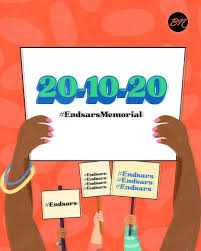
Four Years On: The Fire Still Burns
On the anniversary each year, the Lekki Toll Gate becomes a shrine of sorts. Flowers, placards, songs. Some drive by and honk in solidarity. Others park, step out, and pray.
The faces are fewer now, but the conviction remains, raw and unbending.
There’s no official memorial, no national recognition day, no justice list engraved in marble. But every survivor, every mother, every friend who still lights a candle has become a living monument.
End SARS was not just a protest; it was a mirror.
It showed a nation what it had become and what it could still be, if it ever chose to listen.
“They took lives, but they couldn’t take the truth,” says Chuka.
“Because the truth keeps showing up every October, standing right there at the toll gate.”
Epilogue In the end, remembering is no longer just about grief; it’s an act of defiance.
For those who died, remembering says: you mattered.
For those who survived, it says: your pain was not imagined.
And for a country still learning to look itself in the mirror, it says: the story isn’t over.