


A fresh surge in gang violence in Haiti has forced hundreds of residents to flee their homes in the capital, Port-au-Prince, deepening the country’s worsening humanitarian crisis and exposing the continued collapse of state authority.
Over the weekend, heavily armed gangs launched violent attacks across several northern neighbourhoods of the capital, triggering panic among residents who escaped with whatever belongings they could carry. Families were seen gathering along roads leading to Toussaint Louverture International Airport, searching for safety as gunfire echoed through nearby communities.
Residents from areas including Blanchard, Terre Noire, and Pierre 6 described scenes of chaos as armed groups advanced through neighbourhoods overnight. Many accused the government of failing to protect civilians from gangs that now dominate much of the city.
One displaced resident, Sandra Saintus, expressed anger at what she described as government abandonment, saying ordinary Haitians had been left at the mercy of criminal groups. Another resident, Mikerlange Sidor, said entire communities fled after gangs invaded their neighbourhoods and forced families into the streets.
The latest violence highlights the growing grip of gangs on Port-au-Prince, where criminal groups are estimated to control more than 90 percent of the capital. Armed gangs have expanded their influence dramatically since the 2021 assassination of President Jovenel Moïse, which plunged Haiti deeper into political instability and weakened already fragile state institutions.
Humanitarian organizations say the situation is becoming increasingly catastrophic. Medical charity Doctors Without Borders reported that its facilities in Cité Soleil and Croix-des-Bouquets were caught in crossfire during the latest clashes. In less than 12 hours, medical teams reportedly treated more than 40 gunshot victims, including a hospital security guard struck by a stray bullet.
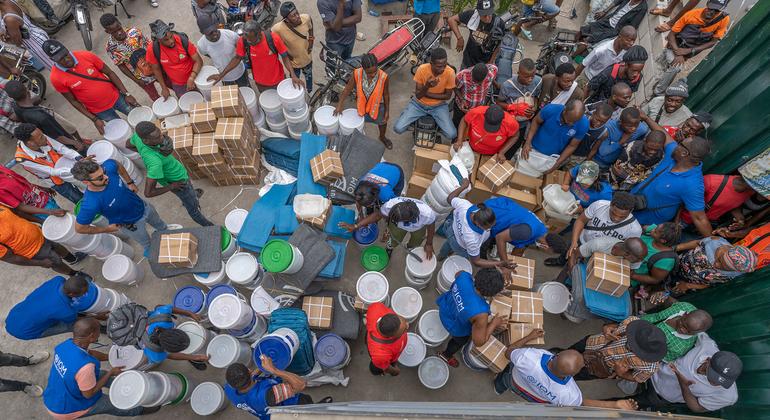
Aid agencies warn that hospitals are overwhelmed, while thousands of displaced families face severe shortages of food, clean water, shelter, and medical supplies. Many are now living in overcrowded temporary camps with limited sanitation and little protection from further violence.
The International Organization for Migration estimates that more than 1.4 million Haitians have been displaced by gang violence nationwide, with nearly 200,000 people currently sheltering in makeshift sites across the capital.
Meanwhile, international efforts to stabilize Haiti have moved slowly. Last year, the United Nations Security Council approved a multinational security mission aimed at restoring order and supporting Haitian police. However, deployment has been delayed, and only limited foreign personnel have reportedly arrived so far.
Analysts warn that without stronger international support and a functioning political transition, Haiti risks sliding further into lawlessness as gangs continue to expand their control over strategic roads, ports, and neighbourhoods. For many residents fleeing the violence, uncertainty and fear now define daily life, with little confidence that conditions will improve soon.