


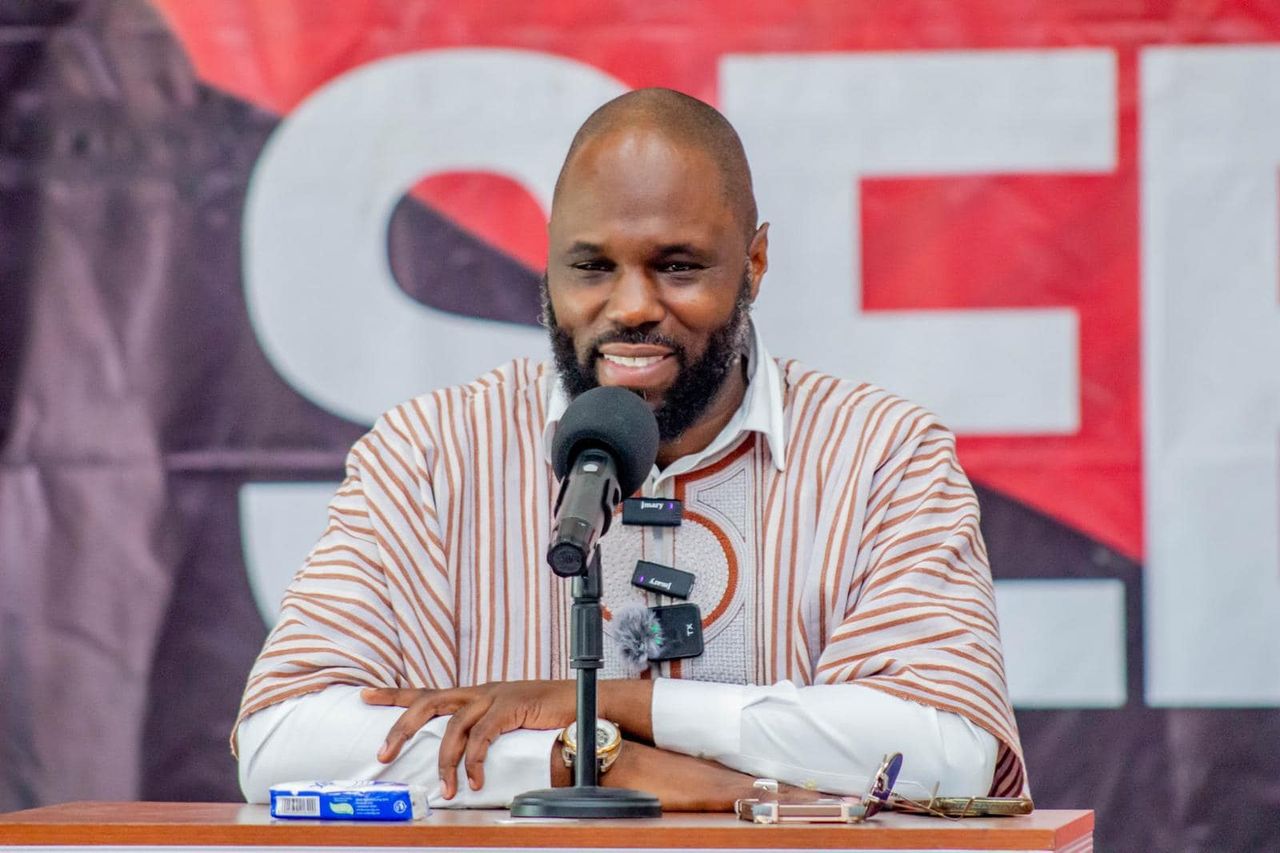
Kemi Seba
Controversial pan-African activist Kemi Seba has told a South African court that his life would be in danger if he is deported to Benin, as he fights to avoid extradition while facing immigration-related charges in South Africa.
Seba, whose real name is Stellio Gilles Robert Capo Chichi, appeared before a court in Pretoria after being arrested last month for allegedly overstaying his South African visa. He was detained alongside his teenage son and a South African associate. Authorities say the trio violated immigration laws, while Seba’s legal team argues the matter is closely tied to his political asylum application.
Through his lawyer, Bill Kobras, Seba told the court he has avoided returning to Benin since May 2024 because of what he described as a “well-founded fear” that he could be persecuted or killed under the administration of President Patrice Talon.
The activist is wanted in Benin over allegations linked to an alleged coup plot. Beninese authorities issued an international arrest warrant against him in December 2025, accusing him of supporting mutinous soldiers who briefly appeared on television claiming to have overthrown the government. Seba has denied wrongdoing and insists the accusations are politically motivated.
His lawyers argued in court that his visa overstay should not be treated as a routine immigration offence because he had already applied for asylum in South Africa on April 28.
According to the defence, his detention has prevented him from completing mandatory refugee registration procedures, including biometric documentation.
The legal team also revealed that the military-led government of Niger has offered to support Seba if he is granted bail. Niger’s ruling junta reportedly provided him with a diplomatic passport after France revoked his French citizenship in 2024.
Kemi Seba has become one of the most prominent anti-Western voices in Francophone Africa, attracting a large following online and among young Africans critical of French political and military influence in the region. He has organized protests against France’s presence in West Africa and frequently advocates for African sovereignty, economic independence, and the removal of foreign military bases.
In recent years, Seba has openly aligned himself with Russia, portraying Moscow as an alternative strategic partner for African nations amid shifting geopolitical alliances in the Sahel region.
The Pretoria court postponed the case until May 19, when final arguments on his bail application are expected to be heard. Until then, Seba, his son, and the South African co-accused will remain in custody.
The case has drawn international attention, with supporters portraying Seba as a political dissident facing persecution, while critics accuse him of fueling instability and extremist rhetoric across West Africa. The outcome of the case could have wider diplomatic and political implications involving South Africa, Benin, Niger, and regional debates over political activism and asylum protections in Africa.