


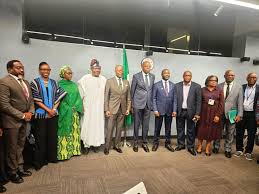
Three years after President assumed office, Nigeria’s political environment has undergone significant changes marked by defections, party crises, electoral reforms and growing concerns over the state of democracy ahead of the 2027 general elections.
During his inauguration on May 29, 2023, Tinubu described the election that brought him to power as one of the fairest in Nigeria’s democratic history. He assured Nigerians that democracy would continue to thrive under his administration.
However, as the country moves closer to another election cycle, opposition figures, political analysts and civil society groups say the political atmosphere has become increasingly tense and polarised.
Since taking office, the Tinubu administration, working with the National Assembly, introduced the amended 2026 Electoral Act aimed at improving Nigeria’s electoral process. The law introduced new provisions expected to guide future elections and strengthen electoral administration.
The president also appointed a new chairman of the Independent National Electoral Commission, INEC, , in October 2025. Although the appointment generated criticism from some opposition figures over alleged political affiliations, the new chairman has since taken charge of preparations for future elections.
Within the ruling , former Kano State governor was replaced by Professor Yilwatda Nentawe as national chairman, further reshaping the leadership structure of the party.
The political space also expanded with the registration of new political parties by INEC, including the Democratic Leadership Alliance and the Nigeria Democratic Congress, bringing the total number of registered political parties in Nigeria to 21.
While the government points to these developments as evidence of political growth and democratic expansion, critics argue that the country’s democratic institutions are facing increasing pressure.
One of the most striking political developments under Tinubu’s administration has been the wave of defections from opposition parties to the ruling APC.
Several governors elected under the reportedly defected to the APC, including Governors , , , , , , , and .
The mass defections significantly weakened opposition parties, especially the PDP, which analysts say is now facing one of the deepest internal crises in its history.
Apart from defections, factional disputes have also intensified within major opposition parties, including the PDP, the African Democratic Congress, Labour Party and the Social Democratic Party.
Political observers say the growing divisions have raised concerns about the ability of opposition parties to provide strong democratic competition ahead of the 2027 elections.
Executive Director of the Civil Society Legislative Advocacy Centre, , described the current situation as “democratic backsliding.”
According to him, the increasing influence of powerful political actors, weakening confidence in public institutions and alleged interference in the judiciary threaten democratic consolidation in Nigeria.
He also criticised the growing use of consensus arrangements within political parties, arguing that party leaders and governors now determine candidates without allowing genuine internal competition.
Public affairs analyst also expressed concern over the unprecedented level of defections from opposition parties to the ruling APC.
He noted that Nigeria has never witnessed such large-scale political movement since the return to democracy in 1999, adding that the PDP, once the country’s dominant opposition party, now faces severe fragmentation.
Analysts further argue that the political environment has become increasingly unstable due to factional crises, legal battles and internal power struggles within major parties.
Despite these concerns, supporters of the administration insist that the registration of new political parties, reforms to the Electoral Act and restructuring within INEC demonstrate ongoing efforts to strengthen democracy and widen political participation.
However, critics maintain that political reforms alone may not guarantee free and credible elections unless institutions remain independent and opposition parties are allowed to function without intimidation or internal manipulation.
As Nigeria approaches the 2027 elections, the country’s political future may largely depend on whether democratic institutions can maintain public trust and whether political actors prioritise national stability above partisan interests.
For many Nigerians, the next election cycle will not only test the strength of the opposition but also determine whether the country’s democracy is advancing or gradually sliding backward under increasing political tension.


